
Built for enclosed commercial kitchens
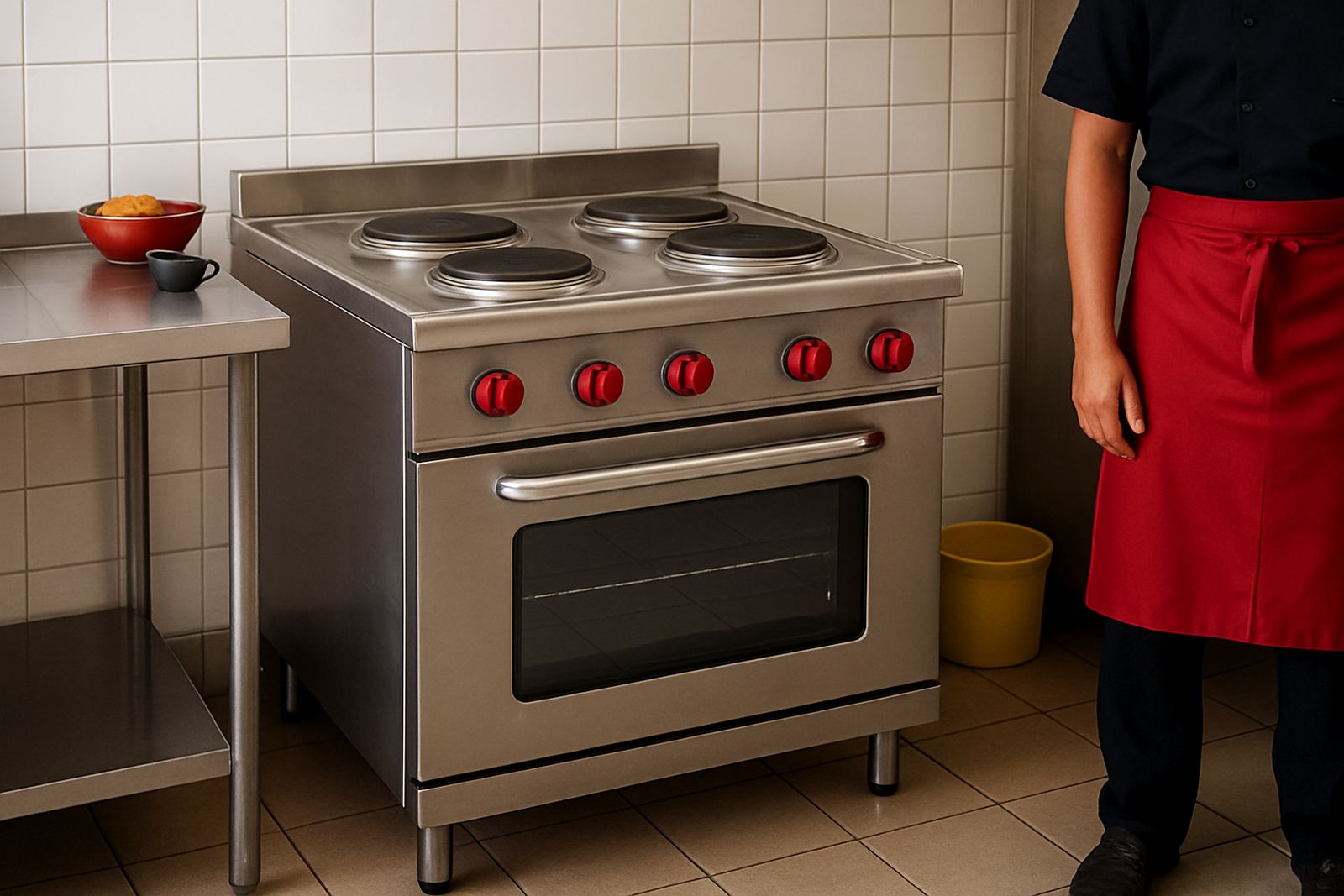
An electric range combines cooking plates and an oven base in one unit, giving chefs a steady cooking point for boiling, frying, simmering and baking. In Durban and the wider KZN area, these units are often chosen for indoor kitchens where gas storage is limited or where the site already has the electrical capacity to carry a heavy duty appliance.
Because there is no live flame, the cooking area is often easier to manage in tighter kitchen layouts and in sites where ventilation space is at a premium. That said, the range still gives off heat, so it must be positioned with enough clearance around the sides and rear for safe use and easier cleaning. On busy lunch shifts, that extra planning matters more than people think.
- Common in restaurant hot lines and institutional kitchens
- Suitable for cooking under fixed extraction or in enclosed prep areas
- Usually supplied as a heavy duty floor standing unit
- Works well where gas use is not preferred or allowed by site rules
Sizes and configuration options
Electric ranges are available in different widths and cooking top combinations, so the unit can match the volume of the kitchen. Smaller kitchens may only need a compact two-plate or four-plate unit, while larger operations often need six or more hotplates with a full oven below. Some layouts call for an open base rather than an oven, especially when the site already has separate baking equipment.
Typical options include single phase or three phase power, depending on the load and the kitchen's supply. Three phase is often the better fit for larger hospitality or institutional sites because it spreads the electrical load more evenly. If the supply is weak or unstable, the range can trip breakers and cause delays in service, especially during load-shedding recovery when several appliances come back on at once.
- 2, 4 or 6 plate configurations
- Oven base or open base
- Single phase or three phase connection options
- Stainless steel outer finish with heavy duty controls
Where an electric range works best
This product suits sites that already have a sound electrical installation and want controlled indoor cooking. It is a practical fit for school feeding kitchens, hospitals, hotels, caterers, retirement facilities and canteens where the cooking line is under shelter and the duty cycle is steady through the day. It also works well in coastal areas such as Durban North and Umhlanga, provided the kitchen is properly ventilated and cleaned, because salt air can shorten the life of neglected equipment.
It is less suited to sites with frequent supply problems or undersized distribution boards. If the building is old, or the electrical reticulation has not been tested recently, we usually recommend a site survey before ordering. That helps avoid a unit arriving on site only to find the breaker size, cable run or isolator is wrong.
- Restaurants with enclosed kitchens
- Hospitals and care facilities
- Canteens and staff feeding kitchens
- Sites with no practical gas storage area
Electrical needs and installation points
Electric ranges need a proper connection from a qualified installer, with cable sizing and breaker protection matched to the unit's total load. Depending on the model, the kitchen may need a dedicated isolator and a clearly labelled circuit on the distribution board. On many projects we also check whether the supply can handle simultaneous use with other heavy appliances such as fryers, ovens and dishwashers.
Positioning matters too. The unit should sit level on a firm floor, with enough working space for pans, trays and cleaning access. In wet service areas, the floor finish must allow safe mopping without standing water around the base. If the range sits near a wall or under extraction, there should be enough clearance for heat dissipation and maintenance access. A sloppy install can lead to premature element failure and nuisance trips, and nobody wants that during breakfast service.
- Dedicated electrical circuit recommended
- Breaker, cable and isolator must suit the load
- Level floor and enough service clearance required
- Installation should be checked against site rules and municipal safety requirements
Cleaning, care and servicing on busy sites
Daily cleaning is straightforward, but it must be done properly. Plates should be wiped once they have cooled, crumbs and spills should be removed from the cooktop edges, and the oven cavity should be checked for grease build-up. In coastal conditions, stainless surfaces can pick up corrosion if salt residue and food acids are left sitting, so a regular wipe-down with the right cleaner is worth it.
Preventive maintenance helps the range stay dependable through long operating hours. Elements, switches, thermostats and door seals should be checked as part of routine servicing, especially in kitchens that run early breakfasts and late dinners. If a plate heats unevenly or the oven takes too long to recover, that is usually a sign the unit needs attention before it becomes a fault.
- Clean after each service shift
- Keep spills off control panels and terminals
- Check oven seals and plate performance regularly
- Book servicing before the unit starts tripping or overheating
What to check before you place an order
Before ordering, confirm the cooking demand, the available footprint and the power supply. You should know how many pots or pans are in use at the same time, whether baking must happen in the same unit, and how much room is available for staff to move safely around the line. It helps to measure in metres rather than guess, because a 1200 mm unit can fit in one kitchen and block another.
We also suggest checking the voltage, phase and breaker size on site, plus the route for delivery through doors, passages and service lifts. In Durban and Pietermaritzburg projects, we sometimes find the equipment will fit the kitchen but not the access route. If the site has extractor requirements, the range position should be set with the canopy layout in mind so heat and vapour are captured properly.
- Cooking volume and shift pattern
- Available floor space and access route
- Electrical supply details, including phase and breaker size
- Need for oven base or open base
- Extraction and ventilation layout
Key facts
| Product type | Commercial electric range |
|---|---|
| Typical widths | 600 mm, 900 mm, 1200 mm and larger |
| Heat source | Electric hotplates and electric oven options |
| Power supply | Single phase or three phase, subject to model |
| Body finish | Stainless steel commercial housing |
| Best suited to | Restaurants, hospitals, canteens and enclosed kitchens |