
Why a plate warmer earns its place on the pass
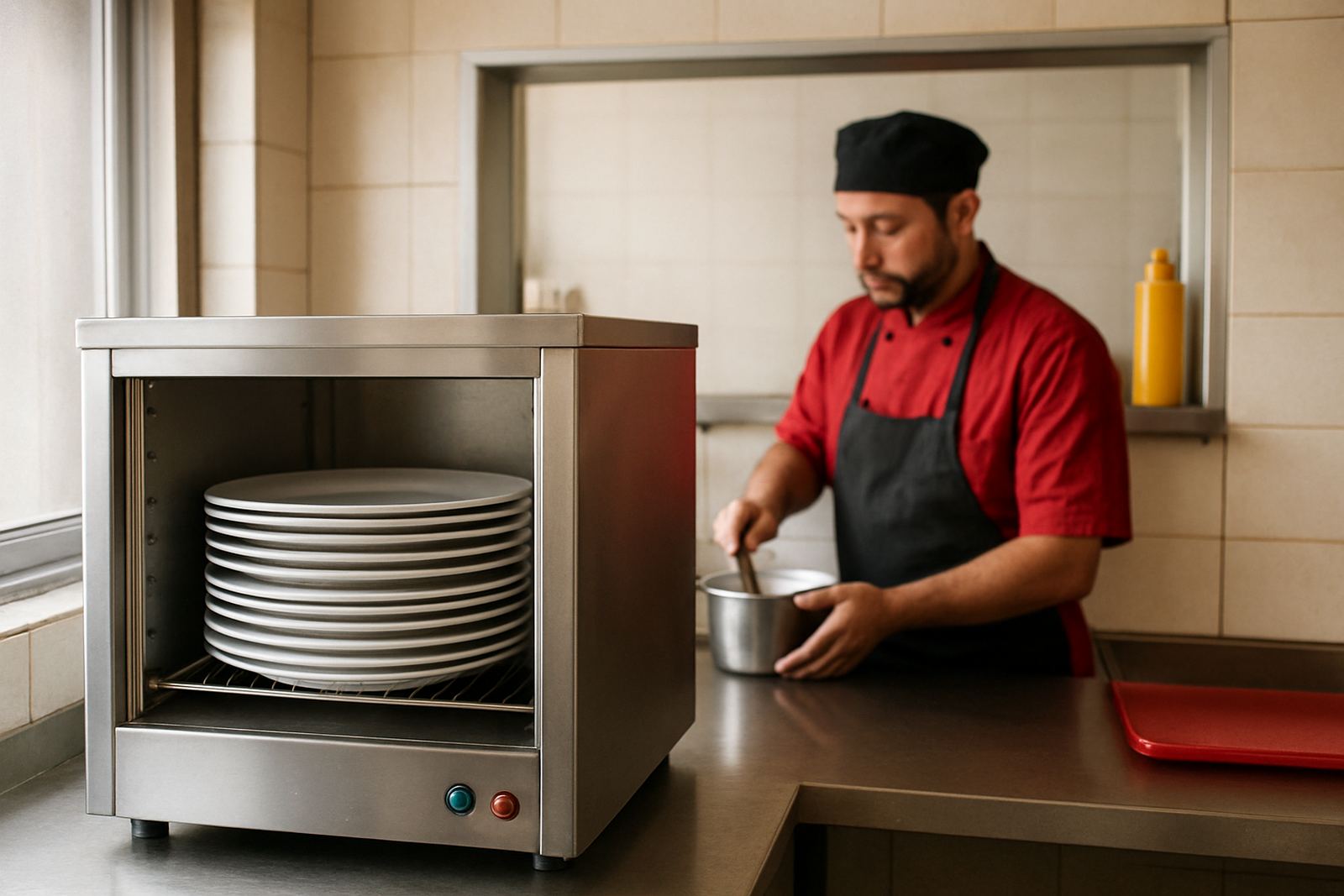
A plate warming cabinet is a heated holding unit for crockery and serving plates. It keeps plates warm enough to stop food dropping temperature too quickly once it leaves the grill, pan or oven. In busy service this makes a real difference, especially for plated meals that need to hold heat while waiters, chefs and tray runners are working across a packed pass.
In Durban, humidity and fast turnarounds can make cold crockery more of a problem than many operators expect. A good warmer takes that pressure off the kitchen. It also helps keep gravy, sauces and sides looking tidy rather than setting too quickly on a cold plate.
- Better hot food presentation
- Less heat loss at the pass
- Faster table service during peak periods
- Useful for plated meals, trays and banquet service
Sizes and cabinet options that suit local kitchens
Plate warmers are available in counter-top and floor-standing formats, with single-door or double-door cupboard styles. Smaller units suit cafés, takeaways and compact hotel kitchens. Larger cabinets are better for canteens, hospitals and banquet prep where more than one service point is pulling plates at the same time.
Common capacities range from about 30 to 120 plates, depending on plate diameter and shelf layout. Many cabinets are made for 250 mm to 305 mm plates, while wider models can take larger dinner plates or shallow bowls. Adjustable shelves are useful when service changes between lunch trays, side plates and main-course plates.
- Counter-top units for lighter use and tighter prep areas
- Under-counter units where floor space is limited
- Full-height cabinets for high-volume operations
- Single-zone or dual-zone warming, depending on service pattern
Where plate warming cabinets work best
We supply and spec plate warmers for restaurants, hospitals, hotels, canteens and contract catering kitchens across Durban, Glen Anil, Umhlanga, Pinetown, Ballito and Pietermaritzburg. They are handy where plated meals leave the kitchen in batches, or where food service is spread across several counters and wards.
They are also useful for off-peak prep. If your team pre-heats plates before the rush, service starts more smoothly and the pass stays less congested. For institutions, this can help with portion control and meal timing, which matters when the dining room, ward trolley or serving hatch all run to schedule.
- Restaurants with plated mains and banquet service
- Hospitals and care facilities with tray line serving
- School and staff canteens with fixed meal times
- Hotels and function venues with staged service
Power, installation and site planning
Most plate warmers are electric and need a suitable single-phase or three-phase supply depending on size and heating load. Smaller units often run on 220 V to 240 V, while larger cabinets may need a heavier circuit and dedicated isolator. We check the site before installation so the unit fits the available power, ventilation and workflow.
For kitchen fit-outs in Durban and the North Coast, it is worth planning the warmer near the pass, but away from direct splash zones and heavy traffic. If the cabinet sits beside hot equipment or under a low shelf, there must still be enough space for door swing and safe access. In some projects, a simple stainless stand or wall protection panel makes the installation cleaner and easier to maintain.
- Confirm voltage and circuit size before ordering
- Allow service access around the cabinet
- Keep it close to the pass or plating area
- Use proper levelling on uneven floors
Care, cleaning and preventive servicing
Like most catering equipment, a plate warmer works best when it is cleaned and checked regularly. Wipe the interior after service, remove crumbs and spills, and keep vents clear so heat can move properly through the cabinet. Door seals and hinges should be checked for wear, especially in kitchens that run long hours.
In coastal areas such as Durban North and Umhlanga, stainless surfaces need regular wiping to prevent staining from salt air and moisture. If the unit starts taking longer to reach temperature, the thermostat, element or door seal may need attention. We handle preventive maintenance and breakdown repairs, which helps avoid service delays when the kitchen is already under pressure.
- Daily wipe-down and crumb removal
- Monthly check on thermostats, switches and seals
- Keep load levels within the maker's recommended capacity
- Book servicing before the winter and festive rush
What to confirm before you place the order
Before buying a plate warmer, check the size of the plates you use, the number of plates needed per service and the space available at the pass. Also confirm whether the cabinet will sit under a counter, stand on the floor or be built into a stainless line-up. These details save costly changes later.
It also helps to note whether you need plain plate storage, temperature control or a warmer that can hold plates for different meal periods. If the kitchen already runs on tight electrical capacity, we can advise on the load and whether a smaller cabinet or a different location will make more sense. For projects with extractor planning, fabrication or installation on the same site, we coordinate the whole setup so the warmer arrives ready for use.
- Plate size and quantity per service
- Available floor space and door clearance
- Electrical supply and isolator position
- Whether the unit must match existing stainless finishes
Key facts
| Product type | Heated plate warming cabinet for commercial kitchens |
|---|---|
| Typical capacity | Approx. 30 to 120 plates depending on model and plate size |
| Common power | 220 V to 240 V single-phase or three-phase on larger units |
| Temperature control | Adjustable thermostat with indicator light on most models |
| Construction | Stainless steel cabinet with insulated walls and adjustable shelves |
| Suitable for | Restaurants, hospitals, hotels, canteens and banquet service |