What a Pot Rack Does in a Working Kitchen
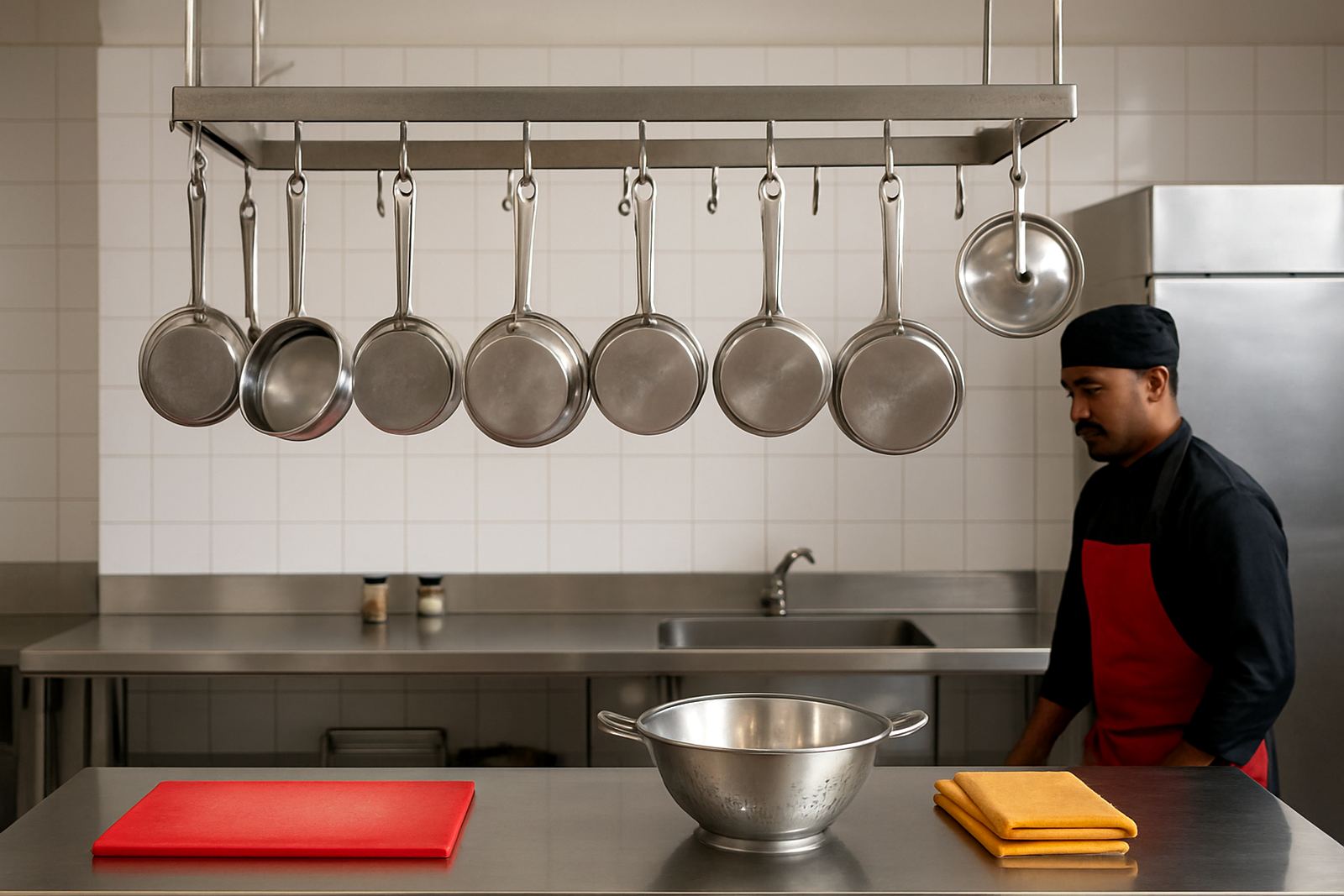
A pot rack is a fixed storage frame or rail system used to hold cookware within easy reach while freeing up floor space below. In a commercial kitchen it is usually fitted above a prep line, against a wall near the cooking section, or over a central work area where staff need quick access to pots, pans, colanders and lids.
Compared with loose shelving or stacked storage on the floor, a proper rack helps keep the room clearer, speeds up service, and makes cleaning easier. It also reduces the chance of cookware getting damaged, knocked over or mixed up during busy meal times. In Durban kitchens with high humidity and salt air near the coast, keeping metalware lifted off wet floors also helps with day to day care.
Wall Mounted and Overhead Rack Options
We supply pot racks in practical sizes and layouts to suit the amount of cookware you need to store. The right option depends on the layout of the kitchen, wall structure, ceiling height and how often staff need to reach the items.
- Wall mounted racks: Suitable for shorter runs above sinks, prep tables or landing areas. Good where overhead space is limited.
- Overhead racks: Hung from ceiling supports or frames, giving storage above island work zones and central cooking areas.
- Single rail systems: Useful for lighter cookware and compact kitchens with a smaller stockholding.
- Multi tier racks: Better for larger kitchens that keep several sizes of pots, pans and trays in regular use.
Typical lengths are 1 200 mm, 1 500 mm, 1 800 mm and 2 400 mm, with custom sizes available for tighter corners or longer prep lines. Depth and drop can also be set to suit the people using the kitchen, so staff can reach items safely without stretching over hot equipment.
Where Pot Racks Work Best
Pot racks suit kitchens where there is a constant turnover of cookware and not enough space for deep storage cupboards. They are often used in restaurants, hotel kitchens, school feeding schemes, hospital production kitchens, canteens, takeaway prep areas and contract catering facilities.
In a Durban or Umhlanga kitchen, a rack near the cooking line helps keep stock organised during rush periods. In Pinetown or Pietermaritzburg, where production kitchens may run longer shifts, the rack can be planned into a full equipment layout so staff move less and work faster. They also help in sites that must meet hygiene expectations for municipal inspections, because open storage is simpler to clean around than stacked pots on the floor. If your kitchen has extractor canopies, gas ranges or steam heavy equipment, the rack position must be planned carefully so it does not interfere with heat, airflow or safe access.
Installation, Fixing and Site Requirements
Installation depends on the wall type, ceiling structure and the weight of the cookware you intend to store. Concrete walls, steel framing and properly braced ceiling points are preferred for heavier overhead racks. Where the building structure is not suitable, we can advise on alternate fixing methods or a modified layout.
- Load rating: The rack and fixings must match the actual weight of pots, pans and lids.
- Clearances: Allow safe working space above sinks, stoves and pass-throughs.
- Access: Staff should reach the top level without standing on chairs, boxes or loose crates.
- Heat zones: Keep rack parts clear of direct flame, extractor hot spots and steam discharge.
There are no power or gas connections required for the rack itself, but the installation needs to be coordinated with surrounding services. If it is being fitted close to a gas line, extractor ducting, light fittings or sprinklers, those items must be checked before drilling starts. On coastal jobs, we also pay attention to the fixings and finish so the unit is not affected by damp air or early corrosion. A proper install makes a big difference, and saves call backs later.
Care, Cleaning and Ongoing Service
Pot racks need basic cleaning as part of the kitchen’s daily washdown. Wipe down the frame, hooks and support bars with a food-safe cleaner and dry them after cleaning where possible. This is especially important in rooms with regular steam, dishwashing splash or salty air from open doors near the coast.
During routine maintenance, check for loose fixings, worn hooks, bent rails or signs of movement in the wall or ceiling points. If staff overload the rack or hang items unevenly, the frame may start to sway or pull. We can service installed units, tighten fixings, replace damaged components and check whether the layout still suits the way the kitchen operates after a menu change or upgrade.
For sites that run long hours, a quick inspection once a month is worth it. It helps catch small issues before they become a safety problem or lead to damaged cookware.
What to Check Before You Order
Before ordering a pot rack, it helps to measure the area properly and list what will be stored on it. A rack for a small prep kitchen is not the same as one for a hospital line or a busy restaurant pot wash area, so the details matter.
- Available wall or ceiling space: Measure in millimetres and note doors, windows, lights and extractor positions.
- Cookware weight and quantity: List the heaviest pots, pans and trays the rack must carry.
- Mounting surface: Confirm whether the wall is brick, concrete, plasterboard or steel framed.
- Working height: Make sure staff can reach the upper section safely.
- Hygiene needs: Decide whether the area must be open for inspection and easy washdown.
- Finish: Choose a finish suitable for humidity, frequent cleaning and commercial use.
We can assist with kitchen layouts, equipment specification and site surveys across Glen Anil, Durban North, Umhlanga, Pinetown, Ballito and Pietermaritzburg. If the rack is part of a larger kitchen fit-out, we will plan it alongside prep benches, cold rooms, cooking lines and extractor planning so everything fits the way the site actually works.
Key facts
| Product type | Wall mounted or overhead pot rack for commercial kitchens |
|---|---|
| Common lengths | 1 200 mm, 1 500 mm, 1 800 mm, 2 400 mm, custom sizes available |
| Typical use | Storage for pots, pans, lids and light cookware |
| Mounting | Wall fixed or ceiling suspended, subject to site structure |
| Finish options | Commercial grade metal finish suitable for kitchen use |
| Services | Supply, installation, commissioning checks and maintenance support |