
Why grease control matters in busy KwaZulu-Natal kitchens
In a commercial kitchen, grease does more than make a mess. It catches dust, holds smells, blocks filters and can put strain on extraction equipment. Around Durban, where air moisture is high for much of the year, grease turns tacky quickly and sticks to canopies, wall cladding and even floor edges near the cookline.
That matters whether you are running a restaurant in Umhlanga, a school canteen in Pinetown or a hospital kitchen in Pietermaritzburg. Once grease gets into the wrong places, cleaning takes longer and the risk of slips, smoke back-up and fire grows. Good grease control starts with the layout of the kitchen, then continues through daily cleaning and planned maintenance.
- Less smoke hanging over the cooking area
- Cleaner floors and safer walkways
- Longer life for extraction fans and filters
- Lower chance of odours spreading into dining or service areas
Start at the source: fryers, grills and hot holding points
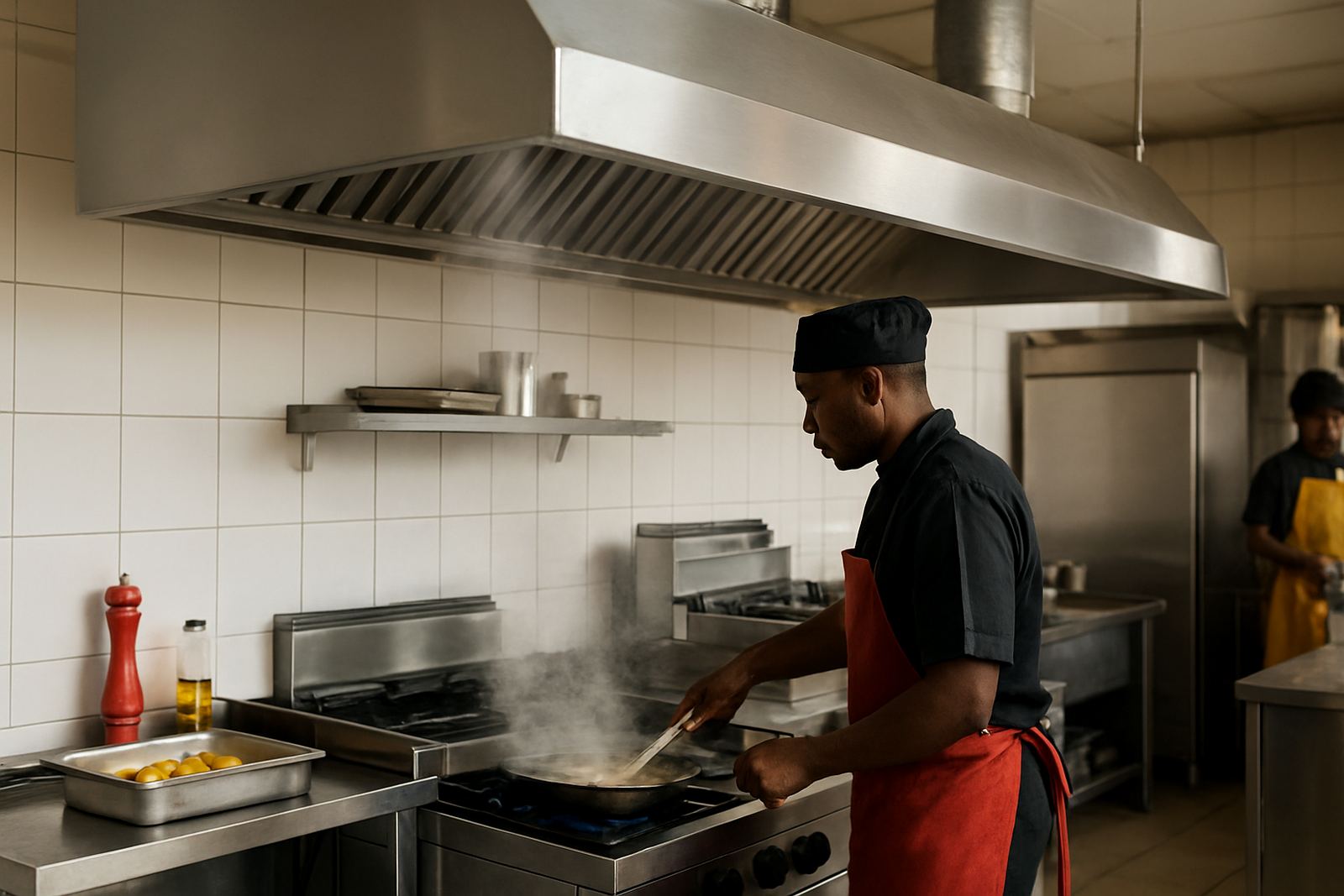
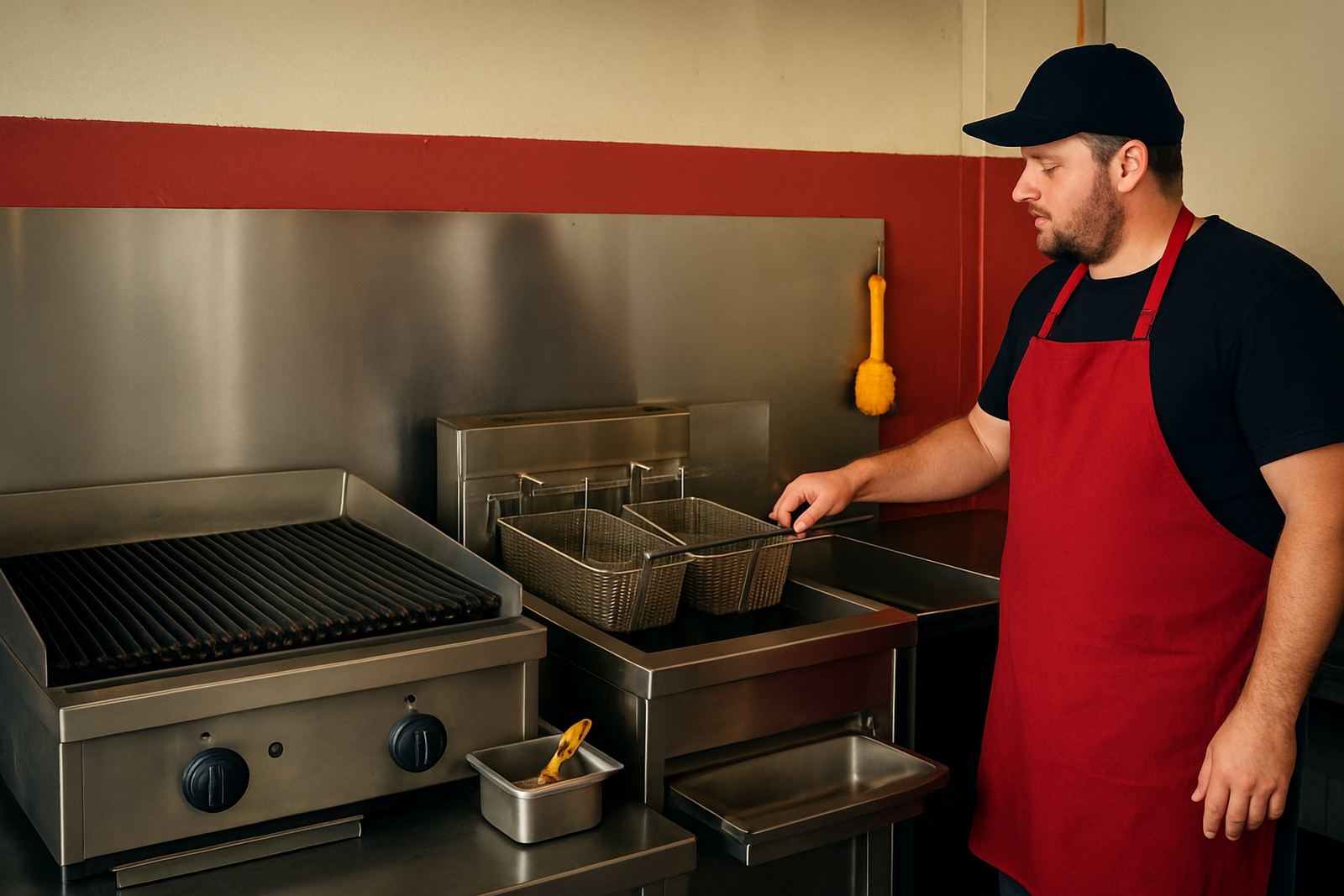
The best grease management is done where the grease is created. Fryers, flat-top grills, chargrills and braais need the right equipment position, the right capture area above them and enough open space for cleaning. If the canopy is too small or set too high, grease and steam escape before they are pulled away.
We often see kitchens where the cookline was added later and the extraction stayed the same. That usually means more wiping down, more filters clogging and more heat in the room. A proper site survey helps match the canopy size, duct run and fan capacity to the actual equipment on site.
- Keep fryers away from doorways and cross-draughts
- Leave enough space to remove baskets, trays and drip pans safely
- Use splash guards where oil splatter is heavy
- Fit easy-access grease filters above high-output cooking points
Extractor planning that handles Durban humidity and load-shedding
Grease management and extraction planning go together. In coastal areas like Durban North and Ballito, humid air can slow down evaporation but also make residue cling to surfaces. That means filters, ducting and fan housings need regular attention, not just a once-off clean.
Load-shedding adds another issue. When power drops, hot oil can settle and smoke may linger longer in the room if the extraction stops. Kitchens that serve through outages need a sensible backup plan, whether that is operational timing, better ventilation routing or a clear shutdown procedure for frying stations. A good system is not just about power, it is about how the kitchen behaves when the supply is interrupted.
- Check grease filters weekly in high-volume kitchens
- Inspect duct bends where residue often collects
- Make sure access panels are fitted for cleaning crews
- Keep spare filters on hand for busy seasons and weekends
Cleaning routines that staff can actually follow
Staff training matters because grease control fails when everyone assumes someone else will do it. The cleaning routine should be simple enough for a busy shift team to follow after service, with deeper cleaning built into the weekly schedule. If the process takes too long, it gets skipped.
Use warm water, the correct degreasing products and non-scratch tools that protect stainless surfaces. Harsh scrubbing on polished metal can leave marks and make future cleaning harder. It also helps to assign zones so no area is missed, from fryer fronts to shelf brackets and floor skirtings. A quick daily wipe plus a proper weekly clean is often better than a big monthly clean that comes late.
- End-of-shift wipe down on fryers, splash backs and handles
- Daily check of filter trays and drip points
- Weekly clean of canopies, fan covers and exposed duct openings
- Monthly review of grease build-up around hard-to-reach corners
Stainless fabrication details that make grease easier to manage
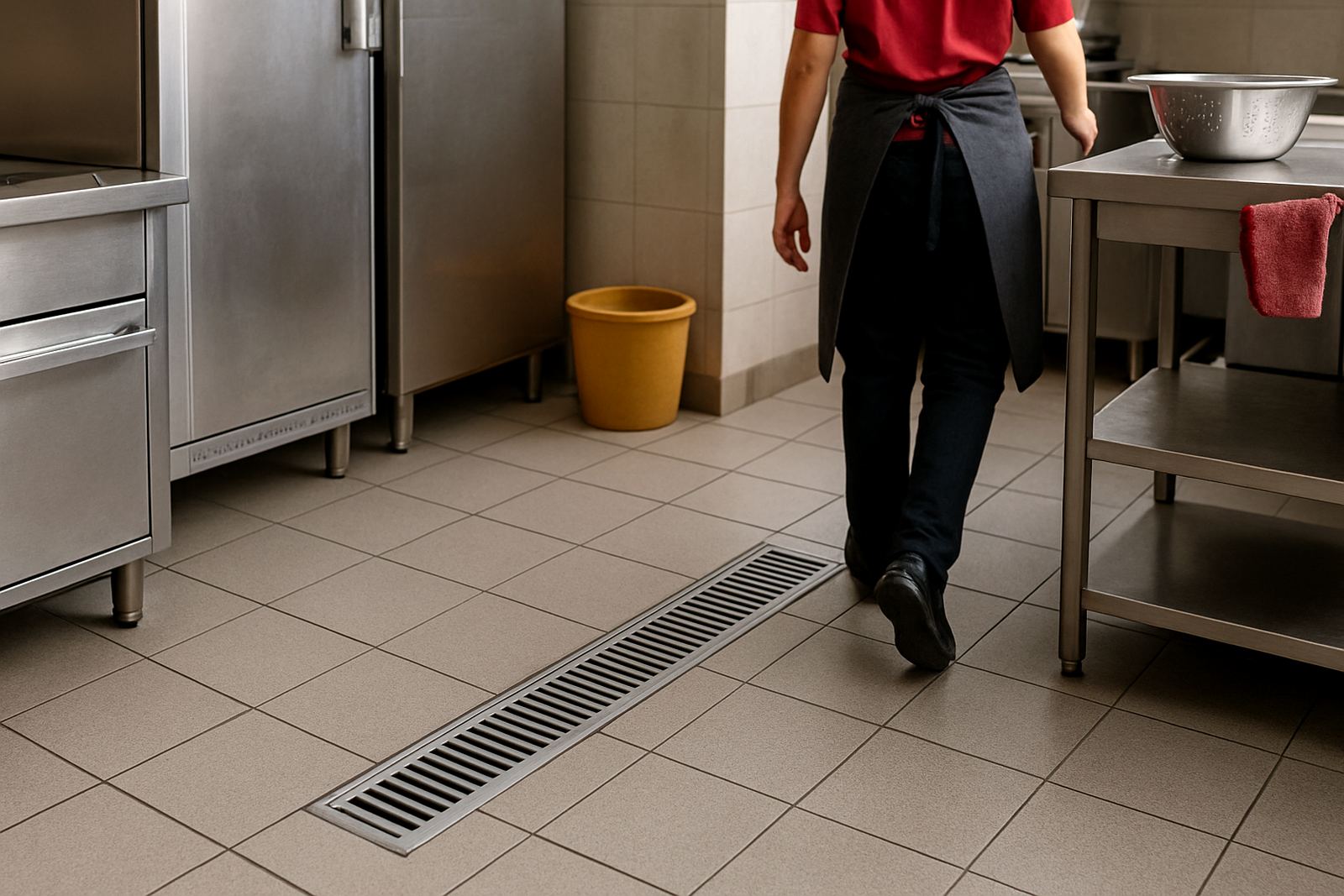
Good stainless work can save hours of cleaning. Raised edges, welded joins, smooth finishes and properly sloped drain points all help grease move away from working areas instead of sitting in seams. In food-service sites, especially hospitals and canteens, small fabrication details make a big difference over time.
We often recommend splash protection behind fry banks, removable filter housings and stainless shelves that do not trap residue underneath. It is also worth checking that wall junctions are sealed neatly, because open gaps collect grime and become difficult to clean later. One loose panel or poor weld can turn into a recurring problem for the maintenance team.
When planning a new kitchen or modifying an older one, think about how cleaners will reach every surface. If a panel cannot be accessed without moving heavy equipment, grease will build up there, simple as that.
A Durban example: saving time in a busy service kitchen
A service kitchen in Durban North recently had repeated smoke build-up near the fryers during lunch rushes. The team had been cleaning daily, but the canopy size was too short for the equipment line and grease was gathering around the filter edges. After a site check, the extraction position was adjusted, access points were improved and the staff were shown a clearer cleaning routine.
The result was not dramatic overnight, but it was noticeable within a week. The room stayed cleaner, the smell dropped and the team spent less time scrubbing the same spots twice. That is the practical side of grease management: not fancy, just fewer interruptions and a safer kitchen.
- Better airflow across the cookline
- Less residue on nearby walls and shelves
- Quicker cleaning after service
- Reduced strain on extraction parts
When to bring in a supplier for grease control advice
If your kitchen keeps getting greasy no matter how often it is cleaned, the problem is usually layout, extraction or equipment placement. That is when a supplier with design and installation experience can help. A proper review can show where grease is escaping, where filters are under-sized, and whether the current setup is suited to the way the kitchen works.
At KZN Catering Equipment in Glen Anil, Durban, we help kitchens across KwaZulu-Natal with site surveys, extractor planning, stainless fabrication, installation, commissioning and maintenance. For kitchens in Umhlanga, Pinetown, Ballito and Pietermaritzburg, the aim is the same: keep the cookline cleaner, make daily work easier and reduce avoidable wear on equipment. If the grease is getting ahead of the team, it is time to look at the system, not just the mop bucket.