
Why the sandwich line needs its own workflow
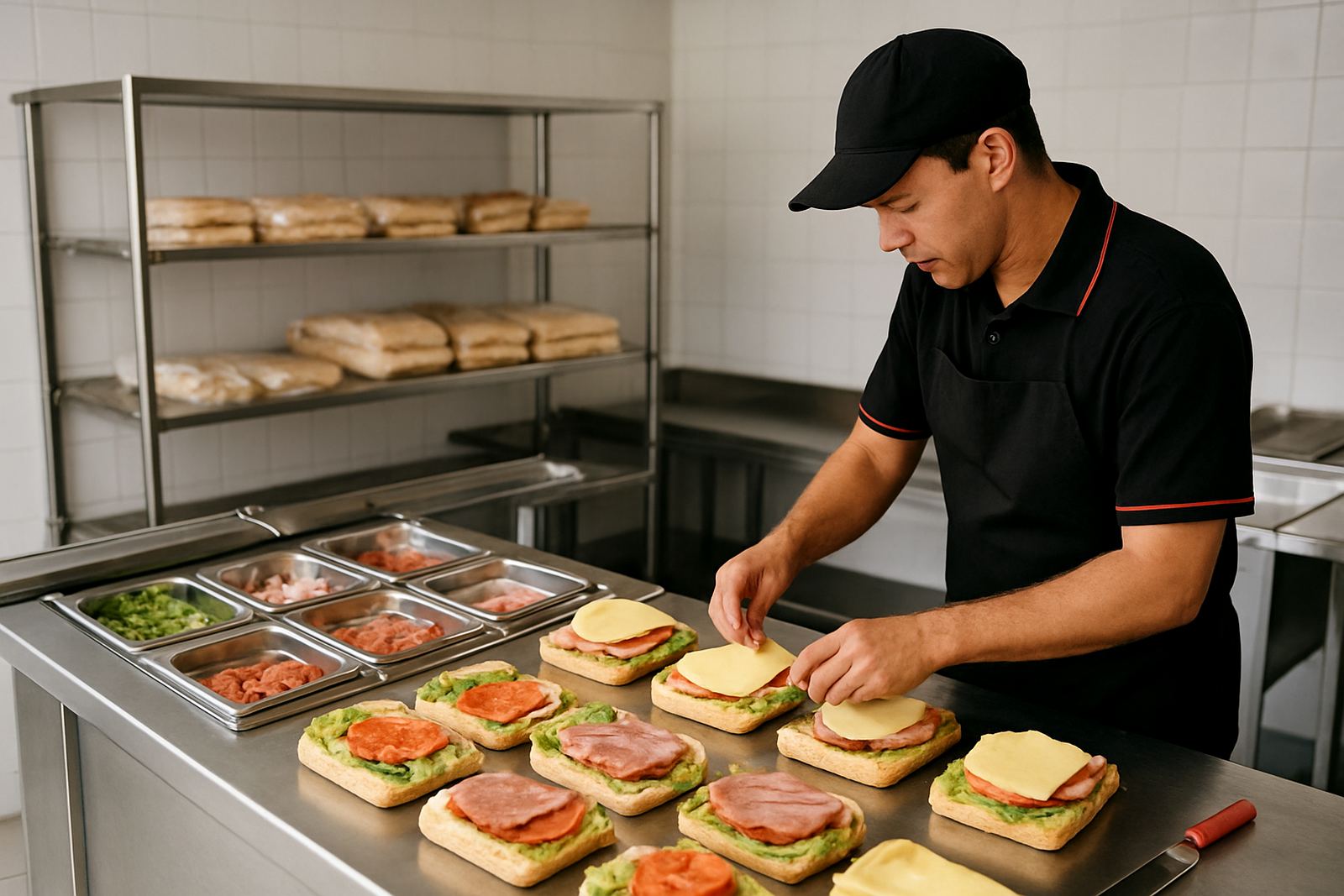
In a busy restaurant, school canteen, hospital ward kitchen or takeaway counter, the sandwich line should work as a small production area inside the bigger kitchen. It is where bread gets sliced, fillings are portioned, salads stay chilled and each order is finished without staff crossing paths. When that workflow is right, service times come down and waste does too.
For Durban kitchens, the layout matters even more because humidity, heat and frequent door opening can pull cold air out of open prep areas. A line that is too long, too cramped or poorly placed next to a hot cookline becomes slow and uncomfortable fast. The aim is simple: keep chilled ingredients close, keep movement short, and give the team enough space to work safely even during load-shedding when backup power is running and every minute counts.
Saladette counters that suit quick assembly
A saladette counter is usually the heart of the sandwich line. It combines refrigerated storage with a top section for ingredients, often with pan space for sliced tomato, lettuce, cheese, meat, sauces and garnish. The right unit keeps produce at serving temperature while making it easy for staff to reach what they need in one motion.
When specifying a unit, look at pan depth, lid type, deck space and whether the counter will be used by one person or two. A single operator in a small Glen Anil café may only need a compact unit, but a hospital or canteen line can need a longer run with extra chilled storage below. It also helps to think about how the team will restock during service, because poor restocking makes the line messy and slows everything down.
- Choose a depth that leaves room for the operator to move without overreaching.
- Keep high-use fillings nearest to the bread assembly point.
- Ask for insulated lids or covers if the line sits near doors or sunny windows.
- Use refrigerated under-storage for backup stock so the top stays clear.
Prep benches that make the line faster
Prep benches are where the work really starts. They are used for washing, slicing, portioning and staging the fillings before the sandwich line opens. A good bench setup keeps the cutting area separate from the final assembly area, which helps with hygiene and reduces cross-contamination. In practical terms, it also means fewer staff bumping into each other during the rush.
Stainless steel is usually the right choice because it handles cleaning, humidity and daily wear better than painted surfaces. For the KwaZulu-Natal coast, that matters. Salt air can be hard on fittings, hinges and frames if the materials are not suitable. Good fabrication should include proper drainage, splash backs where needed, and enough undershelf or cupboard space to keep crates and dry stock off the floor. That makes municipal inspections easier and gives you a cleaner line too.
- Allow at least one dedicated bench for pre-assembly and one for finishing.
- Fit cutting boards that can be removed and cleaned properly.
- Keep knives, containers and wraps within arm's reach.
- Use sealed feet or legs where possible for easier floor cleaning.
Cold holding, hygiene and food safety in real service
For sandwich service, cold holding is not something to treat casually. Lettuce, sliced meats, cheese, egg fillings and mayonnaise based items must stay within safe temperature ranges from prep to service. A saladette counter helps, but only if staff load it correctly and lids are closed when the line is not actively in use. Leaving pans open while orders are being called may look quick, but it can raise temperatures very fast.
Good practice starts with the layout. Keep raw prep away from ready to eat items. Use separate containers for allergens where possible, especially in school and hospital settings. A layout that allows staff to move left to right or right to left in one clear sequence cuts down on errors. It also makes staff training easier, because new team members can learn one process instead of guessing where things belong. This part seems small, but it saves time every single day.
What a local Durban sandwich counter often needs
Every site is different, but a typical Durban line may need a refrigerated saladette counter, a stainless prep bench, shelving for dry ingredients, and maybe a small upright fridge for backup stock. In a larger operation, a pass-through arrangement can help the sandwich station link to the till or serving hatch without crowding the kitchen. In smaller shops around Durban North or Umhlanga, space is usually the main challenge, so compact equipment with smart storage underneath often works best.
Power supply is another local issue. During load-shedding, equipment choice and circuit planning matter. Kitchens often need to know which machines can stay on backup power and which ones should be isolated. If the line is in a building with strict landlord rules or body corporate requirements, plan the extractor, drainage and electrical points early so you do not have to shift equipment later. That kind of rework gets expensive quick.
How we plan a sandwich line for KwaZulu-Natal kitchens
A proper sandwich line setup starts with a site survey and a simple workflow plan. We look at how staff enter the area, where ingredients arrive from, how the line connects to the rest of the kitchen and how much space is really available. From there, the equipment list can be matched to the menu and the number of meals served per hour. A hotel deli in Ballito will not need the same arrangement as a canteen in Pietermaritzburg.
Once the layout is set, the next step is installation and commissioning. That includes checking levels, drains, power points and door clearances, then testing the equipment under working conditions. Training matters too. Staff should know how to restock, clean, defrost if needed and close down the line at the end of service. When all of that is done properly, the sandwich station becomes one of the smoothest parts of the kitchen instead of the most stressful.
- Match the line length to peak orders, not just average trade.
- Plan for restocking during service without blocking the operator.
- Make sure cleaning access is built into the layout.
- Use equipment that suits the climate and power conditions at the site.
A practical example from Durban North
A Durban North café serving office lunches may only have a narrow back-of-house area, but it still needs fast sandwich service. In that kind of site, a compact saladette counter can sit close to the till hatch, with a stainless prep bench behind it for morning prep and overflow stock. Bread, fillings and garnishes can be staged before opening, then topped up in smaller batches through the day to keep the line fresh and controlled.
The result is simple: fewer steps, less waste and better control over cold food. Customers get faster service, staff have a cleaner working area, and the kitchen can handle peak times without feeling rushed. That is really the point of a good sandwich line. It is not about adding more equipment than you need, it is about placing the right pieces in the right order so the team can work properly.