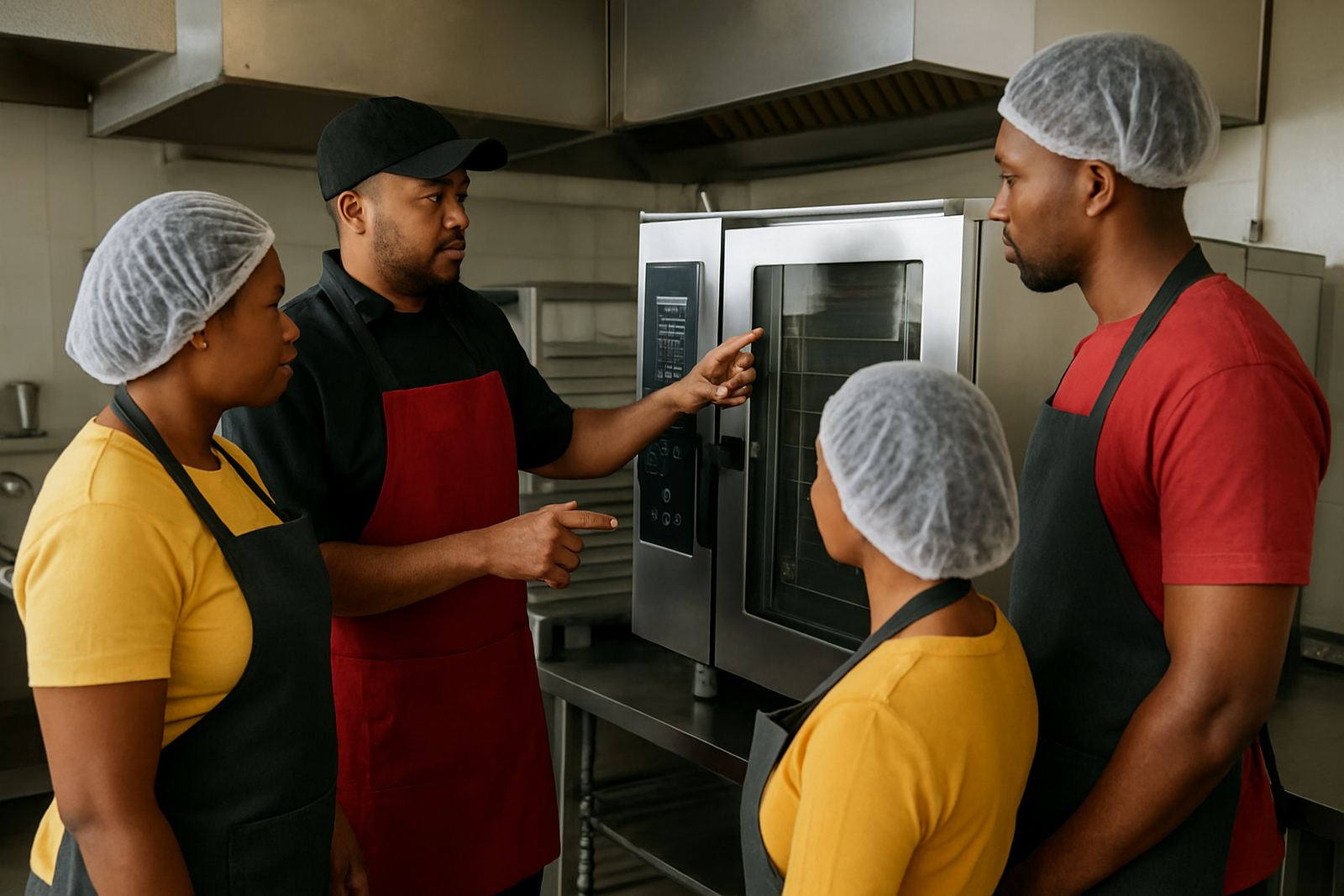
What our kitchen staff training covers
Our staff training is built around the machines and workflows in your kitchen, not theory. We show your team how to start up, shut down, clean and monitor cooking, refrigeration and prep equipment so it lasts longer and performs better under daily use. This matters in busy restaurants, school kitchens, hospitals and canteens where one missed step can lead to wasted product or a breakdown before lunch.
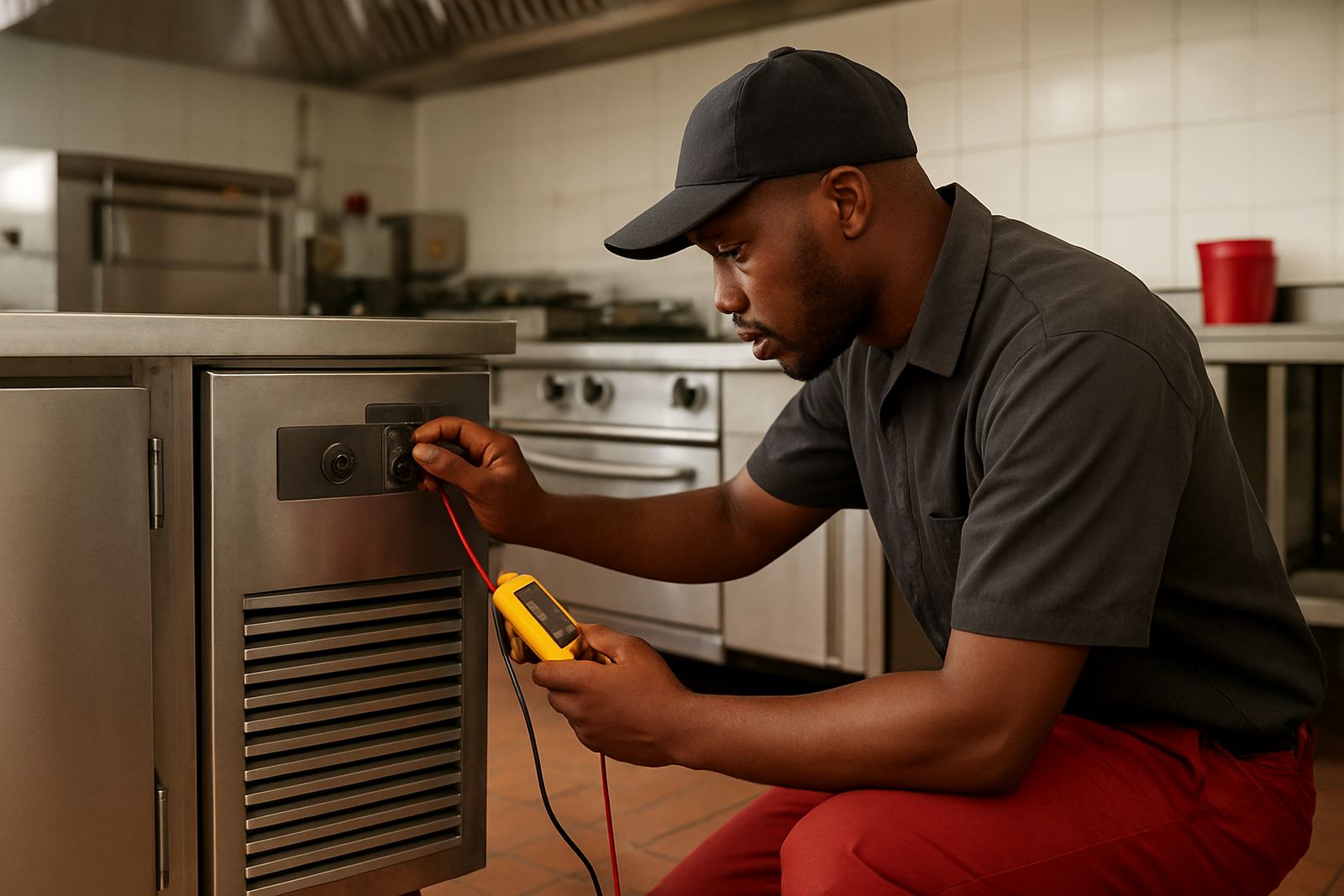
Training is practical and site based wherever possible. We work through the actual equipment on your floor and show staff what normal operation looks like, which sounds simple but it makes a big difference. On the day we can cover hot kitchen equipment, cold rooms, undercounter fridges, prep tables, slicers, mixers, extractors and stainless work areas. We also explain what to do during load-shedding, what not to switch off at the plug, and how to bring equipment back online safely.
- Daily start-up and shut-down routines
- Safe use of gas, electric and refrigeration equipment
- Cleaning methods for stainless steel and food contact parts
- Temperature checks and simple fault spotting
- What to do during power cuts, low voltage and overload trips
How the training is planned and delivered
We begin with a short call or site visit to understand your menu, shifts, team size and equipment list. A hospital kitchen near Durban North needs a different handover to a takeaway line in Umhlanga or a bulk canteen in Pietermaritzburg, so we set the session around real use, not a standard talk. Priya Naidoo or Siyabonga Mkhize will usually confirm the equipment list and the training flow before the session starts.
The trainer then works through each item in plain language and demonstrates the correct sequence, for example preheating, loading, venting, temperature setting and cleaning. Staff are asked to repeat the steps so we can check understanding on the spot. If the team changes often, we can train supervisors to pass on the basics in-house as well. We keep the session calm and practical, with plenty of time for questions because operators often know where the friction points are, they just need the right method.
- Pre-training review of equipment and kitchen flow
- On-site demonstration and hands-on practice
- Q and A for supervisors and operators
- Simple handover notes for daily reference
Equipment details we train your team on
We train around the specifications that matter in real kitchens. That means power requirements, operating temperatures, ventilation allowances, safe clearances and cleaning access. If a fryer needs a stable temperature band, or a refrigerator needs proper door seal care in humid coastal conditions, we make that clear. The same applies to extractor use, where staff must understand grease build-up, filter cleaning and why blocked airflow shortens motor life.
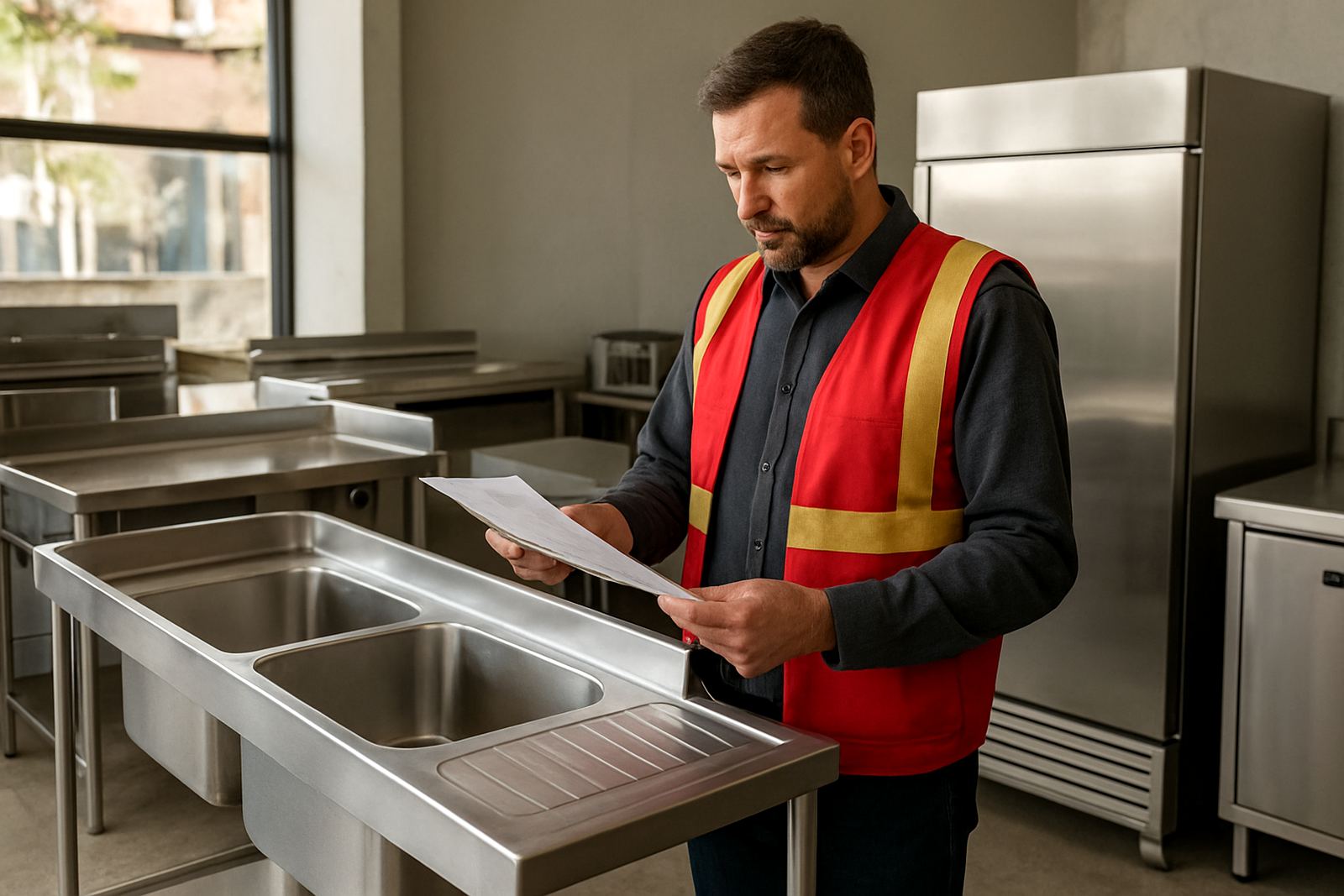
Typical points we cover include temperature control ranges, water fill levels, gas isolation, drain use, door sealing and correct loading. For stainless work tables and shelving, we show staff how to avoid dents, overloading and harsh cleaning that can stain the surface. For refrigeration we explain how much stock to allow around fans and vents, because stuffing the cabinet tight is a common mistake and it pushes up running costs. In some kitchens, a missing 2 minute routine every morning causes hours of trouble later, and that is exactly what training prevents.
- Hot equipment: startup order, heat control, oil care and safe shut-down
- Cold equipment: set points, stock loading, door seals and defrost checks
- Prep equipment: slicing, mixing, guarding and safe handling
- Ventilation: filter care, grease trays and airflow awareness
Service process, timing and team size
Most staff training jobs are arranged within a few working days, depending on how many people must attend and whether the equipment is already installed. A small team in Glen Anil or Ballito can often be trained in a single session, while a larger site with several shifts may need two visits so everyone gets proper hands-on time. We can also split the training into front line operators, cleaners and supervisors if that suits your roster.
As a guide, one session usually runs from 1.5 to 4 hours. For a full kitchen handover after installation, allow longer so we can cover the equipment and answer questions without rushing. If maintenance or commissioning is happening at the same time, we can combine the visit and save you time. Mandla Sibusiso Dlamini oversees service standards across the team, so the work stays practical and consistent from one site to the next.
- Small team refresher: about 1.5 to 2 hours
- New kitchen handover: 3 to 4 hours or longer
- Multi-shift sites: split sessions by roster
Pricing approach and what affects cost
We price training according to the size of the kitchen, the number of staff attending, the travel distance and whether the session is standalone or part of a larger project. A simple refresher for one site in Durban North will cost less than a full handover for a busy canteen with refrigeration, cooking and extraction equipment across several stations. If you need written notes or a follow-up visit after a few weeks, we can include that in the quote.
We keep pricing clear, with no hidden add-ons for normal planning time. If the equipment list is incomplete or the site needs extra time because staff are new to the machines, we tell you upfront. That helps with budgeting and avoids surprises on the day. We can also group training with preventive maintenance so the kitchen gets one co-ordinated visit instead of several callouts, which usually makes better financial sense for schools, hospitals and larger food service operations.
Maintenance intervals and refresher training
Training works best when it is reinforced at regular intervals. For busy commercial kitchens, we suggest a short refresher every 6 to 12 months, or sooner if you change menus, bring in new equipment or lose experienced staff. Coastal humidity around Durban and Umhlanga can also affect cleaning routines and refrigeration care, so sites near the coast often benefit from more frequent reminders.
As part of the service, we can show your team the simple checks that should happen daily, weekly and monthly. Daily checks usually cover temperatures, visual cleanliness and switch-off routines. Weekly checks can include filters, seals and drain points. Monthly checks may include deeper cleaning around motors, behind equipment and under benches where grease and dust collect. The idea is to catch small issues early before they turn into breakdowns or spoiled stock.
- Daily: temperatures, shut-down, cleaning and stock placement
- Weekly: filters, seals, visible wear and vent checks
- Monthly: deeper cleaning, inspection and fault reporting
Key facts
| Training format | On-site, practical demonstration and hands-on practice |
|---|---|
| Typical session length | 1.5 to 4 hours depending on kitchen size and staff count |
| Team coverage | Operators, supervisors, cleaners and shift leads |
| Equipment covered | Cooking, refrigeration, prep, extraction and stainless fit-out |
| Recommended refresher | Every 6 to 12 months, or after staff or equipment changes |
| Service area | Glen Anil, Durban North, Umhlanga, Pinetown, Ballito and Pietermaritzburg |