
What a deck oven does in a working kitchen
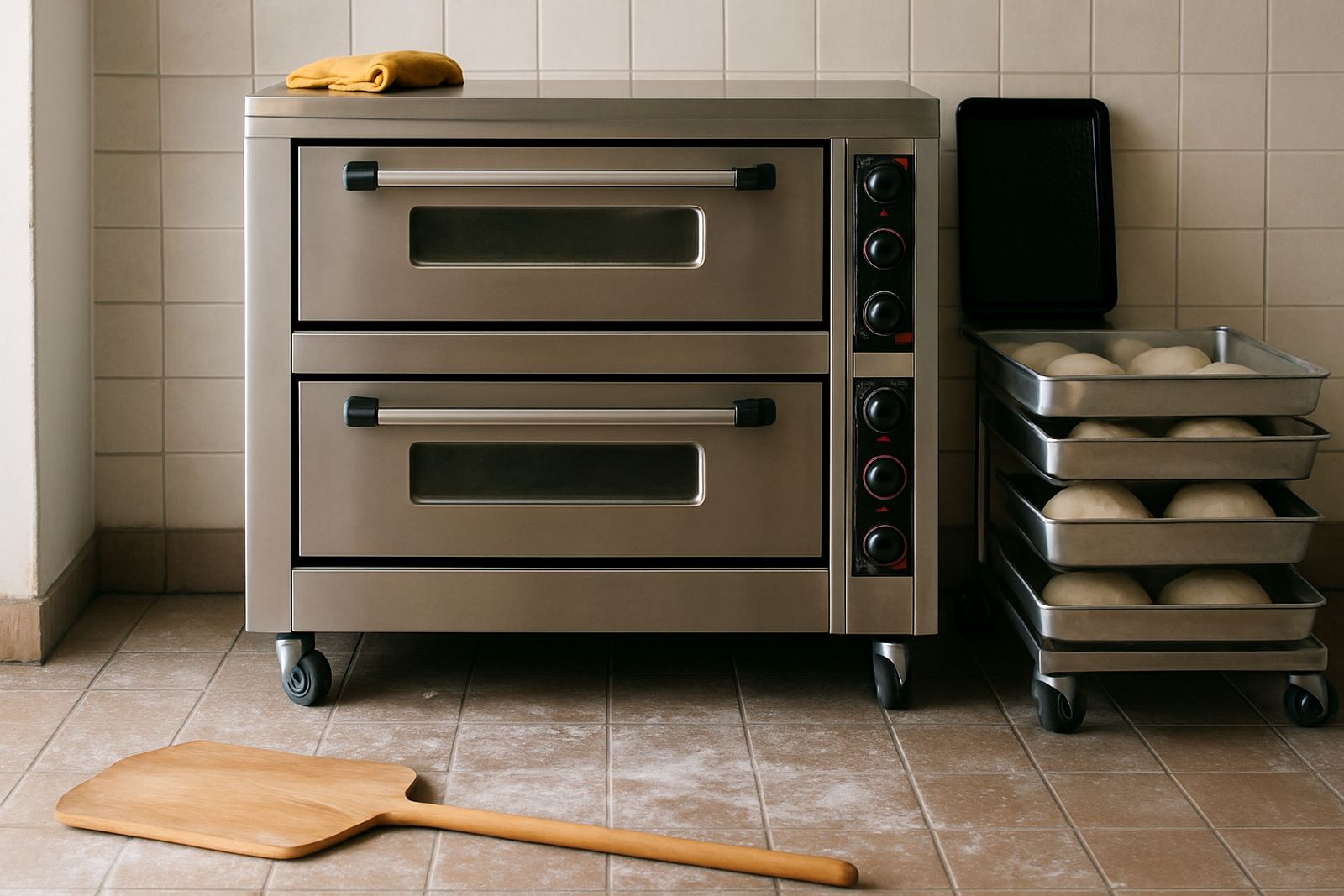
A deck oven gives you direct heat from a stone or steel baking surface, plus controlled top and bottom heat for even colour and bake. It is a good fit where product quality matters, whether you are turning out pizza by the hour, baking loaves, or running trays of pies, roast veg and pastries. The deck format also suits kitchens that want steady output without the fan-dried finish you get from some other oven types.
In a commercial setting, the oven has to recover heat quickly between loads and hold a steady temperature through service. That matters in Durban heat and humidity, and even more when load-shedding or voltage dips affect equipment. The right deck oven should give repeatable results, day after day, without needing constant tweaking from the operator.
- Stone decks suit pizza, flatbreads and artisan bread.
- Steel decks are useful for tray-bakes, rolls and mixed menus.
- Separate chambers let you run different temperatures at the same time.
- Front loading makes service faster where staff are moving in tight aisles.
Sizes, deck counts and heating options
Deck ovens come in single, double and multi-deck formats, with each chamber able to run independently on many models. The common choice is a 2-deck or 3-deck unit for restaurants and bakeries, while larger canteens, hotel kitchens and production bakeries may need a wider multi-deck arrangement. We also look at cavity height, internal depth and tray size so your pans fit properly without wasted space.
For heating, there are electric and gas options depending on what your site can support. Electric units are often preferred where the kitchen has stable supply and enough amperage available. Gas models can be a practical choice where you need lower running costs or have stronger gas infrastructure. In both cases, heat recovery and insulation make a big difference to operating cost, especially on long trading days.
- Typical chamber widths: 600 mm, 900 mm and 1200 mm.
- Common deck depth: 750 mm to 1200 mm, depending on product format.
- Stone decks are normally used for high bottom heat and crisp bases.
- Steel decks are a better fit where trays are moved in and out often.
Where deck ovens suit best in KZN kitchens
These ovens are used in pizza shops, restaurants, school and hospital kitchens, bakery outlets, hotels and contract catering operations. In Pietermaritzburg and Pinetown, we often see them paired with prep tables and proofing cabinets for bread production. In Umhlanga, Ballito and Durban North, they are commonly chosen for pizza and casual dining menus where service speed matters.
They also suit canteens that need baked items throughout the day, not only at one service. If your menu includes more than one baked product, a deck oven can be set up to handle mixed work without taking up the floor space of several separate machines. For coastal sites, stainless external panels and proper ventilation are worth specifying from the start, because salty air can shorten the life of cheaper finishes.
- Restaurants with pizza, flatbread or oven-finished mains.
- Bakeries and production kitchens making bread, rolls and tray bakes.
- Hospitals, schools and staff canteens with scheduled meal service.
- Hotels and guest houses needing dependable breakfast and dinner output.
Power, gas and installation details to plan early
Before ordering, we check your available electrical supply, gas line size and extraction arrangement. An electric deck oven may need a dedicated circuit, correct breaker sizing and cabling run by a competent electrician. Gas models need the correct pipe sizing, shut-off valves and compliance with local gas safety requirements. If the oven sits under an extractor or near other high-heat equipment, clearances and airflow must be planned properly.
Installation is not only about putting the oven in place. The floor should be level, access routes measured, and doorways checked before delivery. If the unit has multiple sections, we confirm how it will be broken down for handling and whether it will fit through tight passages. Our team in Glen Anil can handle the site survey, then plan the fit with the rest of the kitchen layout so there are no suprises on the day.
- Check available amperage, phase and breaker capacity for electric units.
- Check gas pressure, pipe diameter and isolation valves for gas units.
- Allow service access behind and above the oven for maintenance.
- Plan extraction and make-up air where heat build-up is a concern.
Care, cleaning and preventative servicing
Deck ovens last longer when operators clean them daily and keep an eye on heat performance. Crumbs, flour dust and spillages should be removed once the oven cools. Stone decks should not be hosed down or shocked with water while hot, as that can crack the surface. Steel decks should be wiped correctly and kept free of burnt residue that affects product colour. On busy sites, a simple cleaning routine at close of trade saves a lot of callouts later.
We can also assist with preventative maintenance and breakdown repairs. That includes checking thermostats, heating elements, seals, burners, ignition parts and door alignment where relevant. If your oven is baking unevenly, taking too long to recover or showing hot spots, it is usually better to deal with it early rather than pushing through another week of service. A small fault can turn into a full stoppage very quickly.
- Let the oven cool before cleaning the decks.
- Use dry brushing or the correct scraper for build-up.
- Inspect seals and hinges monthly.
- Book service before peak season, not after a breakdown.
What to confirm when you place the order
When we spec a deck oven, we look at output per hour, product size, baking style and the space you have available. It helps to know whether you are baking one product all day or running mixed batches through the shift. If you need a tray size that does not match a standard chamber, we will check the internal dimensions so you do not end up with trays sticking out or wasting baking area.
You should also confirm the finish, control type and any extras such as viewing windows, lights, steam injection, stands or proofing support. If the oven is going into a new kitchen, ask for the full dimension drawing so the builder and installer can work from the same information. That avoids costly changes late in the job, and keeps the install moving without delays.
- Product type and expected hourly output.
- Tray size, loaf size or pizza diameter.
- Power or gas supply available on site.
- Floor space, door widths and delivery route.
- Whether you need steam, stands or a matching prep area.
Key facts
| Product type | Stone and steel deck oven |
|---|---|
| Available configurations | Single, double and multi-deck |
| Heat source | Electric or gas, depending on site |
| Typical use | Pizza, bread, pies and tray-bakes |
| Installation area | Durban, Glen Anil, North Durban and KwaZulu-Natal |
| Support services | Survey, installation, commissioning and maintenance |