What a jacketed boiling pan does in a busy kitchen
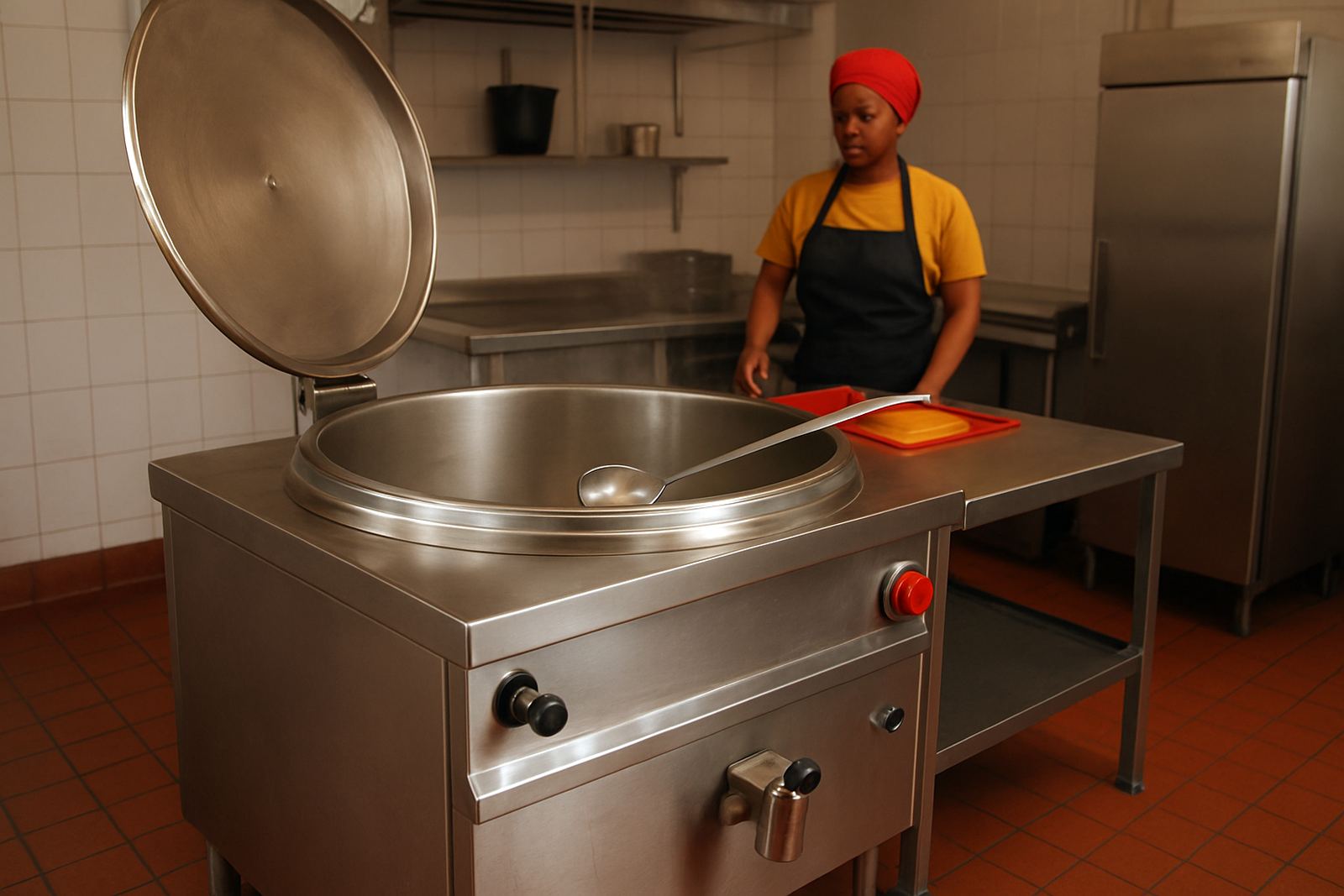
A boiling pan is a heavy-duty cooking vessel with a double skin, or jacket, around the bowl. Heat is transferred through that outer jacket instead of sitting directly under the food, which gives more even cooking and helps reduce scorching on thicker mixes. That matters when you are making soup, porridge, custard, sauces, stews or stock in large volumes and cannot keep stirring every minute.
For restaurants, hospital kitchens, school canteens and contract caterers, the biggest advantage is control. You can cook longer runs without burning the base, and you get a more consistent finish from batch to batch. In a kitchen where one person is preparing meals for 80 or 300 people, that consistency saves time and food.
These units are normally fitted as floor-standing equipment and can be supplied for electric or gas operation depending on the site. If your kitchen deals with wet prep every day, a boiling pan is often more practical than using a standard pot on a range, especially when the team needs to keep other cooking lines free.
Sizes and options that suit KZN food production
Boiling pans are usually selected by capacity and by the type of product being cooked. Smaller units suit satellite kitchens and snack bars, while larger bowls are better for institutional foodservice where the output is measured in tens of litres at a time. The right size depends on batch volume, menu cycle and floor space, not just the number on the plate.
- Compact units for tighter prep areas and smaller batch work
- Medium capacities for restaurants, guest houses and hotel kitchens
- Larger capacities for hospitals, factories, schools and central production kitchens
- Tilting bowl options for easier decanting and cleaning
- Thermostatic control for better temperature management
- Gas or electric heating depending on supply and load-shedding planning
We help match the pan to the kitchen layout, since a unit that is too large can block movement and a unit that is too small creates more batches than the team can handle. In Durban and coastal areas, stainless finishes and proper drainage around the installation area also make a difference over time because of moisture and salt in the air.
Where a boiling pan works best
Boiling pans suit kitchens that need regular bulk production with a repeatable process. They are common in hospital kitchens where soups and soft foods need to be prepared in safe, controlled quantities. They are also useful in canteens, old age homes, universities, staff feeding areas and central kitchens supplying more than one outlet.
In restaurant settings, a boiling pan can be the workhorse for soup specials, sauces, fillings and pre-cook items. In Pietermaritzburg and inland sites, the same equipment is often chosen for catering operations that travel between venues and need dependable prep before service. On the coast, kitchens in Umhlanga, Durban North and Ballito often want equipment that copes with daily washdown and the humid environment without constant attention.
If your menu includes thick mixes or long simmer times, this unit helps keep the stove line open for frying, grilling and finishing. It also makes staff training easier because the cooking process is clearer and more controlled than working across multiple smaller pots.
Installation, services and utility requirements
Installation needs to be planned properly, especially where the kitchen is part of a new build or refurbishment. Our team checks the floor space, access routes, service points and nearby equipment before installation so the pan lands where it should and the operator can work safely. That includes making allowance for door swings, trolley movement and cleaning access behind the unit.
Power or gas requirements depend on the model selected. Electric units need the correct supply, isolator and cable sizing, while gas models need compliant gas pipe work, ventilation and safe cylinder or bulk gas positioning. If the kitchen also has extraction work or other heat-producing equipment, we look at the full picture rather than only the boiling pan on its own. That avoids later issues with heat build-up and poor workflow.
- Site survey before supply where needed
- Confirmation of electrical load or gas feed
- Level installation on suitable flooring
- Clearances for cleaning, service and operator movement
- Commissioning and first-run checks after fitment
For Glen Anil, Durban and surrounding areas, we can coordinate site work with the rest of the kitchen project so the boiling pan arrives at the right stage and does not get damaged during other trades. That is a small thing, but on a live site it matters a lot.
Care, cleaning and servicing that keeps the pan working
A boiling pan needs routine cleaning and scheduled checks to stay in good shape. The bowl should be washed after use, with particular care around the rim, drain points and controls. Food build-up on thick sauces or starches can harden quickly, so cleaning while the unit is still warm but safe is usually easier than leaving it overnight. Staff should also avoid abrasive pads on stainless surfaces where they are not needed.
On the service side, it pays to check thermostats, valves, seals and any tilting mechanism at set intervals. In KwaZulu-Natal, where kitchens often run long hours and humidity can affect fittings, preventive maintenance helps avoid sudden breakdowns during service. Our service team can support planned upkeep, fault finding and repairs when a unit is not heating evenly, leaking, or not holding temperature properly.
If you have load-shedding or generator changeover on site, the boiling pan should be included in the power plan rather than treated as an afterthought. Voltage drops and poor changeover practices can shorten component life, so it is worth asking about that before installation rather than sorting it out later.
What to check before you order
The best order is the one matched to the menu, the kitchen and the utility supply. Before you place an order, check the daily batch size, whether you need direct heat or a jacketed system, and whether the team must tip the pan for decanting. It also helps to measure the route into the kitchen because a large floor-standing unit may need more access than expected.
- Required capacity in litres per batch
- Electric supply or gas availability on site
- Floor space and access width
- Whether tilting is needed for serving or transfer
- Drainage, water access and cleaning plan
- Any local compliance points for gas, electrics or ventilation
If you are unsure which size or setup is suitable, we can assess the site, specify the equipment and help plan the installation from the start. That is often the easiest way to avoid buying a unit that looks right on paper but does not suit the way the kitchen actually works.
Send a message through our contact form if you need a boiling pan specified for a new kitchen, upgrade or replacement in Durban or anywhere in KwaZulu-Natal.
Key facts
| Product type | Jacketed boiling pan for bulk cooking |
|---|---|
| Typical use | Soups, sauces, starches, stews and institutional batch prep |
| Capacity range | Sized to suit small kitchens through to large central production |
| Heat source | Electric or gas, depending on site requirements |
| Construction | Commercial stainless steel body and bowl |
| Installation | Floor-standing unit with site-specific utility and clearance needs |