What a hot holding cabinet does in a working kitchen
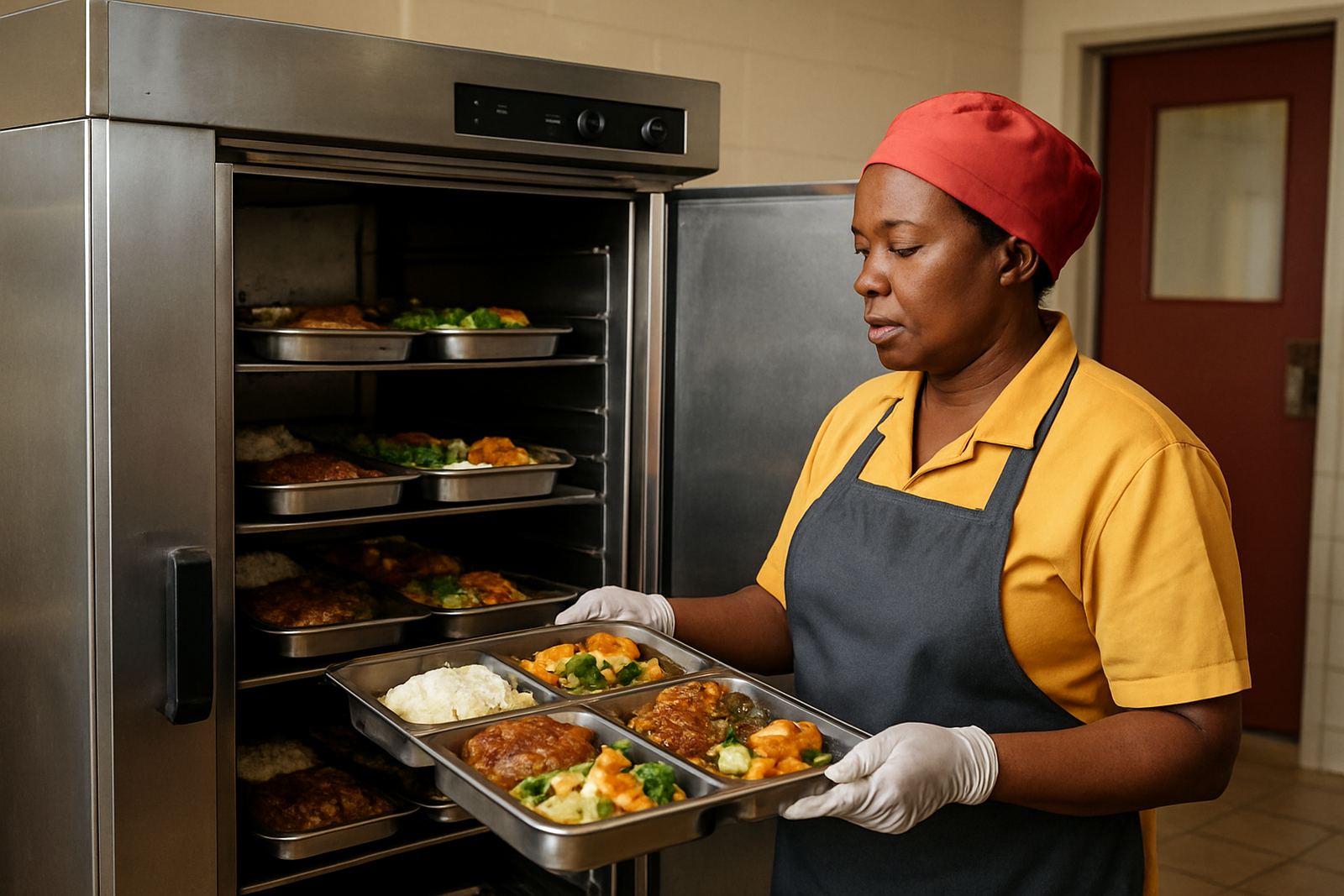
A hot holding cabinet is a heated enclosure used to hold food after cooking and before service. In a restaurant, hospital ward kitchen, school canteen or contract catering line, it bridges the gap between the hotplate, the pass and the table. The aim is simple: keep food warm, moist enough and safe until it is sent out.
These cabinets are not for cooking from raw. They are for holding prepared food at a steady temperature, usually with a fan assisted or static heat setup, depending on the model. For plated meals, the unit helps prevent sauce separation and cold centres. For bakery use, it keeps pies, rolls and savouries at a steady ready-to-serve heat without drying them out too quickly.
In Durban and along the coast, the cabinet also needs to cope with humidity and frequent opening during service. That means solid door seals, good insulation and reliable thermostat control matter. If the cabinet is being used in a pass line, the front of house team must be able to take trays or plates quickly without losing heat every few minutes.
Sizes, door styles and holding options
Hot holding cabinets are supplied in a few practical sizes, from compact single-door units for a small kitchen to larger multi-shelf cabinets for canteens and healthcare facilities. Most kitchens choose the size around tray count, plate count, and the space available on the service side. A 600 mm or 900 mm wide unit suits tighter prep areas, while larger double-door cabinets are better for higher output kitchens.
Common options include solid doors, glass doors for easy viewing, adjustable shelves and mobile castors. Some units are made for full-size pans and trays, while others are set up for plates or bakery trays. Internal shelf spacing matters more than people think, because a tray of plated meals needs enough clearance for steam to move without knocking the lids or covers.
- Single or double door layouts for different output levels
- Fixed or adjustable shelving for plates, trays or bakery pans
- Castors for mobile service or fixed legs for stable pass-line use
- Mechanical or digital temperature controls
- Solid stainless steel construction for daily cleaning
We also look at how the unit is loaded. If staff use it for plated meals, shelf height and tray access are different to a bakery operation. A good spec avoids wasted space and stops people forcing in trays that do not sit properly.
Where hot holding cabinets fit best
These cabinets suit any operation that needs food held safely between cooking and serving. In restaurants, they work well beside a hot pass or service counter. In hospitals, they support controlled meal dispatch from production kitchens to wards. In school and factory canteens, they keep meal service moving during peak break periods where the line must not stop.
They are also useful for bakeries, deli counters and hotel banqueting rooms. In a buffet setting, the cabinet helps maintain product temperature when the kitchen is staging the next tray. In a plated service line, it keeps portions ready for dispatch during a rush. For Pietermaritzburg and inland sites, the cabinet often sits in a drier environment, so the focus shifts more to insulation and power stability than coastal corrosion.
For busy kitchens in Umhlanga, Ballito or Durban North, the cabinet should be placed close to the pass, but not where staff block airflow or swing doors into it. If the unit is too far from the service point, food quality drops while it waits. If it is too close to the cookline, the heat load on the room climbs and staff comfort suffers.
Installation, power and gas considerations
Most hot holding cabinets are electrically heated and need a suitable dedicated circuit with isolator protection. Power draw depends on size and whether the unit uses fan heat or static heat. Small units may run on standard single-phase supply, while larger cabinets may need a heavier circuit. Your site survey should confirm the available supply before ordering, because the wrong connection can lead to nuisance tripping during service.
Where a gas-heated cabinet is chosen, the kitchen must allow for proper gas regulation, safe routing and correct positioning under local safety rules. That includes ventilation, safe distances from other heat sources and access for maintenance. In some sites, especially older canteens and school kitchens, the electrical board or gas point is not where the new line is planned, so the installation needs to be worked out early.
- Check voltage and phase before ordering
- Allow a service gap at the rear and sides
- Confirm floor loading if the cabinet is mobile and fully stacked
- Keep the cabinet away from splash zones and sink overspray
For sites in coastal areas like Glen Anil, Umhlanga and Ballito, we also look at the environment around the unit. Salt air and repeated wiping with strong cleaners can shorten the life of exposed fittings, so stainless finish, good seals and correct placement are worth sorting from the start.
Cleaning, care and routine servicing
A hot holding cabinet will last longer if it is cleaned daily and checked regularly. Food spills must not be left to bake onto shelves, door seals or internal corners. The unit should be switched off and allowed to cool before wiping, then dried properly so moisture does not sit inside the cabinet overnight. On busy sites, staff sometimes rush this step and that is when problems start.
Routine care includes checking thermostats, door hinges, pilot lights where fitted, fans, and the condition of seals. If the cabinet is mobile, castors must be kept free of flour, crumbs and grease. On coastal jobs, we also advise watching for pitting or staining around handles and hinges if cleaning chemicals are too strong.
Planned servicing is useful for hospitals, canteens and catering sites that cannot afford service interruptions. A quick preventative visit can pick up a failing heater, loose control knob or worn seal before it becomes a breakdown. That keeps the cabinet in service and avoids food being held in the wrong place during a lunch rush.
What to confirm before you place the order
Before ordering, it helps to know exactly how the cabinet will be used. A unit for plated meals is not the same as one for bakery trays, and a pass-line cabinet must suit the speed of your service. The right information up front saves time later and stops expensive changes after delivery.
- What food is being held: plated meals, trays, bakery goods or mixed use
- How many portions or trays need to fit at one time
- Whether the unit must be mobile, fixed or built into a service counter
- Available power supply and position of the electrical point
- Whether your site needs a gas option, extractor coordination or special ventilation
- The space available in millimetres, including door swing and access paths
Our team in Glen Anil works with kitchens across Durban, Pinetown, Ballito, Pietermaritzburg and surrounding areas. We can assist with layout, specification, site checks, installation and commissioning so the cabinet suits the line from day one. If the kitchen is already operating, we can plan the changeover so service disruption is kept low.
Key facts
| Typical width options | 600 mm, 900 mm, 1200 mm and larger custom sizes |
|---|---|
| Construction | Stainless steel cabinet with insulated panels and sealed doors |
| Temperature range | Approx. 30 C to 90 C holding range, model dependent |
| Power supply | Single-phase or three-phase electric, gas options available on selected models |
| Loading style | Shelves for plates, trays or bakery pans, depending on configuration |
| Installation needs | Level floor, service access, dedicated supply and clear ventilation space |