What a tilting pan does in a working kitchen
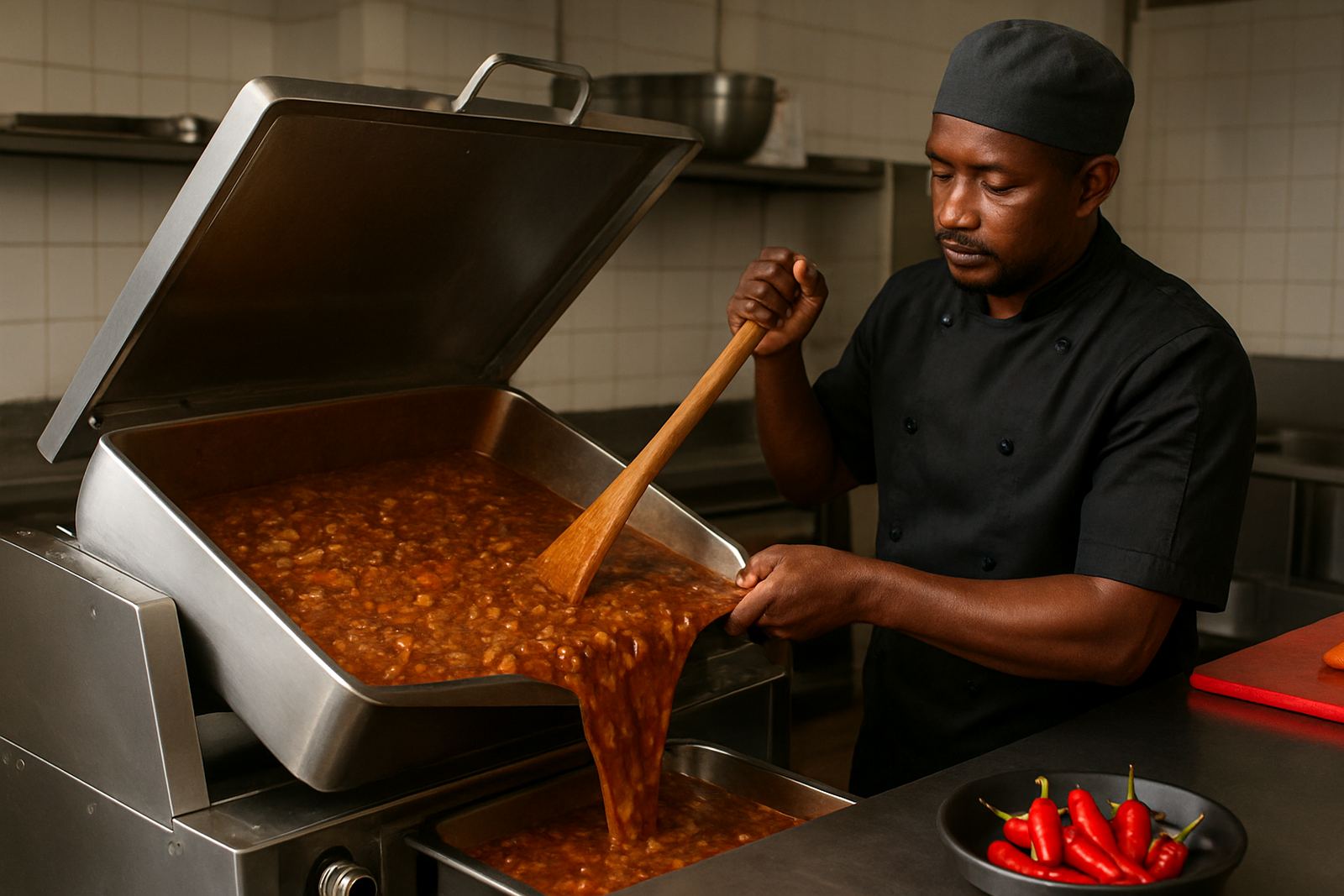
A tilting pan, often called a tilting bratt pan, is a large heated pan mounted on a frame that raises at the front for safe decanting. It is used for bulk frying mince, browning meat, making curry bases, cooking stews, reducing sauces and preparing large batches of soups or vegetables. In school canteens, hospital kitchens and restaurant prep areas, it cuts down on pot handling and keeps production moving during lunch service.
Because the pan is deep and the heat is spread across a wide base, you get more even cooking than with a few small pots on a stove. That matters when you are cooking 30 to 100 litres at a time and need the same finish from batch to batch. The tilting action also helps with draining liquid and transferring food without heavy lifting.
Most units are built in stainless steel for the pan, splash zones and frame, which is important in Durban where humidity and salt air can be hard on mild steel finishes. On a proper install, the unit becomes part of the cook line and handles everyday use, not just special runs.
Sizes, heating options and useful extras
Tilting pans are usually selected by pan capacity, heating type and control style. Smaller units are handy for training kitchens and medium food preparation rooms, while larger pans are better for hospitals, contract caterers and central kitchens where volume is consistent. Common capacities range from about 60 litres up to 150 litres, with custom sizing available for planned kitchen layouts.
Heating can be electric or gas, depending on the site supply and usage patterns. Electric models suit sites with controlled power management and a fixed kitchen layout. Gas models are useful where cooking loads are high or where the kitchen wants faster heat recovery and a lower draw during load-shedding back-up planning. Some units have manual tilting, others use a geared or powered tilt, and the control panel may include thermostatic control and safety cut-outs.
- Capacity options for small, medium and high-volume kitchens
- Electric, gas or site-specific heating configurations
- Manual or powered tilt for safe emptying
- Temperature control for frying, simmering and braising
- Optional lids, basket inserts and drain accessories
Where a tilting pan suits best in KwaZulu-Natal
This equipment is a strong fit for kitchens that prepare food in bulk and need consistent output across long service windows. In Durban and the surrounding areas it is commonly used in hospitals, retirement kitchens, school feeding schemes, canteens, hotels, butcheries with food prep areas and restaurants doing sauces or batch cooking. It is also useful in Pietermaritzburg and inland sites where winter service can be heavier and hot food turnover is steady.
For coastal kitchens in Umhlanga, Ballito and Durban North, the main benefit is reducing the number of separate cooking points that have to be maintained. One pan can replace several stock pots and reduce clutter around the cook line. For Pinetown and Glen Anil operations, it can be positioned with prep tables and extraction to form a practical bulk-cook station.
It suits any site that needs control, repeatability and safe handling of heavy product. If staff are turning out gravies, mince fillings or braised meat every day, the time saving is noticeable. It also helps when a site has limited gas bottle storage or a fixed electrical load that needs to be planned carefully.
Installation, ventilation and power or gas needs
Installation should be planned with the kitchen layout, extraction and service access in mind. Tilting pans give off heat and moisture, so they should sit under suitable extraction with enough canopy coverage and clearance for steam release. If the unit is going into a hospital or institutional kitchen, the layout should also allow cleaning around the base and access for maintenance without shutting down the whole line.
Electric units need a suitable supply, isolator and cable route, with load calculations done before ordering. On sites that already struggle during load shedding, it helps to plan backup use around the full kitchen profile rather than just the pan itself. Gas units need safe cylinder or reticulation planning, pressure regulation and compliance with local safety rules. Either way, the installation should be completed by a team that understands commercial kitchen services, not general building work.
- Check the available floor space and turning clearance for the tilt action
- Confirm extraction coverage and heat release above the pan
- Allow for electrical load, isolator position and cable route
- Confirm gas supply, pressure and shut-off points if the unit is gas-fired
- Plan cleaning access, drainage and service access from day one
Care, cleaning and servicing that keeps it working
A tilting pan lasts well when it is cleaned properly at the end of each shift and serviced before small faults become downtime. Food residues should be removed while the pan is still warm, then the surface washed with approved cleaning chemicals and soft pads that will not damage the steel. Keep water out of electrical controls and do not force the tilt mechanism if food has hardened around the pivot or front lip.
For Durban kitchens, corrosion checks matter. Coastal humidity can attack fittings, hinges and exposed fixings if cleaning is neglected. Service checks should cover thermostat accuracy, heating elements or burners, tilt gears, safety switches and door or lid seals where fitted. Preventive maintenance is cheaper than dealing with a failed unit on a busy Friday lunch run, especially where one pan carries a big share of production.
Staff training is part of care too. Operators need to know safe fill levels, how to tilt gradually, how to decant heavy liquids without splashing, and how to isolate the unit before cleaning. A simple routine written into the kitchen close-down list usually keeps things in order.
What to check before you place an order
Before ordering, it helps to match the pan to the menu and the real daily volume, not just the occasional peak. A unit that is too small will slow service, while one that is too large can waste energy and take up valuable floor area. The best choice depends on the type of food, frequency of use and whether the kitchen is starting from scratch or adding capacity to an existing line.
We usually look at the cooking style, power or gas supply, available floor space and the staff workflow around the unit. It is also worth confirming whether the site needs installation, commissioning and handover training at the same time. In many KZN projects, the final decision also comes down to service access and the ability to keep the pan working during municipal water interruptions or power cuts.
- Daily batch size in litres or kilograms
- Electric or gas supply available on site
- Required pan depth and total footprint
- Whether manual or powered tilt is preferred
- Cleaning method and maintenance access
- Any extraction or ventilation upgrades needed
If you are fitting out a new kitchen in Glen Anil, Durban North, Umhlanga, Pinetown, Ballito or Pietermaritzburg, we can help size the unit and plan the install around the rest of the cook line. That includes kitchen layouts, equipment specification, site surveys, extractor planning, stainless fabrication, installation, commissioning, preventive maintenance, breakdown repairs and staff training.
Key facts
| Product type | Tilting bratt pan for bulk cooking and decanting |
|---|---|
| Typical capacity range | About 60 litres to 150 litres, depending on model |
| Heating options | Electric or gas |
| Tilt mechanism | Manual, geared or powered tilt |
| Body material | Stainless steel pan and external finish |
| Main uses | Frying, braising, sauce production, soups and stews |