
Food-safe shelving for busy kitchens and stores
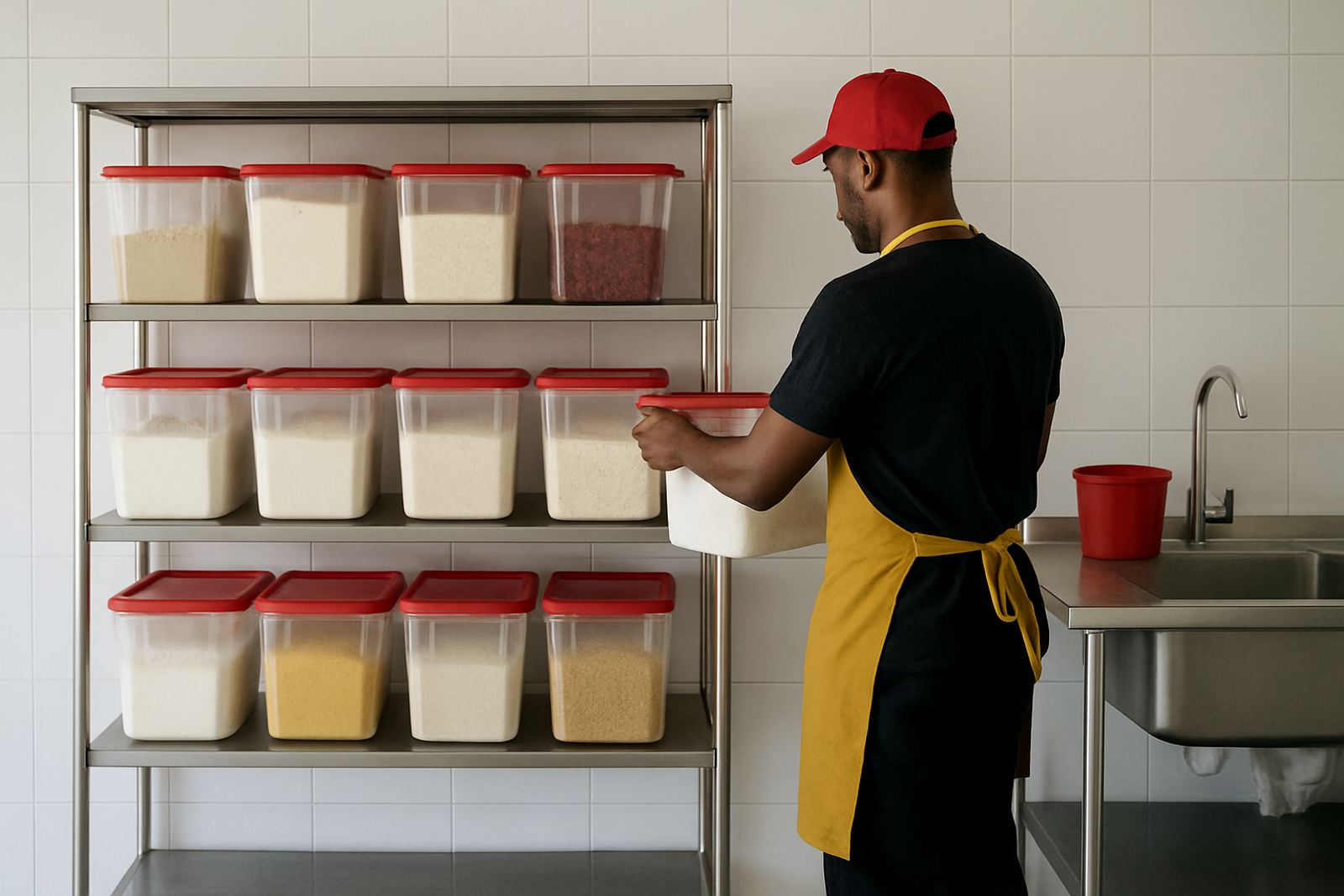
Stainless shelving is used wherever food, packaging or clean utensils need to be stored off the floor and easy to reach. In restaurants, hospitals, school kitchens and canteens, it helps keep ingredients sorted, reduces clutter and makes cleaning faster at the end of a shift. It also stands up well in Durban conditions, where coastal humidity can shorten the life of painted steel and chipboard units.
We supply shelving systems for dry stores, potwash areas, cold rooms and general prep rooms. The right unit depends on the load, the amount of space available and how often the shelves will be washed down. For a store room in Pinetown you may need fixed wall shelving for cartons and tins, while a coastal kitchen in Umhlanga may need open freestanding units that dry quickly after cleaning.
Common sizes and shelving options
Most clients want shelving that uses space properly without blocking movement between work zones. We measure the area and recommend a setup that suits the room height, door swing and cleaning access. Standard options include plain top and bottom shelves, intermediate shelves, corner units and units with adjustable feet for uneven floors.
- Widths often start at 600 mm and go up to 1800 mm per bay.
- Depths are commonly 300 mm, 450 mm, 600 mm and 750 mm.
- Heights are usually 1500 mm, 1800 mm or 2100 mm.
- Solid shelves suit dry goods and small containers.
- Perforated or slotted shelves help airflow in cold rooms and damp areas.
- Wall mounted units are useful where floor space is tight.
We also supply custom sizes for awkward corners, long narrow stores and back-of-house areas with columns or drains. If your kitchen has a low ceiling or existing extractor ducting, the shelving can be set to suit that layout instead of forcing a standard size into place.
Where stainless shelving works best
Stainless shelving is practical in many food-service spaces because it is simple to wipe down and does not absorb smells or moisture like timber products can. It is a good fit for dry stores, cold rooms, bakeries, wash-up areas and servery zones. In hospitals and care facilities, it helps keep stock off the floor and makes stock rotation easier for staff.
- Restaurants and takeaways
- School, hotel and canteen kitchens
- Hospital stores and sculleries
- Bakeries and sandwich prep areas
- Cold rooms and freezer stores
- Back-of-house packing areas
For coastal sites from Durban North to Ballito, stainless shelving is often preferred because it copes better with salt air and repeated washing. If the room is small, we can design shelving around service paths so staff can still move bins, trays and trolleys without bumping corners.
Installation, fixing and site checks
Good shelving starts with a proper site check. We look at floor levels, wall condition, room clearances and how the space will be used during service. Freestanding shelving needs a flat surface and enough clearance for cleaning behind and underneath. Wall fixed units need solid fixing points, especially on older blockwork or drywall that may not carry heavy loads.
Some kitchens only need a simple supply and fit. Others need shelving tied in with a full store layout, cold room fit-out or kitchen installation. We can coordinate the shelving with the rest of the project so the room works as one. If the site is still under construction, it helps to confirm final wall finishes, floor falls and door positions before manufacturing starts, otherwise a shelf run can end up 20 mm short or sitting over a drain cover.
Stainless shelving does not need gas or electrical supply. That makes it useful during load-shedding and in areas where power supply is limited, because stock can still be stored safely while cooking equipment is switched off. Where shelving is fitted in a cold room, we check the airflow around the evaporator and leave enough gap for circulation.
Care, cleaning and servicing over time
Stainless shelving is low maintenance, but it still needs the right cleaning method. Use warm water, a mild detergent and a soft cloth or nylon pad. Avoid harsh scourers and strong chlorine where possible, because repeated misuse can mark the surface over time. In busy kitchens, regular cleaning prevents grease build-up and keeps the shelving easy to wipe down at handover checks.
Our service team can inspect loose brackets, bent uprights, damaged foot caps and any shelves that have taken more weight than they were designed for. In high-use sites, annual checks are a sensible precaution, especially where shelving carries catering tins, cleaning chemicals or chilled stock. If a unit is damaged, we can usually replace the affected section without changing the full run.
What to check before you order
When ordering stainless shelving, it helps to have a few details ready so the unit fits the room and the workload. The wrong depth can block a walkway, while shelves set too close together may waste valuable vertical space. We usually ask for room measurements, floor type and what will be stored on each shelf.
- Overall length, depth and ceiling height
- Whether the unit is for wall mounting or floor standing
- Weight of stock and whether bins or crates will be used
- Dry store, cold room or wash area use
- Any corners, pillars, drains or doors to work around
- Preferred finish and whether adjustable feet are needed
If you are fitting out a new kitchen in Glen Anil, refurbishing a store in Pietermaritzburg or expanding a canteen in Umhlanga, send us the measurements and a simple sketch. We can then recommend a shelving layout that suits day-to-day use, cleaning and future stock changes.
Key facts
| Material | Food-grade stainless steel |
|---|---|
| Common widths | 600 mm to 1800 mm per bay |
| Common depths | 300 mm, 450 mm, 600 mm, 750 mm |
| Common heights | 1500 mm, 1800 mm, 2100 mm |
| Shelf types | Solid, perforated, adjustable and corner units |
| Typical use | Dry stores, cold rooms, prep areas and sculleries |