What an extractor canopy does in a working kitchen
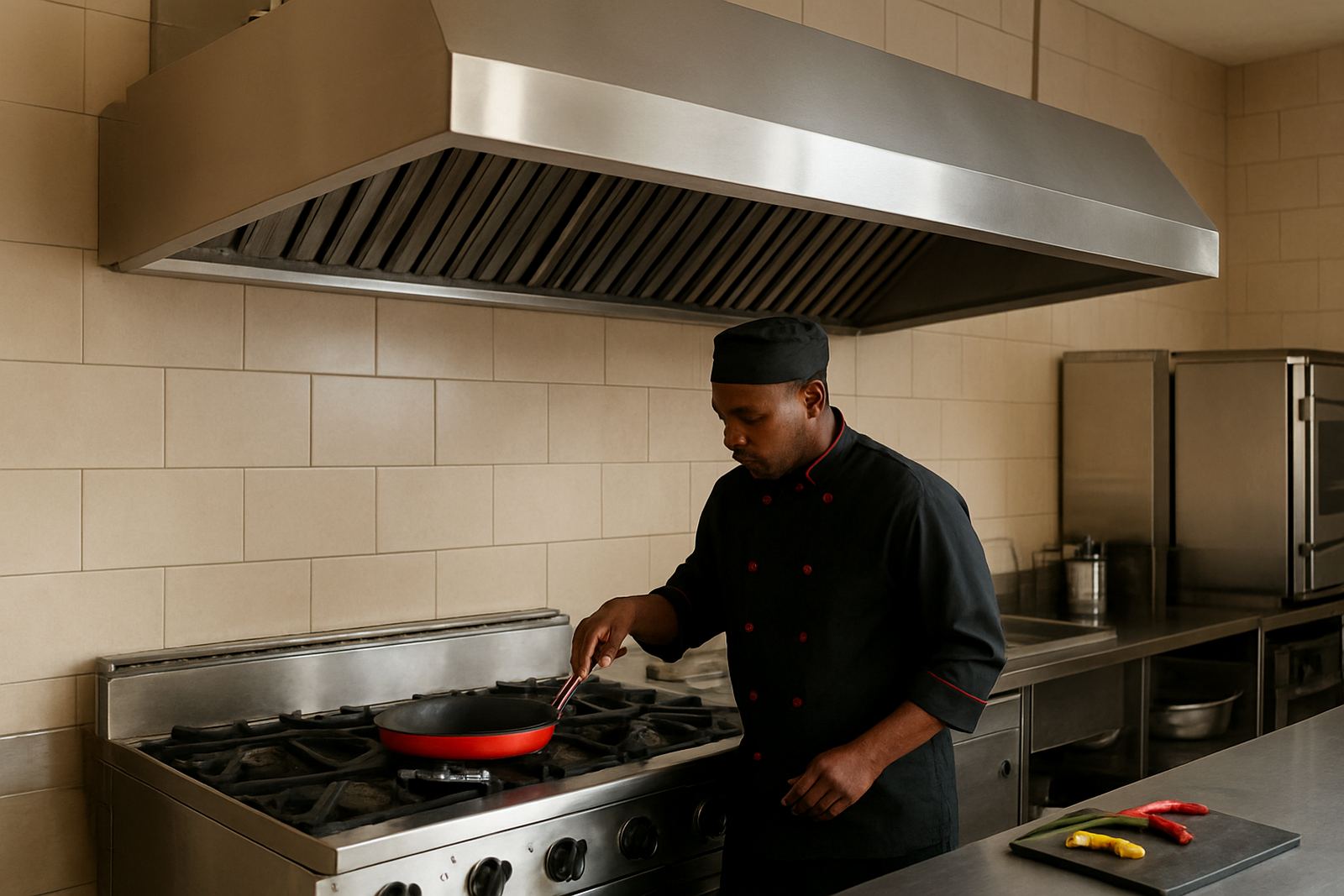
An extractor canopy sits above cooking equipment and captures airborne grease, steam and odours before they spread through the room. In a busy kitchen, that matters for staff comfort, fire safety and general cleanliness. It also helps protect ceilings, lights and walls from grease build-up, which is a common issue in Durban kitchens where humidity can make residue stick even faster.
We supply extractor canopies for gas and electric cook lines, combi ovens, griddles, chargrills, fryers and other high-heat stations. The canopy size and airflow have to match the equipment underneath it. Too small and fumes escape at the front. Too weak and the system struggles during peak service. For that reason, each canopy should be specified to suit the actual line-up, not guessed from a rough room size.
Our team in Glen Anil works with new kitchen layouts and upgrades to older sites where the canopy position, duct route and make-up air need attention. That includes premises in Durban North, Umhlanga, Pinetown, Ballito and Pietermaritzburg, where we often deal with building restrictions, roof access and limited service space.
Sizes, hood styles and custom options
Extractor canopies are normally made in stainless steel with a grease trough, removable filters and a duct connection to suit the fan and flue run. For most commercial kitchens, the canopy depth and overhang are key. A good rule is that it should extend beyond the cooking equipment on all open sides so vapours are captured properly.
We can supply standard and made-to-measure canopies, including wall-mounted and island types. Island canopies are used where cooking equipment is arranged in the middle of the room, while wall-mounted units suit line kitchens against a back wall. Larger sites may need multiple canopies, especially where fryer stations are separated from ovens or where the kitchen serves different meal prep areas.
- Typical widths: 1200 mm, 1500 mm, 1800 mm, 2400 mm, 3000 mm and larger to suit the line
- Typical depths: 900 mm, 1000 mm, 1100 mm and 1200 mm
- Material: 1.2 mm or 1.5 mm stainless steel, depending on duty
- Filters: baffle filters or similar grease-catching inserts, removable for cleaning
- Extras: lights, grease cup, access panels, duct collars and fire suppression ready openings
If the kitchen has unusual ceiling heights, bulkheads or exposed services, we can adjust the canopy build and the duct entry point. That saves time on site and avoids awkward patch work later.
Where extractor canopies are a better fit
Extractor canopies are used anywhere cooking produces heat, moisture or airborne grease. In restaurants, they keep the pass and prep areas more workable during service. In hospitals and care kitchens, they help manage odours and temperature where food is prepared throughout the day. In canteens and staff feeding areas, they are often needed for fryers, hotplates and bulk cooking lines that run for long shifts.
They are also useful in bakeries, butcher kitchens, school kitchens and takeaway prep areas, especially where the municipality or landlord requires proper extraction before occupancy. In coastal areas like Durban and Ballito, good extraction also helps reduce condensation around stainless surfaces and ceiling fittings. That can make a real difference to maintenance costs over time.
- Restaurants and takeaways with fryers, chargrills or combi ovens
- Hospitals, clinics and institutional kitchens with long operating hours
- Canteens, schools and training kitchens with bulk meal production
- Hotels, lodges and banquet kitchens with mixed cooking zones
- Production kitchens where separate prep and cook areas need controlled airflow
Installation, ducting and services needed
Correct installation is as important as the canopy itself. The hood must be fixed level and at the right height above the appliances, with enough clearance for safe operation and cleaning access. Ducting should be planned early so the route is short, practical and compliant with the building layout. Where possible, we keep duct runs straight and serviceable, since long bends and poor routing can reduce extraction performance.
Extractor systems may need electrical supply for lights, fan controls and interlocks. If the kitchen uses gas appliances, extraction planning should also consider gas shut-off positions, appliance spacing and fire safety requirements. On sites with load shedding, we often recommend that the extraction and critical cook line equipment are linked to the backup power plan so the kitchen does not stall during trading hours.
Some jobs need make-up air to prevent the kitchen from pulling in hot air from corridors or starving the appliances of oxygen. That is especially important in tight rooms or sealed buildings. Our projects team surveys the site, checks roof access, confirms wall openings and works with the kitchen layout before fabrication starts. That reduces on-site changes and speeds up installation.
Cleaning, servicing and long-term upkeep
A canopy only works properly if it is kept clean. Grease filters need regular washing, drip trays need emptying and the ducting should be inspected for build-up. In busy kitchens, we recommend a planned maintenance schedule rather than waiting until suction drops or smoke starts hanging in the room. That is usually when the grease has already moved further into the system.
Stainless steel canopies are durable, but they still need proper care. Use suitable degreasers, avoid harsh scouring pads and make sure the filters are dry before refitting. In humid coastal conditions, standing moisture and trapped grease can lead to staining or corrosion on lower quality fittings, so routine cleaning matters. We can assist with preventive maintenance, breakdown repairs and staff training so the kitchen team knows what to check each day.
- Clean filters weekly or more often in high-use kitchens
- Check lights, switches and fan controls during service rounds
- Inspect duct joints and access panels for grease leakage
- Review canopy performance after any equipment change or kitchen refit
What to confirm before you place an order
Before ordering an extractor canopy, it helps to have the cooking equipment list, room dimensions and ceiling height ready. We also need to know whether the canopy will sit against a wall or above an island line, and whether there are beams, sprinklers or air-conditioning vents in the way. If you are replacing an old hood, send the current measurements, photos and a sketch of the existing duct route.
It is also useful to confirm the number and type of appliances beneath the hood, whether gas or electric equipment is being used, and if the site already has a fan, ducting or fire suppression setup. If the kitchen is in a hospital, school or municipal facility, there may be specific sign-off requirements to factor in before installation begins.
- Exact width, depth and height available above the cooking line
- Equipment list with appliance sizes and heat output
- Wall mounted or island mounted canopy position
- Duct exit point, roof access and any ceiling obstructions
- Electrical points for lights, fan controls and alarms
- Cleaning access and maintenance plan after installation
Our team can handle the layout, specification, fabrication, installation and commissioning from one point, which helps keep the job tidy and properly coordinated.
Key facts
| Product type | Commercial extractor canopy for cooking lines |
|---|---|
| Construction | Stainless steel canopy with grease filters and access panel |
| Typical sizes | 1200 mm to 3000 mm wide, custom sizes available |
| Mounting | Wall mounted or island mounted |
| Applications | Restaurants, hospitals, canteens, hotels and production kitchens |
| Service support | Installation, commissioning, maintenance and repairs |