
What a Flat Top Grill Does in a Busy Kitchen
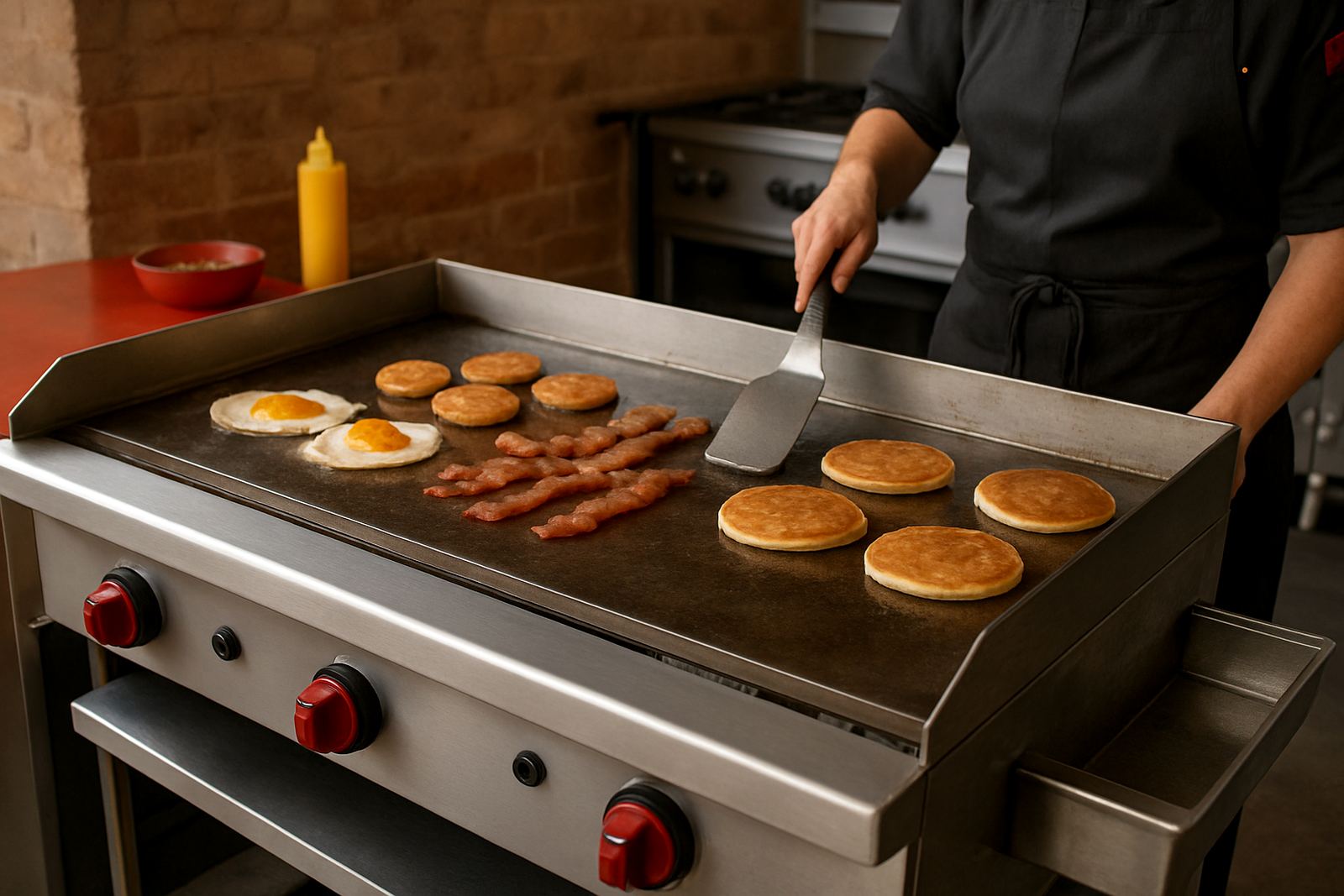
A flat top grill is a smooth plate cooking unit used for direct contact heat. Food sits on the steel plate, so you get even browning, quick turnaround and fewer flare ups than an open flame setup. It is a practical choice for breakfast service, burger orders, toasted sandwiches, grilled chicken portions and hot holding during rush periods.
In a restaurant or institutional kitchen, the real value is control. You can section off the plate for eggs on one side and proteins on the other, with different heat zones if the unit has separate controls. That helps staff keep production moving without wasting space or energy. For Durban kitchens, a flat top grill is also easier to manage in humid conditions than equipment that needs constant open heat adjustment and frequent relighting.
- Even surface heat for consistent browning
- Suitable for breakfast, lunch and batch service
- Good for portion control and fast turnaround
- Available in gas or electric versions
Sizes, Plate Types and Output Options
Flat top grills are commonly supplied in benchtop or floor standing formats, with plate widths to suit small cafes through to full production kitchens. Typical widths are 600 mm, 900 mm, 1200 mm and 1500 mm, with working depths around 700 mm to 800 mm depending on the frame and splashback. Some models are single zone, while others give you two or three independent heat zones for better control across the plate.
Plate thickness matters. Thicker plates hold heat better, which helps during continuous service when the chef is loading burger patties or eggs one after another. Lighter plates heat up faster but may cool quicker when overloaded. For heavy breakfast trade or canteens, a thicker plate usually makes more sense. We also look at whether the plate is mild steel or chrome plated, since that affects cleaning, heat response and cooking feel.
- Benchtop or floor standing models
- Widths from 600 mm up to 1500 mm
- Single, dual or triple heat zones
- Optional splashbacks and grease management trays
Where a Flat Top Grill Suits Best
These units suit restaurants, hotel breakfast buffets, takeaway counters, hospital kitchens, school kitchens and staff canteens. If your menu needs fast plated service or repeated small batches, the flat top grill saves time because the whole surface is ready for work. It also helps where space is tight and one unit must do the job of several smaller appliances.
In KwaZulu-Natal we often fit flat top grills into compact service lines in Durban North, Umhlanga and Ballito, plus larger production kitchens in Pinetown and Pietermaritzburg. For coastal sites, stainless surroundings and sensible extractor planning are important because salt air and grease mist can shorten equipment life if the area is not set up properly. In a hospital or institutional kitchen, we also check cleaning access and safe operator movement, not just cooking capacity.
- Breakfast counters and all day dining kitchens
- Burger shops and takeaway production lines
- Hospitals, schools and canteens
- Hotels, lodges and institutional feeding kitchens
Power, Gas and Installation Points to Plan For
Before ordering, decide whether the grill will run on electricity or LPG gas, and confirm what your site can support. Electric units need the correct supply, isolator and cable size matched to the load. Gas units need a compliant cylinder location or bulk gas setup, shut off valve, regulator and safe ventilation. If the kitchen is in a mall or body corporate site, fire and gas rules can affect where the unit may be installed.
Our team handles kitchen layouts, site surveys, extractor planning and installation, so the grill fits the line without blocking staff movement. For heavier units, we check floor loading, leg height, benchtop strength and extraction clearance. If the kitchen is dealing with load-shedding, a gas flat top grill can keep service going when electric-only equipment is down, though we still plan safe ignition and airflow around the unit.
- Check electric supply size before ordering
- Allow safe clearance for gas and heat
- Match the unit to extractor position and staff flow
- Confirm space for cleaning access and maintenance
Care, Cleaning and Ongoing Servicing
A flat top grill lasts longer if it is cleaned properly every day. The plate should be scraped while still warm, then wiped down with the correct cleaner and a light film of oil if the manufacturer calls for it. Grease drawers must be emptied before they overflow, and the sides, knobs and surrounding surfaces should be washed down so fat does not build up in hidden corners. On chrome plates, staff must avoid harsh scrapers that can damage the surface.
Preventive maintenance is worth doing before the busy season starts. We check burners, thermostats, ignition, pilot systems, gas connections and electrical controls, then sort out worn seals or heat damage before it becomes a breakdown. In Durban's coastal air, corrosion and salt residue can creep into fittings quicker than people expect, so routine checks help avoid surprise failures. If a unit starts heating unevenly or takes too long to recover between batches, it is usually a sign that service is due.
- Daily scrape, wipe and degrease routine
- Empty grease tray and check splash areas
- Inspect knobs, burners, elements and controls
- Book servicing before peak trading periods
What to Check When Ordering a Flat Top Grill
When you send through an enquiry, it helps to know the menu, expected covers per hour and whether the grill will sit on a counter or its own stand. We also need the available fuel type, available power supply, space width, extractor position and whether the unit must fit beside refrigeration or hot holding equipment. If the kitchen is being designed from scratch, we can size the grill against the rest of the prep and cooking line so the workflow makes sense.
It also helps to confirm whether you need a plain plate or a sectioned cooking surface, and whether you want a front grease channel, side splash guards or thermostatic controls. For schools, hospitals and canteens, staff training is important because the unit is simple to use but needs the right heat setting and cleaning method. KZN Catering Equipment can supply, install, commission and train your team, with support from our Glen Anil base in Durban.
- Menu type and peak meal counts
- Gas or electric supply available on site
- Width, depth and installation space
- Need for stand, splashbacks or extraction
Key facts
| Product type | Flat top grill, smooth plate cooking unit |
|---|---|
| Common sizes | 600 mm, 900 mm, 1200 mm, 1500 mm widths |
| Fuel options | Electric or LPG gas |
| Plate material | Mild steel or chrome plated, depending on model |
| Typical use | Breakfast, burgers, eggs, batch cooking and hot service |
| Installation notes | Needs correct power or gas connection, heat clearance and grease management |