
Built for High-Output Cooking Lines
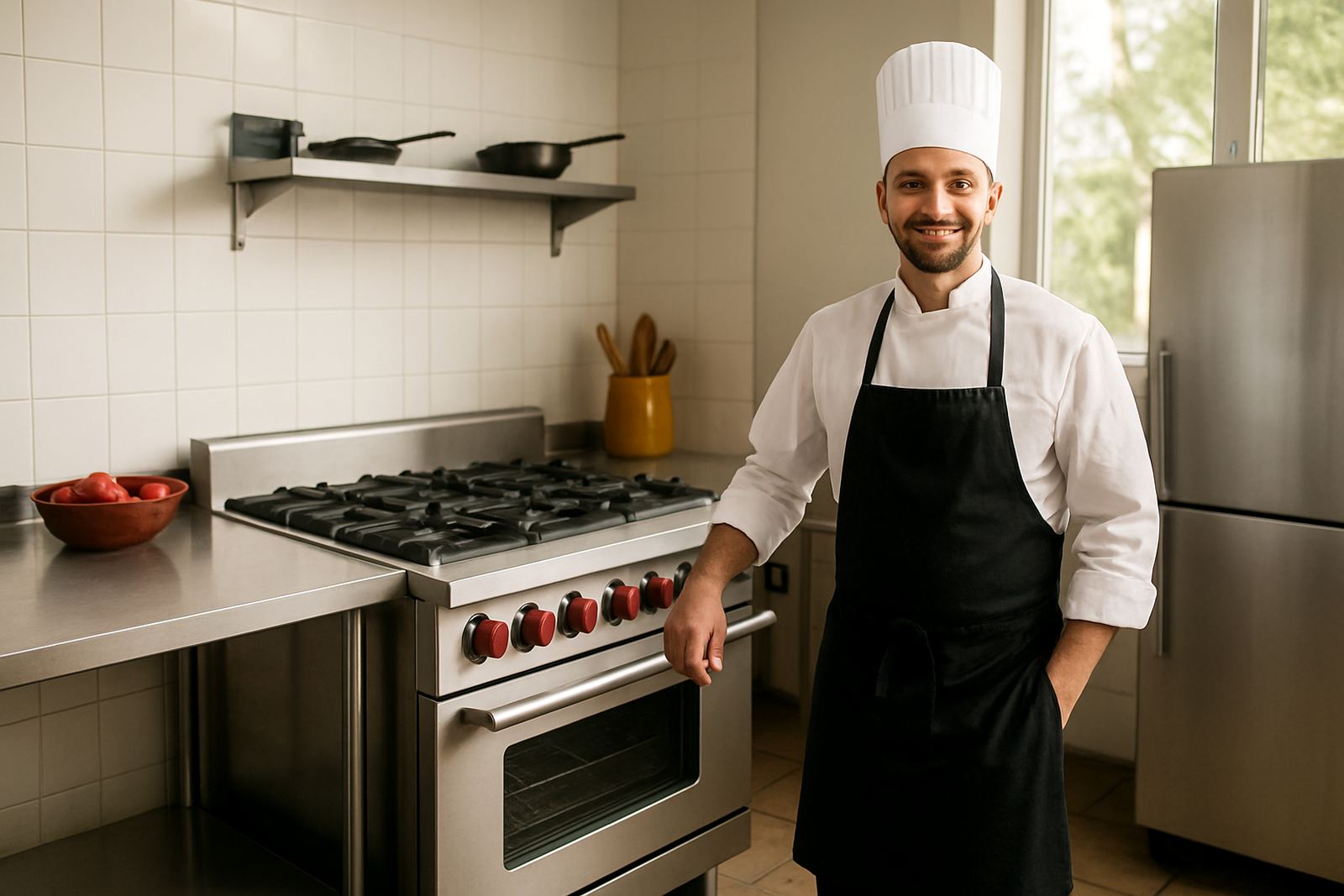
Our gas ranges are specified for kitchens that need steady heat through breakfast service, lunch rush and supper prep without waiting for elements to recover. They suit line cooking, bulk pot work, pan frying, boiling, simmering and general hot section use. In a Durban kitchen, that means less interruption during peak trade, and better control when loadshedding or voltage dips make electric cooking less practical.
Most commercial gas ranges are supplied as 4, 6 or 8 burner units, with options for standard open burners, heavy duty cast iron pan supports and integrated ovens. We also specify combination units where the cooking top is paired with one or two ovens below. For institutional kitchens, the right range often depends on daily meal counts, available floor space, gas supply and the rest of the hot line layout.
- Available in countertop and floor-standing formats
- Options for open burners, plate tops and oven compartments
- Suitable for LPG or piped gas, subject to site setup
- Can be arranged to suit left-to-right or right-to-left workflow
Typical Sizes, Burner Counts and Layout Options
We help match the range to the actual cooking load, not just the available budget. A small café or school kitchen may only need a 4 burner unit with a single oven, while a busy restaurant or canteen may require an 8 burner line with double oven capacity and a wider landing area for pots and trays.
Common working widths are 600 mm, 900 mm, 1200 mm and 1500 mm, with overall depth usually around 700 mm to 900 mm depending on the model. Oven height, splash back style and control position all matter when you are fitting the range into an existing extraction line or service aisle. In coastal areas like Umhlanga and Ballito, we also consider stainless grade and corrosion risk from humidity.
- 4 burner ranges for lighter cooking volumes
- 6 burner ranges for medium to high service kitchens
- 8 burner ranges for canteens, hospitals and production lines
- Single or double oven options where baking or holding is required
Where a Gas Range Works Best
Gas ranges are used in restaurants, hotels, school kitchens, hospital wards kitchens, military and mine canteens, takeaways, catering facilities and staff feeding areas. They are especially useful where chefs need immediate flame response and where the menu changes often through the day. For Durban operators, gas is also useful when power supply is not dependable or when backup cooking capacity is needed during outages.
In larger kitchens, we often place the gas range alongside stockpots, bratt pans, fryers and prep tables so the movement from raw prep to hot service stays efficient. The range must fit the menu, the extraction and the staff flow. If the line is too tight, pots clash and heat spills into the pass area. If it is too wide, the team wastes steps and time.
- Restaurants with fast turn service
- Hospitals and care facilities with set meal times
- Canteens and contract feeding kitchens
- Schools, training centres and accommodation kitchens
Gas, Ventilation and Installation Checks
Installation must be done with proper gas sizing, correct regulators and a safe connection route. We also check whether the site is using LPG cylinders, manifolded cylinder banks or piped gas from a fixed supply. In many KZN projects, the real issue is not the range itself but the line size and pressure drop over distance, especially where the gas room is far from the kitchen.
Extractor planning matters as much as gas supply. A heavy duty range produces heat, grease vapour and combustion products, so the canopy, ducting and make-up air need to be set correctly. Our team handles site surveys, extractor planning and commissioning so the unit is installed to the working kitchen, not just dropped into a gap. Municipal and fire compliance requirements should be checked before handover, because a range that is fitted badly can become a shutdown risk.
- Check gas type and cylinder or pipeline arrangement
- Confirm regulator pressure and pipe sizing
- Allow enough clearance to walls and finishes
- Match the range position to the extractor canopy
Cleaning, Servicing and Daily Care
A commercial gas range lasts longer when the burners, injectors, control knobs and spill trays are cleaned every day. Food spillages left under the pan supports can block flame ports and create uneven heat. On coastal sites, salt in the air can also affect external panels and fittings, so wipe-down and drying are important, not just a quick rinse.
We recommend preventive maintenance rather than waiting for a breakdown during lunch service. Our service team can inspect burners, gas valves, pilots where fitted, igniters, door seals on oven sections and general gas tightness. If a flame burns yellow, the unit struggles to light, or one side heats slower than the other, the range should be checked straight away. Small issues become expensive when a full service line depends on one appliance, and nobody wants that problem on a Friday night.
- Daily cleaning of pan supports and drip areas
- Weekly inspection of flames and ignition
- Routine service checks on valves and gas connections
- Keep records for maintenance and compliance
What to Confirm Before You Order
Before ordering, we ask for the menu, the number of covers, the available footprint and the gas source. It also helps to know whether the kitchen needs open burners only, or if baking and holding are part of the job. The wrong size range can slow a team down, while the right one gives proper heat without wasting gas or floor area.
Please also confirm your delivery access, especially in Glen Anil, Durban North, Pinetown and inner city sites where stairs, narrow gates or tight loading bays can affect installation. If the range is going into a new build or upgrade, we can work from your kitchen layout and coordinate stainless fabrication, equipment placement and commissioning. Our team in Durban supports projects across Pietermaritzburg, Umhlanga and Ballito as well, so we can help from specification through to final handover.
- Meal volumes and service style
- Available width, depth and clearance space
- LPG or piped gas supply details
- Whether an oven, splash back or extra shelf is required
Key facts
| Product type | Heavy-duty commercial gas range |
|---|---|
| Typical sizes | 600 mm, 900 mm, 1200 mm, 1500 mm |
| Burner options | 4, 6 or 8 burner configurations |
| Fuel options | LPG or piped gas, subject to site setup |
| Construction | Stainless steel body with cast iron pan supports |
| Use cases | Restaurants, canteens, hospitals, schools and contract kitchens |