When bulk cooking tools earn their place
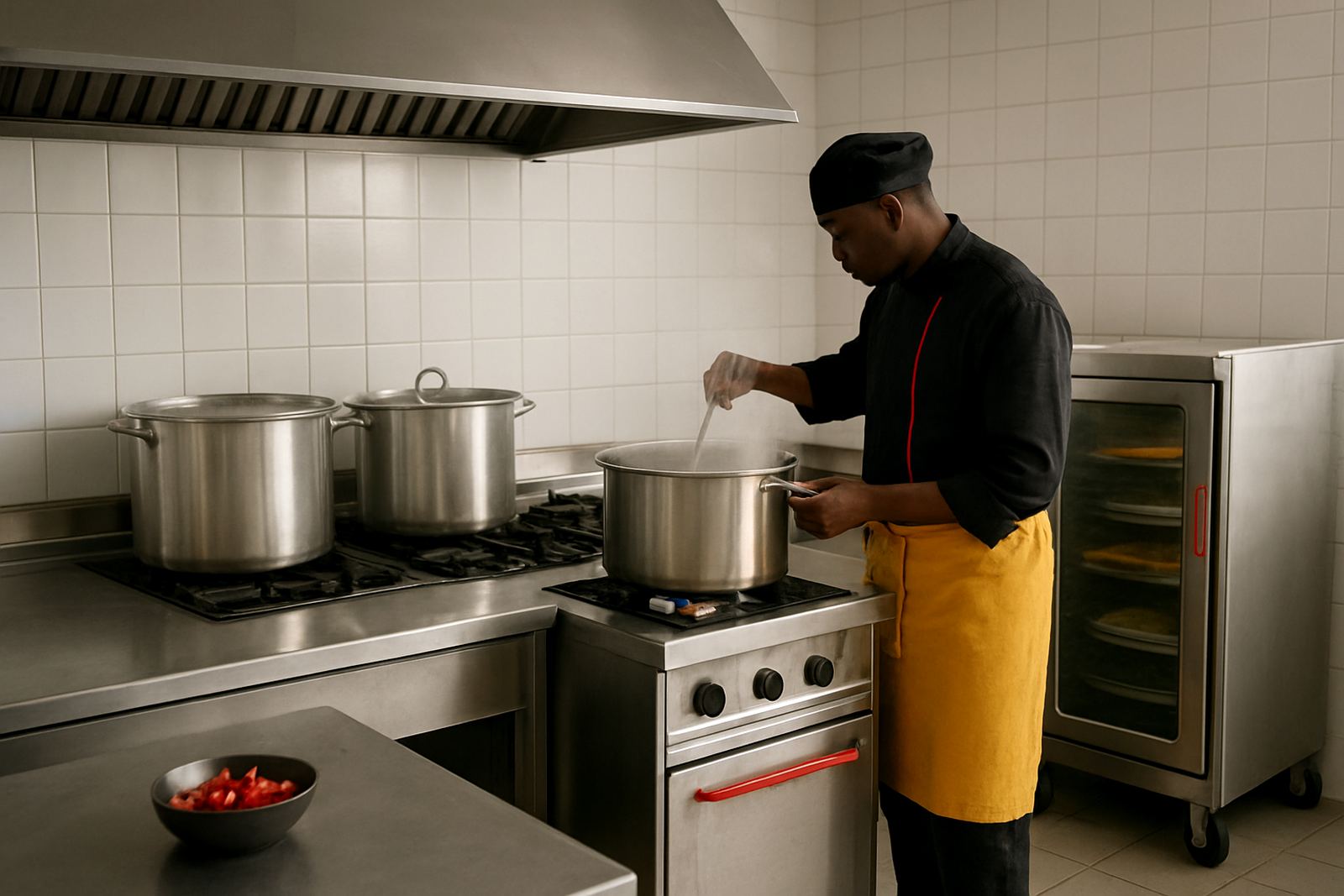
Large pans, tilting kettles, bratt pans and hot holding units make sense where the menu repeats through the day and volume is not negotiable. Think hospital wards, school feeding schemes, staff canteens, retirement homes, contract caterers and busy restaurant prep kitchens. If the team is cooking the same base sauces, soups, stews or starches in batches, bulk equipment usually cuts labour and keeps product consistency steadier than a row of small pots ever can.
The real benefit is control. A bigger vessel gives you even heat, fewer transfers and less chance of burning a batch while the cook is juggling three other tasks. It also helps with food safety because you can move from cooking to holding more quickly, which matters on hot Durban afternoons where product temperature can climb fast if the line is not planned properly.
The main pieces that do the heavy lifting
Not every high-volume kitchen needs the same kit. The right mix depends on menu, staff skill, available floor space and what the site can support on power, drainage and ventilation. In Glen Anil and Umhlanga we often see clients trying to solve a storage problem with a cooking purchase, when the better fix is a proper workflow. That is why the equipment list should follow the layout, not the other way round.
- Stock kettles for soups, sauces, gravies and bulk boiling.
- Tilt pans for browning, simmering, shallow frying and batch cooking.
- Steamers and combi-style units where gentle, even heating matters.
- Hot holding cabinets for plated meals, pans and service trays.
- Mobile trolleys and transport tubs to move food safely between prep and service areas.
Where coastal humidity is high, enclosed storage and proper stainless finishes become more important too. Open shelving can work, but only if the cleaning routine is disciplined and the extractor plan keeps grease away from walls and ceiling surfaces.
What to check before you buy
Bulk cooking tools are only useful if the site can run them properly. A 100 litre kettle that sits underused is wasted capital, while a small holding cabinet on a 300 meal line creates delays every lunch service. The practical check is simple: count portions, measure peak service times, then map the labour you actually have. If the answer changes every day because the menu keeps shifting, choose versatile units first.
For KwaZulu-Natal sites, power supply is part of the conversation. During load-shedding or generator changeover, some kitchens need gas cooking, insulated holding, or a staged prep plan so the whole service does not fall over. It is worth confirming whether the electrical load, gas route and extraction route are all realistic before any order is placed. Otherwise the equipment may fit on paper but not in the room.
- Check clearances for lids, doors and cleaning access.
- Confirm drainage for washdown and any discharge from steam or cleaning cycles.
- Plan non-slip floors and safe walking space around hot zones.
- Make sure the extractor and make-up air are sized for the real duty, not the guess.
- Allow for future menu growth if the site is likely to expand in 12 to 24 months.
Why layout matters as much as the machine
Bulk cooking equipment is heavier, hotter and slower to move than standard kitchen kit, so the room has to support it. A kettle placed too far from prep tables creates extra carrying. A tilting pan near a narrow doorway creates a safety risk. A holding unit placed where staff keep crossing behind it slows service and raises the chance of spills. The best result comes from a layout that keeps prep, cook, hot hold and dispatch in one clear flow.
At KZN Catering Equipment, that means site surveys, equipment specification and stainless fabrication are usually handled together. The aim is not only to fit the machine into the room but to make the room work around the machine. On larger projects in Pinetown, Ballito and Pietermaritzburg, that often includes extractor planning, drain points, wall protection and the right service aisle widths for cleaning and maintenance access.
A Durban example from the field
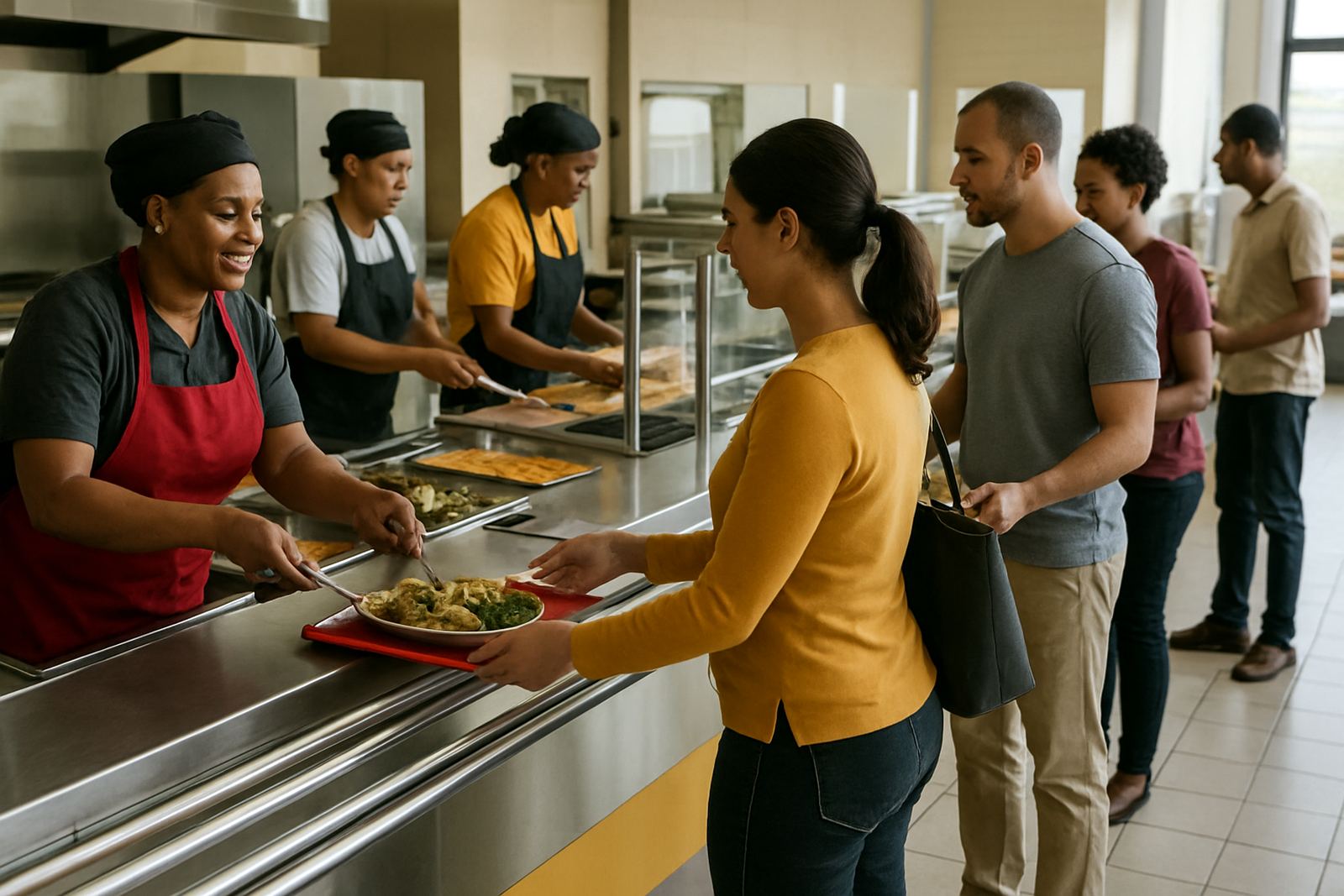
One of the most practical bulk cooking setups is for a canteen serving lunch and supper to shift workers near Durban North. The site was moving from small stockpots to a kettle and a hot holding unit because the team could not keep pace during peak breaks. By the time meals reached the serving line, the first batch was already cooling and the second batch was not ready. The answer was not simply bigger equipment, it was better sequencing.
We reworked the prep area so the base sauces and starches could be batch cooked earlier, then transferred straight into holding with shorter lifting distances. The kitchen kept its old prep discipline, but the equipment now matched the volume. Staff training also mattered because the new system only works when the team knows safe fill levels, holding times and when to rotate product. It was a practical fix, not a fancy one, and that is usually what high-volume sites need most.
Maintenance, cleaning and day-to-day discipline
Bulk tools take punishment, especially in hospitals and canteens where they run most days of the week. If the cleaning schedule is weak, residue builds up fast and performance drops. Hinges, valves, seals, thermostats and burners all need regular checks. Coastal air around Durban can also speed up corrosion if stainless surfaces are not wiped dry after washdown. It sounds small, but it saves money over time.
Preventive maintenance should be planned before breakdown repairs become urgent. That means checking controls, confirming heating cycles, inspecting cords, gas connections and ventilation, and replacing worn parts before service is disrupted. A well-run kitchen does not wait for a full failure. It books maintenance around service windows and keeps a simple log so the same fault does not keep coming back. That approach is far more pratical than reacting after a lunch line has already been delayed.
Choosing equipment that matches the menu
The best bulk cooking tools are the ones that match the food you actually serve. A soup kitchen needs different capacity from a bakery or a hospital ward. A contract caterer serving 600 plated meals needs a different holding strategy from a school feeding programme that works in waves. If the menu includes stews, curries, porridge, rice, soups or gravies, larger pans and kettles often pay off quickly. If the menu is more limited, a smaller but well planned combination may be enough.
For kitchens across Glen Anil, Durban North, Umhlanga, Pinetown, Ballito and Pietermaritzburg, the same rule keeps coming up: buy for the process, not just the price. Good bulk cooking kit should save time, reduce waste and make service safer. When it is matched to the room, the team and the local conditions, it becomes one of the most useful parts of the kitchen.