Start with the queue, not the equipment list
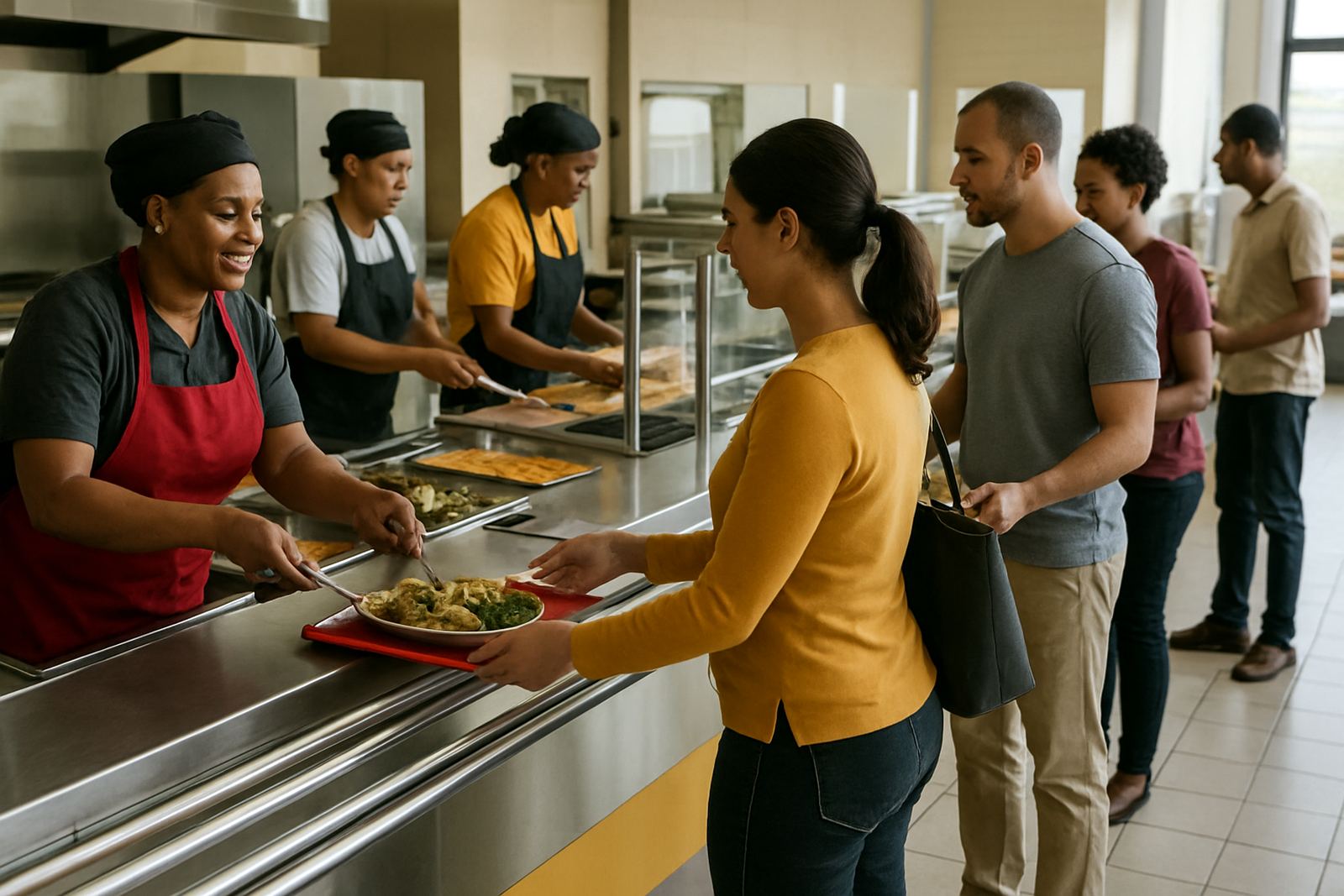
When a canteen jams up, the problem is often the layout, not the service speed. If people must double back for cutlery, squeeze past the till, or stop to wait for a plate at the hot counter, the line slows down and the room feels cramped. In Durban and the North Coast, that matters even more when lunch break is short and the kitchen is already working hard in heat and humidity.
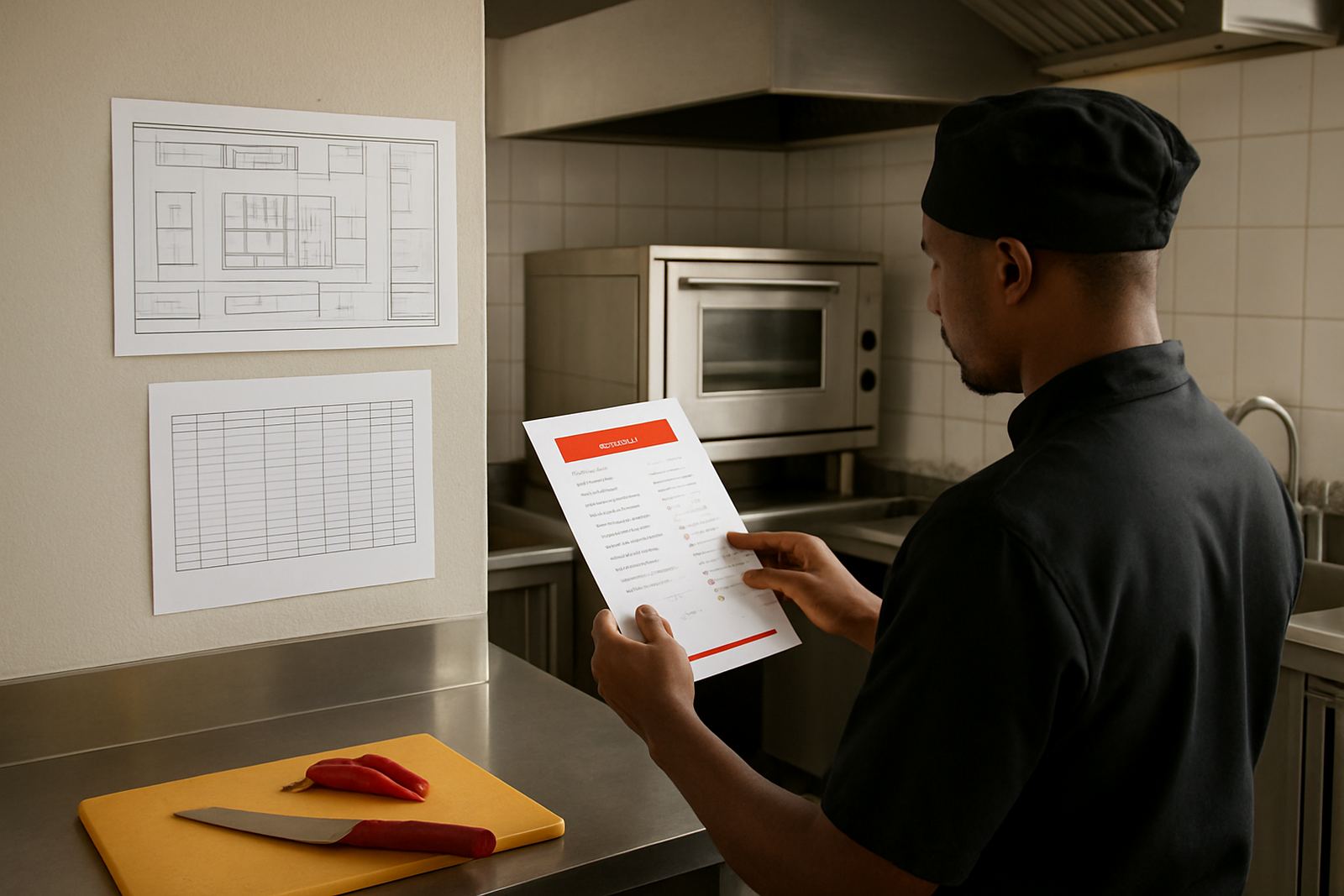
We begin by mapping the full journey from entrance to exit: tray pick-up, serving points, payment, condiments, and seating. That lets us place each item where the flow naturally moves forward. A good layout avoids cross-traffic between staff carrying pans and diners moving with trays, and it leaves enough space for a wheelchair or trolley where needed. Even a small improvement, like shifting the tray rail 600 mm, can make the whole queue easier to manage.
Tray rails should guide, not trap, the line
Tray rails are meant to keep the queue straight, but if they are too tight or poorly positioned they become a choke point. In many canteens the rail ends too close to the serving counter, so people bunch up just as they try to choose food. The best setup gives enough width for one person at a time, with a clear place to pause if a member of staff needs to help them.
For a school or hospital canteen, we normally look at these basics:
- Allow a clear lane of about 900 mm to 1 200 mm for single-file movement.
- Keep tray pick-up at the start of the queue, not beside the till.
- Use smooth bends rather than sharp corners that catch trays and sleeves.
- Leave room at the end for dirty tray return so the exit does not back up.
Stainless rails and supports are worth doing properly because they stand up to daily cleaning and constant contact. On coastal sites near Umhlanga or Ballito, they also handle salty air better than light-duty fittings that start to stain after a few months.
Put the till where the queue naturally narrows
The till should never sit in the same pinch point as the hot counter. If the cashier is serving while customers are deciding on food, the line slows twice. A better approach is to place payment after the food selection but before the exit, with enough counter space for a tray to rest while cards, vouchers or staff accounts are processed. That small change often removes the biggest hold-up.
It also helps to separate cash and food handling where possible. A short side counter for cash-up, label checks, or meal tally cards can keep the main line moving. In larger operations, one cashier may need to face the queue while another handles school or staff records behind the line. On load-shedding days, this setup becomes even more useful because backup power can be kept for only the till and lighting if needed.
Useful points to check:
- Is the till visible before customers reach the serving point?
- Can two staff members work without crossing each other?
- Is there a place for bags, phones and cards without blocking service?
- Can the till area stay lit and operational during power cuts?
Hot holding works best when the front counter stays clear
Hot holding counters can be a source of delay when staff are lifting lids, reaching across steam, or waiting for trays to line up. The front of the counter should be clear enough for one customer to move forward as soon as the previous tray leaves. If the food is packed too tightly, people stop to decide and the queue starts stacking up behind them.
We often recommend grouping menu items by demand. Put the fastest-moving dishes first, then the slower choices or special items further along the line. That keeps the service rhythm steady and stops the same popular item from causing a cluster at one point. In a Pietermaritzburg factory canteen, for example, splitting proteins from starches and sides can cut the decision time because staff can plate faster and move on.
Heat control matters too. If hot holding units are overfilled, the food quality drops and staff spend more time fixing lids, stirring pans, or replacing dishes. Better spacing also improves cleaning after service, which is important where municipal inspectors expect tidy food areas with no standing water or clutter under counters.
Staff movement is part of queue flow
Queue flow is not only about the customer path. Staff need clear access behind the counter for topping up pans, replacing trays and clearing spills without cutting through the serving line. If a worker has to squeeze past diners with a hot dish, the whole area slows and the risk of accidents goes up. We plan the back-of-counter space as carefully as the customer side.
That usually means separate routes for clean items, waste, and restocking. It also means enough undercounter storage for paper goods, utensils and small service items so staff are not running to a back room every few minutes. In a busy Glen Anil or Durban North operation, that can save a lot of walking over a lunch rush. It sounds simple, but it makes a real difference.
- Keep restocking points close to each serving section.
- Use covered bins and return points away from the main queue.
- Train staff to serve from one side and clear from another where possible.
- Mark floors clearly so customers know where to stand and where to move.
A Durban example: school lunch without the bottleneck
At one Durban-area school canteen, the lunch line kept stalling at the tray rail and again at the hot counter. Learners collected trays, then stopped in the middle of the queue to decide between three mains and two sides, while the cashier had to lean across the line to take payments. Break time was short, and the result was a crowd at the door before the bell even rang.
We reworked the layout so trays came first, then the hot line in a single direction, then payment at the end. The tray return moved to a separate exit path, and the condiments were shifted to a side point after payment. That reduced the back-and-forth and let staff keep serving without crossing the queue. The kitchen did not need more equipment, just a better path through the space.
That kind of change is especially useful in KwaZulu-Natal, where kitchens often deal with humidity, fast turnover and a mix of staff and visitors. The right layout makes cleaning easier, protects equipment from avoidable knocks, and keeps service moving even when the lunch rush comes all at once.