Start With the Menu, Not the Catalogue
A kitchen is only as good as the food it is meant to produce. A breakfast cafe, a school canteen and a hospital feeding unit all need cooking, prep and holding equipment, but not in the same mix or size. When the menu is clear first, the equipment list becomes practical instead of expensive.
We often see the same mistake in Durban and the North Coast. A client asks for a full list of ovens, griddles, fryers and refrigeration, then later realises the menu needs more cold prep space, a bigger wash-up area, or better holding for take-away. If the menu changes, the equipment should change with it.
- Short menu with high repeat volume usually needs speed and holding capacity.
- Broad menu needs flexible prep stations and more storage.
- Specialist menu needs the right heat source, extraction and finish.
Volume Changes the Entire Equipment List
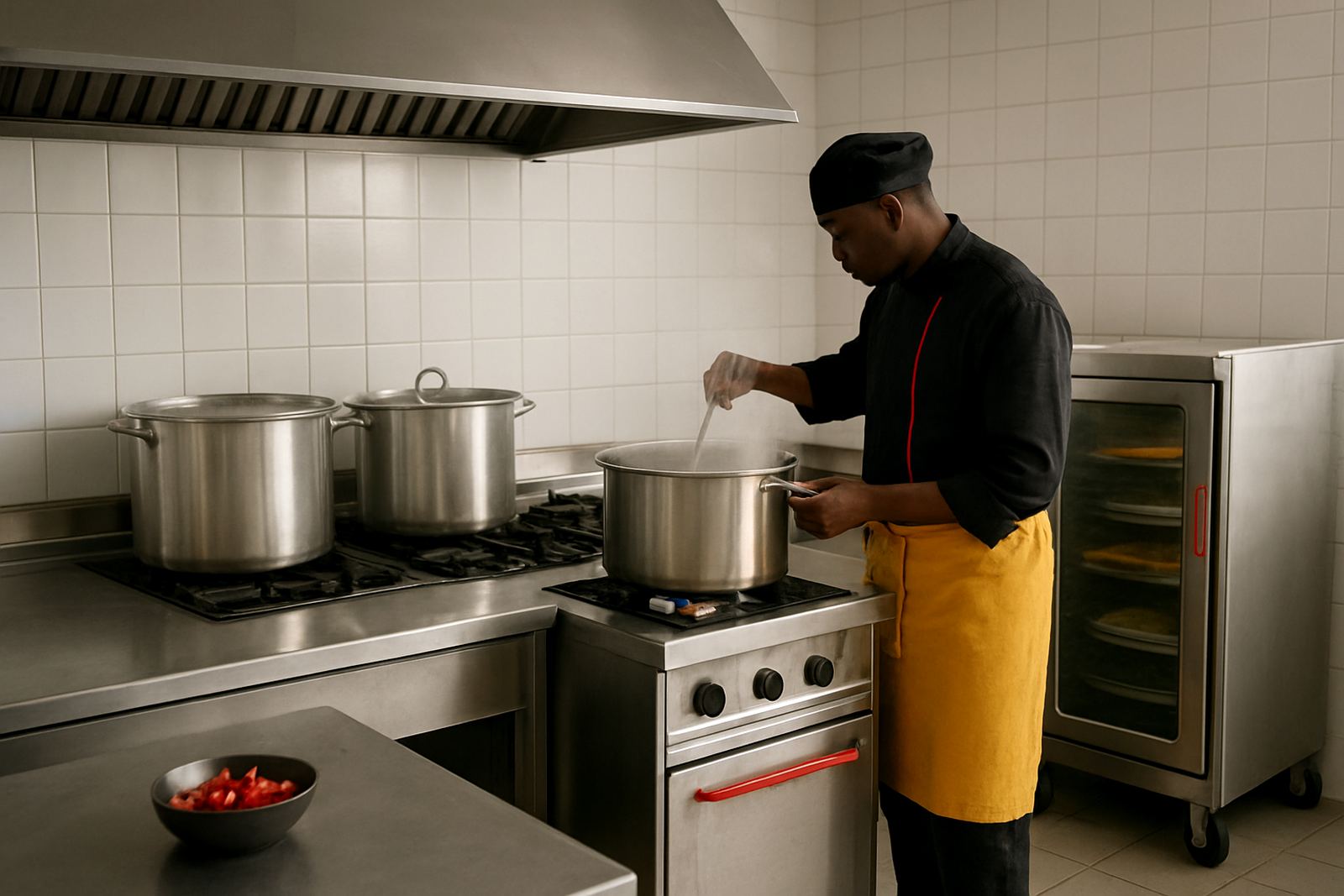
Two kitchens can serve the same chicken curry and rice, yet need completely different equipment. One may feed 60 staff at lunch from a small canteen. The other may serve 400 hospital meals over a set schedule. The larger operation needs batch cooking, extra cold storage and more disciplined workflow. The smaller one may need one strong cooking line and tighter prep space.
Daily volume affects pot size, fridge size, freezer capacity and the number of trays or pans that must be turned over each hour. If service spikes at 12:30, the kitchen must be ready before that peak, not during it. In KwaZulu-Natal, where humidity can push refrigeration harder, undersized cold rooms and upright fridges become a problem fast.
- Estimate meals per service, not only per day.
- Allow for peak trading days, functions and school terms.
- Include chilled holding where food cannot sit out in warm weather.
Service Style Decides the Flow
How food leaves the kitchen matters as much as what comes off the stove. Buffet service, plated service, counter service and delivery all call for different layouts. A plated restaurant needs a cleaner pass and a smoother hot line. A canteen with tray service needs speed, clear staging and enough space for trays, lids and utensils. If meals are boxed for dispatch, then sealing, packing and temporary holding become part of the equipment list.
The service style also affects staff movement. Good planning keeps raw product, cooked food, waste and washing separate. That saves time and helps with municipal hygiene requirements. It also reduces cross traffic, which matters on busy shifts when one person is carrying hot trays while another is trying to prep salads.
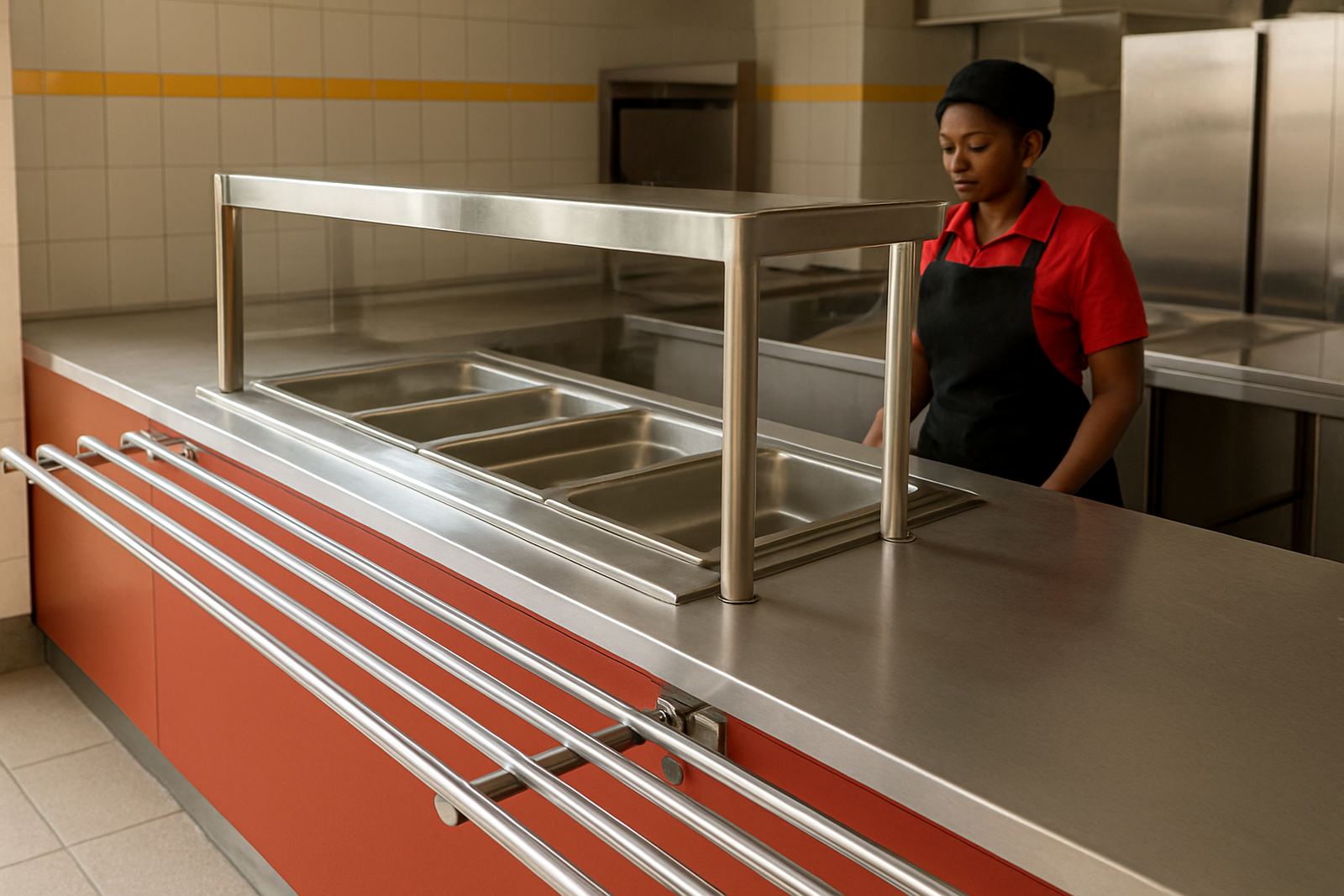
- Buffet service needs warmers, sneeze protection and controlled holding.
- Plated service needs finishing space close to the pass.
- Delivery and takeaway need packing counters and predictable handover points.
A Durban Example: Lunch Trade Near the Coast
Take a mid-sized restaurant in Durban North serving breakfasts, lunch burgers and a simple evening menu. If the owner starts by buying general equipment, the room can fill up with items that look useful but do not support the actual menu. Once the dishes are mapped, the picture changes. A solid gas or electric cooking line, a flat-top, a compact fryer, undercounter refrigeration and a proper prep table may do more than a large and expensive mixed setup.
Now compare that with a Pietermaritzburg school canteen serving 350 meals. The menu may be limited to one protein, a starch and a vegetable, but the volumes are higher and the pace is tighter. Here, batch cooking equipment, hot holding, stainless prep and durable storage matter more than a wide range of appliances. The best list is the one that matches how service really happens, not how the dining room looks.
Equipment Should Fit Staff Skills and Load-Shedding Reality
Equipment only works if the team can use it properly. A complicated kitchen slows down if the crew is small or changes often. If staff are trained on a simple line of gear they can clean, load and operate safely, the kitchen performs better. That is why commissioning and staff training should be part of the plan, not an afterthought.
In KwaZulu-Natal, power interruptions also change the equation. Some kitchens can switch to gas for cooking and keep refrigeration on backup power. Others need a tighter plan for cold storage, holding times and service timing. If load-shedding hits during prep, the menu method must still support safe output. Better planning now saves waste later.
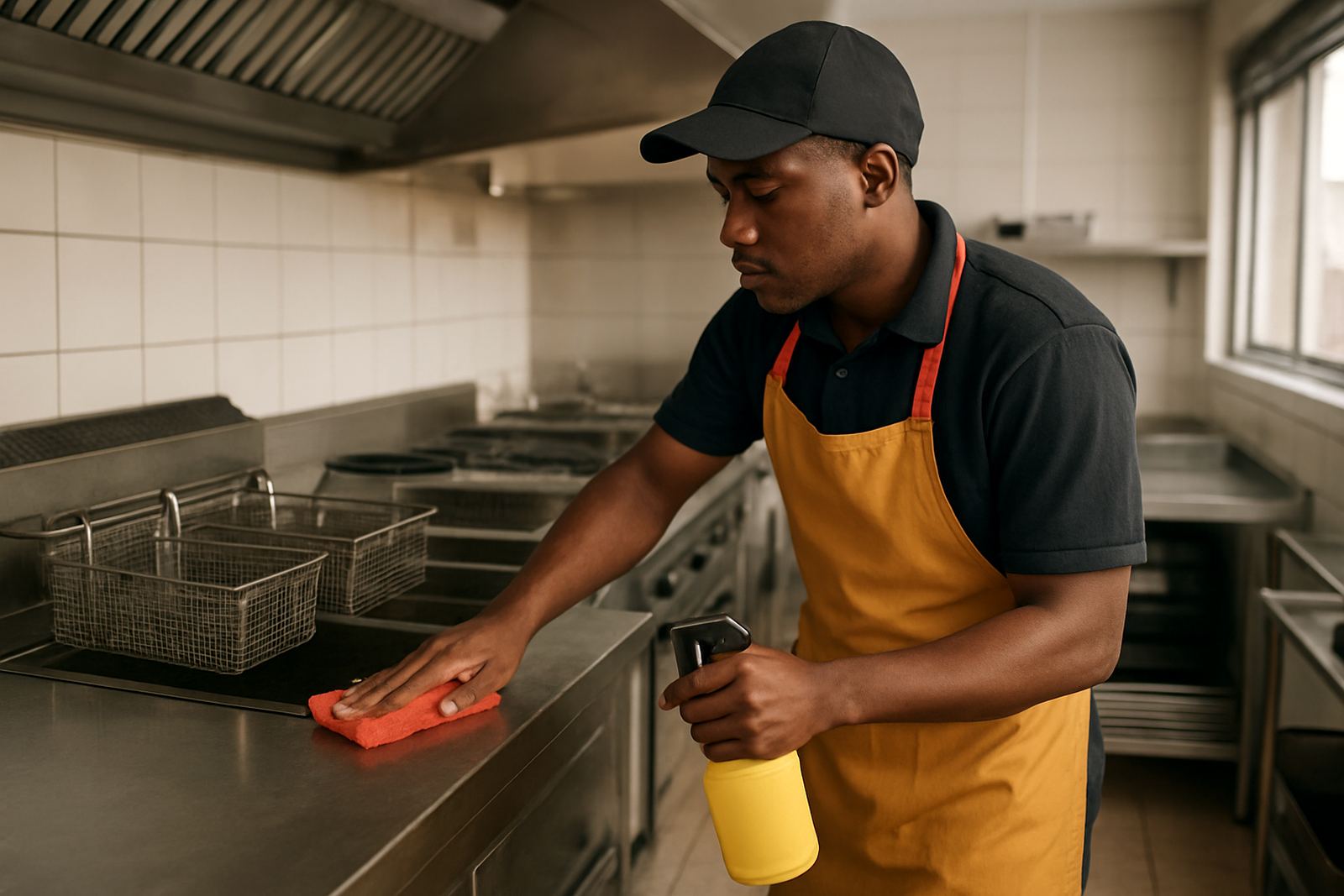
- Choose equipment the team can clean and maintain daily.
- Plan backup cooking or holding options for outages.
- Keep refrigeration and prep together so product moves quickly.
The Right List Comes From a Site Survey
A proper site survey turns menu ideas into working measurements. Ceiling heights affect extractor planning. Door widths affect delivery and installation. Floor drains, power supply and water points affect where sinks, dishwashing and prep tables can go. In older buildings around Glen Anil, Pinetown or even parts of central Durban, space can be tighter than expected and the plan has to fit the building as it stands.
We also check stainless needs, storage sizes and maintenance access. If a fridge is jammed against a wall, it becomes difficult to clean and service. If hot equipment is too far from extraction, the kitchen gets uncomfortable quickly. These are not small details. They are the difference between a kitchen that works daily and one that creates constant problems.
Build the List in the Right Order
A sensible equipment list starts with the menu, then looks at volume, then service style, then the room itself. After that come the finer points such as extraction, fabrication, installation and maintenance access. When those steps are followed, the kitchen is easier to run and cheaper to keep in service over time.
For restaurants, hospitals and canteens, this approach keeps spending focused on the equipment that does real work. It also makes future expansion easier because the base layout is already organised. In practice, that means less rework, fewer surprises and better day to day results.
- Menu defines the cooking and prep tasks.
- Volume defines size and duty cycle.
- Service style defines speed and holding.
- Building conditions define what can actually be installed.
If you want a kitchen that matches the food you serve, begin with the menu and build from there. That is where the practical savings are, and the daily smooth running too.