Why the last 20 minutes matter more than most teams think
When a kitchen shuts down in a rush, small things get left behind. Grease cools on hoods, food scraps dry onto prep tables, drain strainers clog, and refrigeration doors get left with sticky seals. By the next shift, staff are already behind before the first pot is on the stove.
A clean-down at close is really a maintenance habit. It keeps food safe, reduces odours, and gives your team a clear start point. It also helps your equipment last longer, which matters in Durban where coastal humidity can speed up corrosion if surfaces stay damp or dirty overnight.
For restaurants, hospitals and canteens, the close-out routine should be written down, timed, and checked. Not because people are careless, but because end-of-day fatigue is real and the same few shortcuts cause most of the trouble.
Start with heat, grease and food waste while surfaces are still warm
The best clean-down starts before everything has gone cold. Once fat sets hard on stainless steel or extractor filters, the job takes longer and often needs harsher chemicals. That is unnecessary wear on equipment and a waste of labour.
- Switch off cooking equipment in the correct order and allow safe cool-down time.
- Scrape plates, pans and griddles before washing.
- Empty crumb trays, drip trays and fryer baskets.
- Remove loose debris from under counters and around burner legs.
- Check floor drains so water can run freely during the final mop.
On a busy supper service in Umhlanga, one kitchen may be packing up while another is still plating meals. The team that clears the hot side properly avoids sticky build-up that would otherwise slow the next day’s prep. A few extra minutes now can save 30 minutes in the morning, easy.
Handle refrigeration and cold rooms with care after service
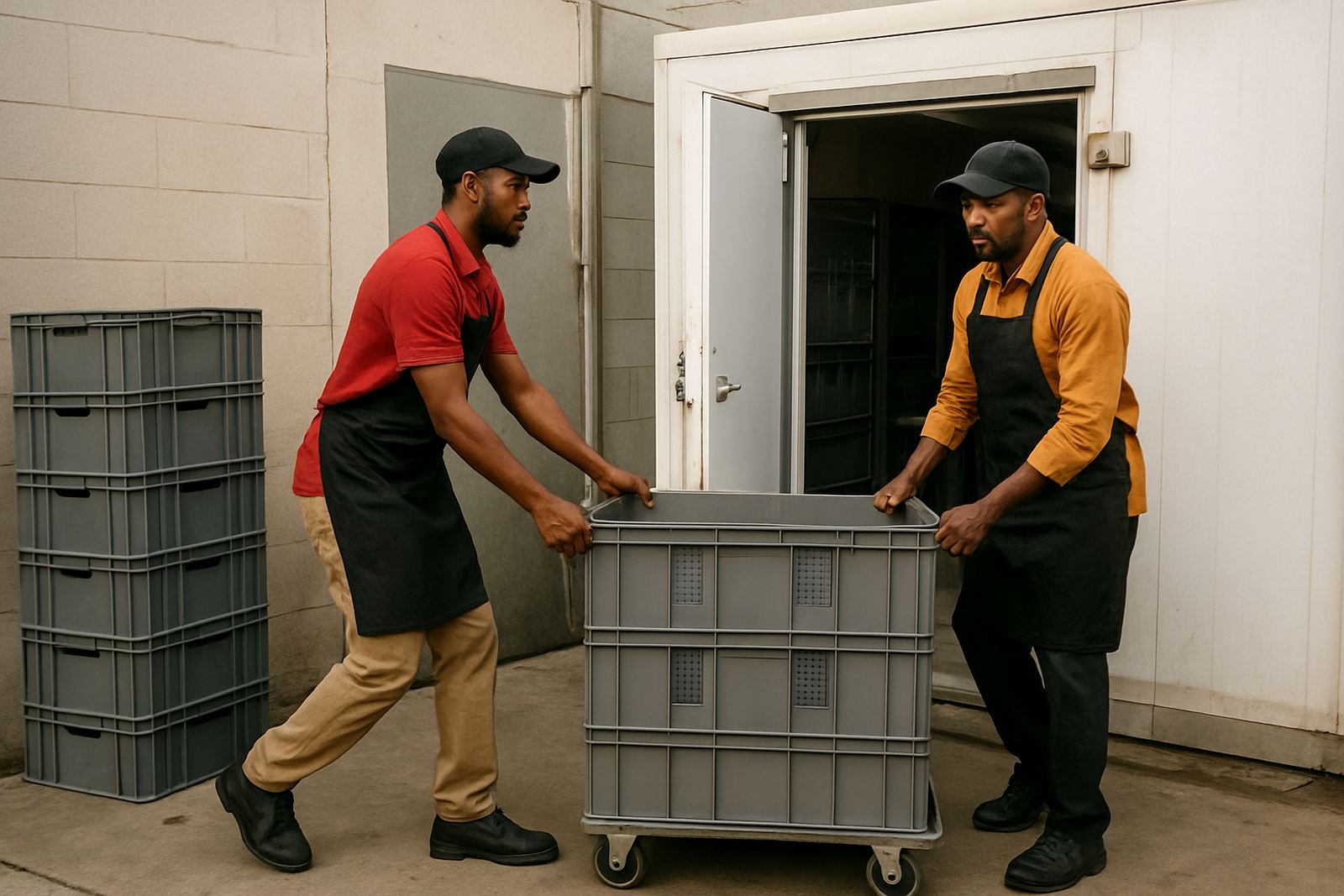
Refrigeration is often the most ignored part of closing clean-down, yet it is one of the most expensive systems in the kitchen. Doors, handles, seals and evaporator covers need attention every night. If spills stay in place, they can harden, smell, and encourage pests.
Wipe shelves, remove broken packaging, and make sure product is stored off the floor. If your team has had a power interruption during the day, check temperatures and record anything out of range before locking up. In parts of Pinetown and Durban North, load-shedding schedules can still catch people out, so the close-down should include a simple temperature check and a note in the logbook.
- Close all doors fully and confirm seals are not pinched.
- Wipe condensation from gaskets and handles.
- Keep dry goods away from refrigeration vents.
- Label any items that must be discarded after a temperature issue.
Extractor hoods and filters need daily attention, not weekly hope
Extractor systems are there to remove heat, smoke and grease. If filters are left loaded with residue, airflow drops and the kitchen gets hotter and dirtier. That affects staff comfort, but it also puts more strain on motors and ducting.
A proper closing clean-down includes removing and washing filters where the system allows it, then checking that the hood edges are wiped clean. Grease build-up around the canopy is a warning sign that the routine is slipping. It is cheaper to clean a filter every night than to call for a repair because the system has been neglected.
We have seen this often in kitchens near the coast where salt air mixes with grease and moisture. The combination is tough on metal surfaces, so a wipedown is not just about appearance. It is about stopping early corrosion before it becomes a bigger maintenance issue.
Tables, sinks and stainless surfaces should be left dry and ready
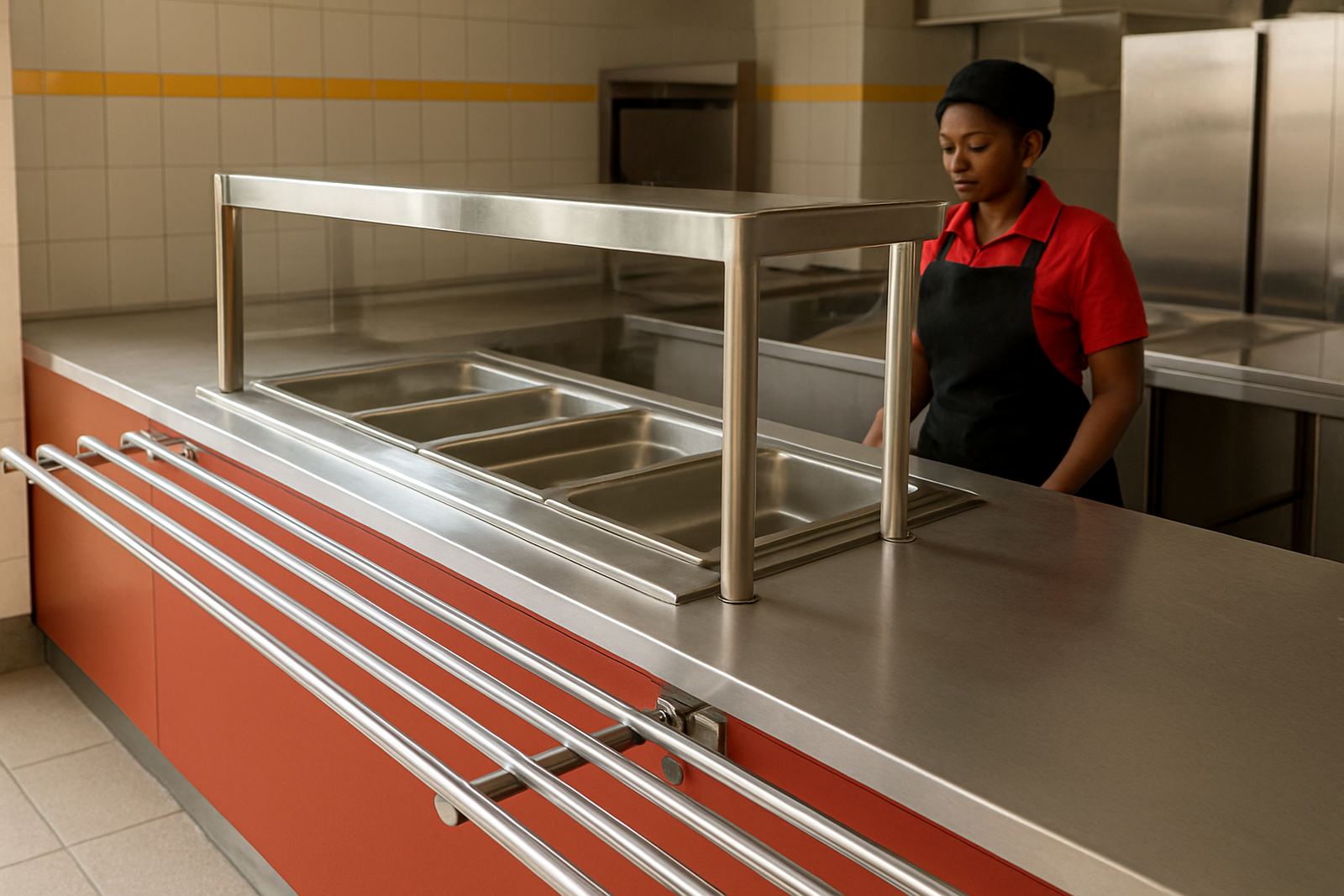
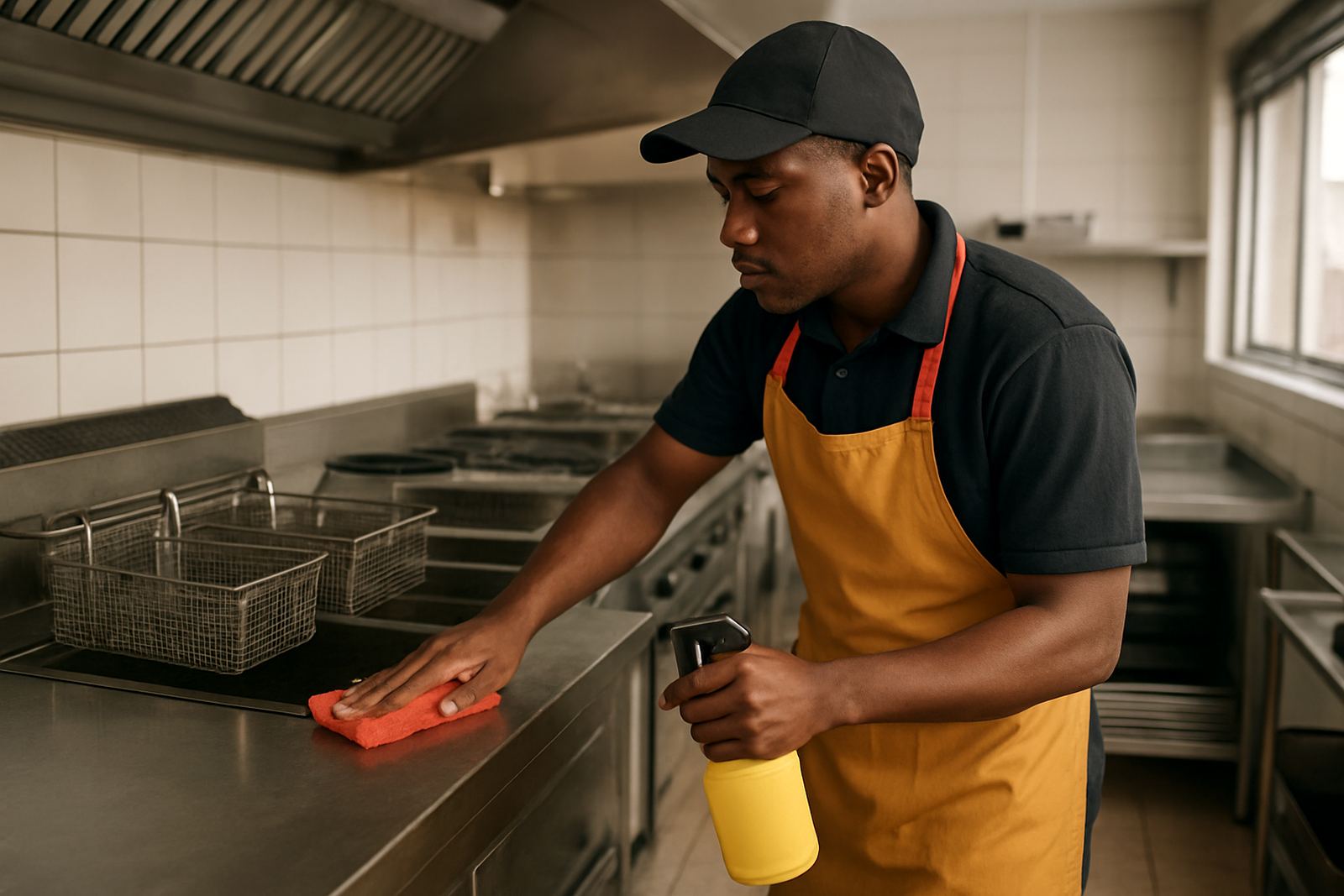
Stainless steel is easy to clean, but only if it is treated properly. Harsh scouring pads, standing water and old chemical residue can leave marks or dull the finish. The aim at close is not to make every item shine like new, but to leave food-contact surfaces safe, dry and ready.
Pay attention to sinks, splash backs, shelving, chopping stations and undersides of prep benches. Water left in corners can drip overnight and create rust stains on adjacent fittings. If the kitchen has been busy with washing up, check that sink traps are clear and that detergent trays are topped up for the first shift. No one wants to discover a blocked trap at 6 am.
- Use clean cloths for the final wipe, not the same cloth used on floors.
- Dry handles, knobs and touch points after washing.
- Leave drawers and cupboard doors open briefly if moisture has built up.
- Store chemicals separately from food and utensils.
Build a close-down routine that fits your team size and service pressure
A hotel kitchen in Ballito will not close the same way as a school canteen in Pietermaritzburg, but the principle is the same. The routine must match the layout, the equipment and the number of people available at the end of the shift. If it is too long or too vague, staff will skip bits.
The most effective close-down lists are simple. They name who handles cooking equipment, who checks refrigeration, who locks chemical stores, and who signs off the final floor clean. Keep the list where the team can see it, ideally near the service pass or wash-up area. If you have a lot of agency staff or part-time workers, make the sequence even clearer.
For busy operations, it helps to assign a supervisor to the last walk-through. That person checks that nothing is left switched on, no cloths are left on hot surfaces, and every item has been returned to its place. It is a small control that prevents a lot of silly mistakes.
When cleaning becomes maintenance, the kitchen runs better tomorrow
Closing clean-down should be part of a bigger care plan. The same staff who wipe down at night are often the first to notice a loose handle, a strange noise from a motor, or a door that no longer seals well. Those small signs should be reported early, not left for weeks.
At KZN Catering Equipment, we often find that kitchens with a disciplined close-down have fewer emergency call-outs and better equipment life. That matters whether you run a private hospital kitchen, a restaurant in Glen Anil, or a staff canteen serving hundreds each day. Good habits at closing time protect the investment you have already made.
If your operation needs a better layout, stronger stainless fabrication, or advice on how to make end-of-day cleaning quicker, it is worth looking at the room as a whole. The right equipment placement, extractor planning and training support can make the closing shift easier from the start.