Start with the menu, not the machine list
A school feeding kitchen works best when the equipment follows the menu. If the feeding scheme is serving porridge, rice, samp, soup, stews and bread, there is no need to crowd the room with equipment that will sit idle for most of the term. The first step is to count portions, check serving times and agree what must be cooked fresh, what can be held warm and what can be prepped the day before.
In Durban and across KwaZulu-Natal, many school kitchens run with one cook and a helper, sometimes only on certain days. That means the layout must reduce walking, lifting and cross-traffic. A fryer may look useful, but if the meal plan does not need it, that money is better spent on a larger pot, a proper sink line or a stronger cold room for vegetables and dairy.
- List the exact meals for a week, not just a general idea.
- Count learner numbers for peak days and exam periods.
- Separate cooking, washing and dry storage from the start.
A layout that keeps the line moving
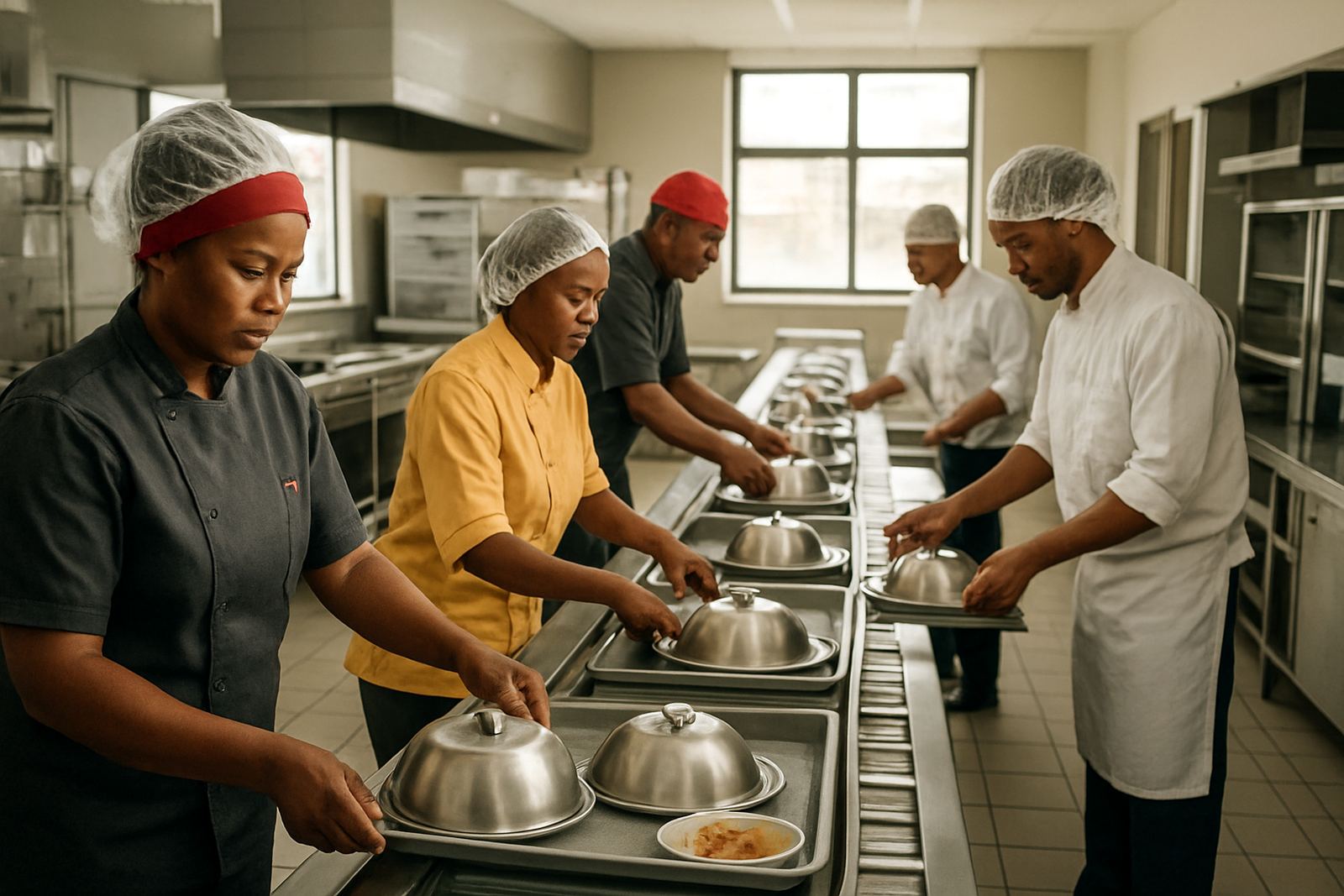
School kitchens are often squeezed into older classrooms, container units or small additions to existing buildings. The layout must allow raw goods in one side, prep in the middle and serving at the far end. If the cook has to cross the room with hot pots while learners are collecting meals, the risk of spills and delays goes up fast.
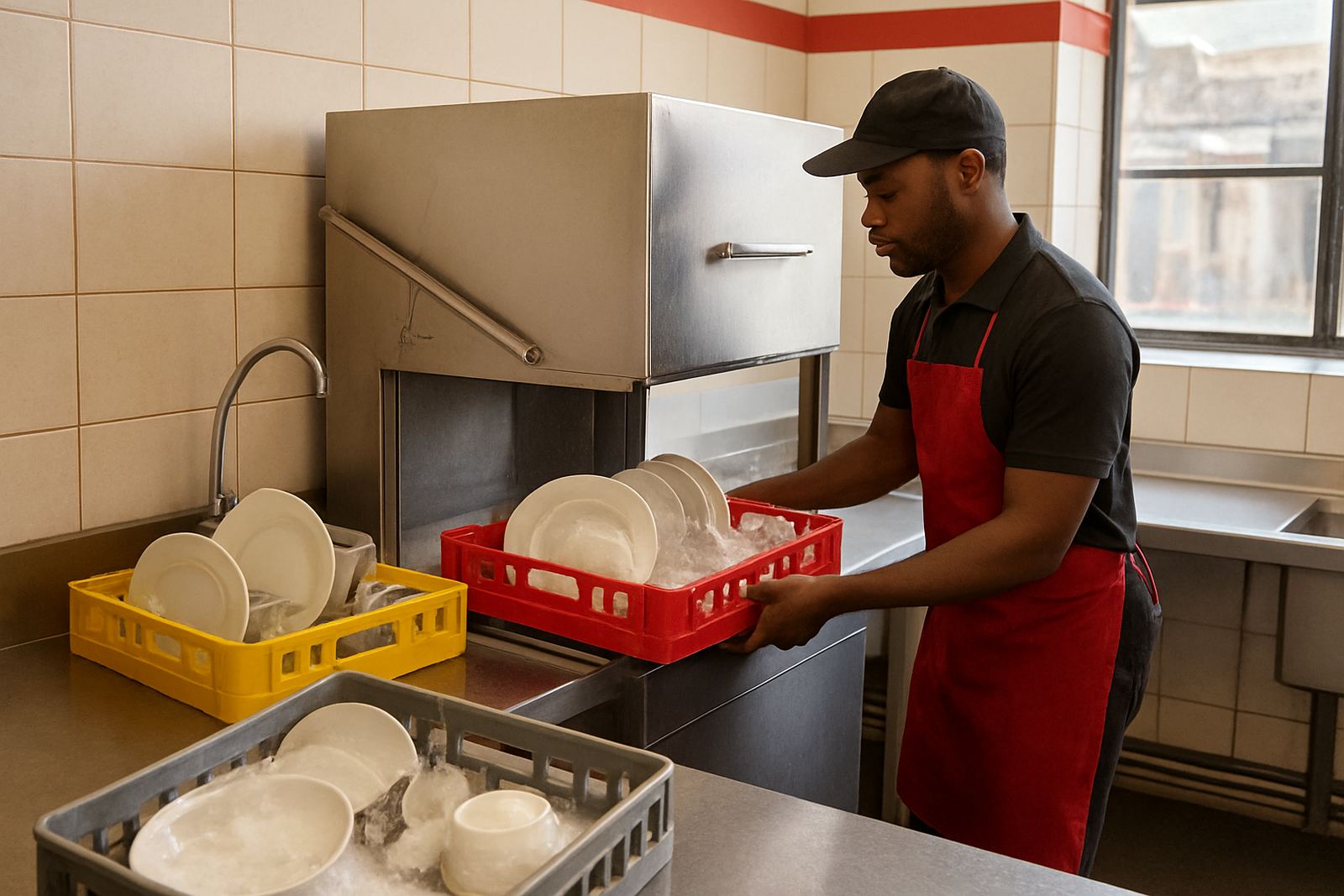
In the Glen Anil and Durban North area, we often see kitchens where the serving hatch is fine, but the prep bench blocks the sink or the pot wash area sits too close to the cooker. A better plan gives each task its own space, even if the room is small. One way to think about it is simple: dry goods, cold goods, prep, cook, serve, wash. Keep that sequence in the floor plan and the work becomes easier.
- Use stainless prep tables that can be wiped down quickly.
- Place the hand wash basin where staff can reach it without crossing the cook line.
- Leave enough aisle space for carrying 20 kg to 25 kg pots safely.
Cooking equipment that suits simple, large-batch meals
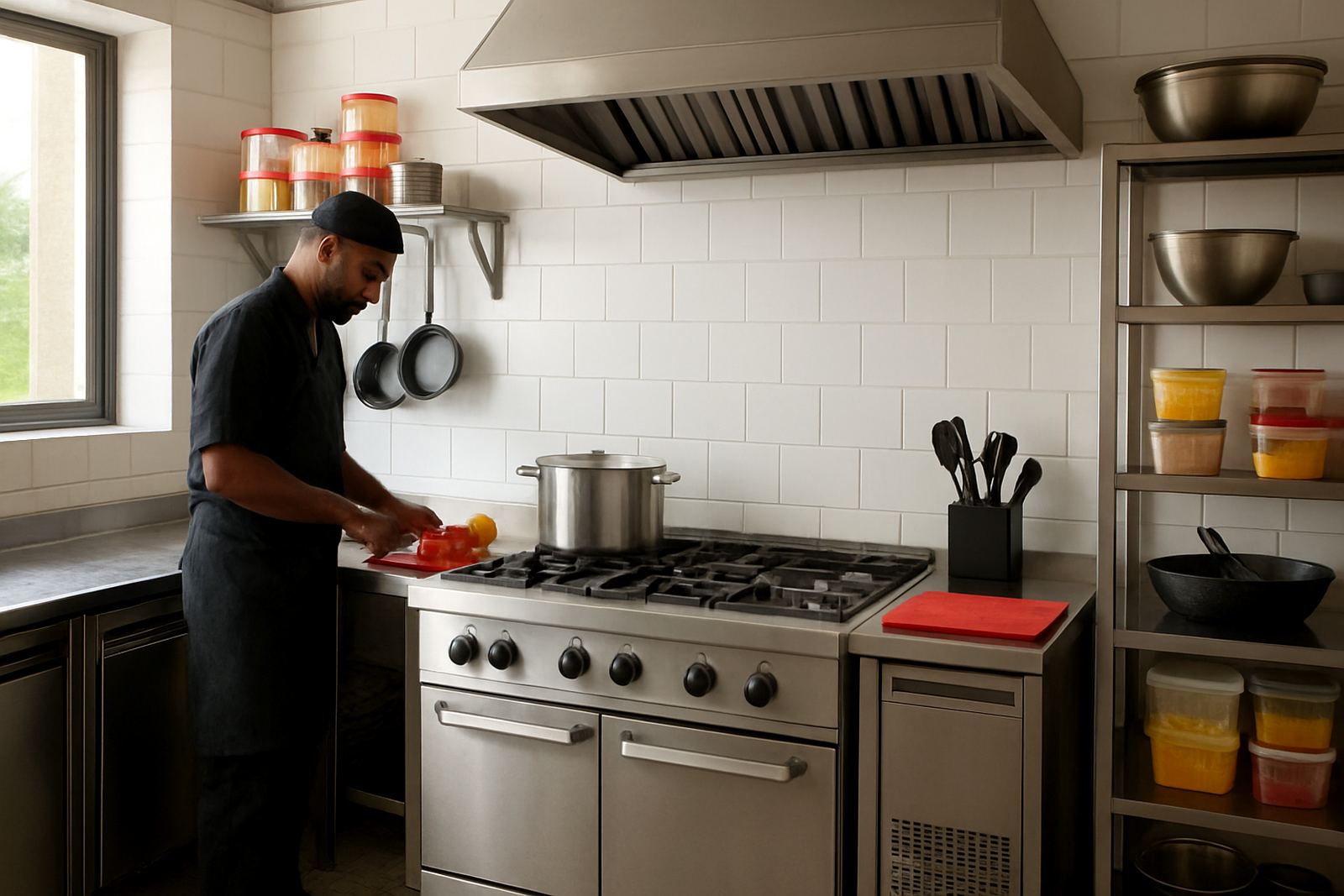
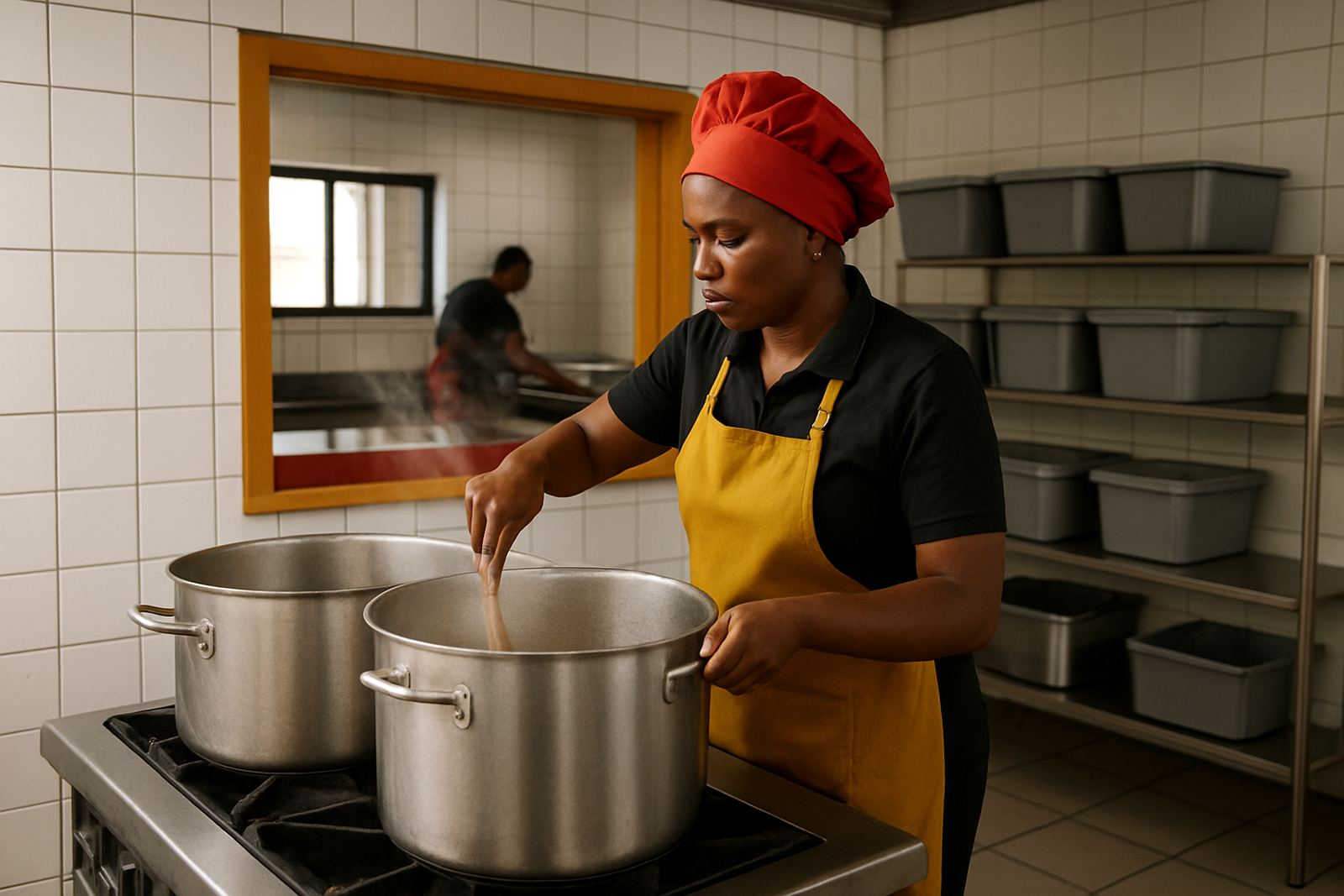
For feeding schemes, the best cooking equipment is the kind that can handle volume without needing constant attention. Large stock pots, heavy-duty boiling tops, tilting pans and hot cupboards all help when meals are cooked in batches. The aim is steady output, not complicated menu work.
Gas is often chosen because it keeps working during load-shedding, which still affects many schools in Durban, Pinetown and Pietermaritzburg. Where electricity is used, the installation must be checked carefully so that the load does not trip the system when the cooker, hot water and refrigeration are all on at once. Good extractor planning also matters. School kitchens get hot quickly, and poor ventilation slows staff down and makes the room uncomfortable by mid morning.
- Choose equipment that is easy to clean and hard to damage.
- Keep spare burners, taps and handles on hand for quick repairs.
- Use extractor fans and ducting that suit the actual heat load.
Cold storage and dry stores need the same attention
It is common to focus on the cooker and forget storage, but this is where a lot of waste starts. In KwaZulu-Natal, warm days and coastal humidity can spoil vegetables, dairy and cooked leftovers quickly if cold storage is too small or poorly sealed. Doors should close properly, seals should be checked and cold rooms or fridges should be sized for the weekly delivery pattern, not just the first delivery.
Dry stores need shelving off the floor, good airflow and clear separation between food, cleaning chemicals and packaging. Mice, damp and pests find weak points in a hurry. If the school receives maize meal, bread, tins and frozen goods on different days, the store layout must make stock rotation easy. First in, first out is not just a nice rule, it saves money.
- Keep fridges close to prep space to reduce time out of temperature.
- Allow space for pallets or crates during delivery days.
- Use rust-resistant fittings in coastal areas like Umhlanga and Ballito.
Hygiene, training and safe daily routines
A school feeding kitchen needs simple routines that staff can follow under pressure. The best equipment will not help if surfaces are cluttered or if the team is not clear on washing, sanitising and temperature checks. Staff training should be practical and repeatable, with short steps that new helpers can learn quickly.
School authorities also need to think about municipal requirements, grease control and waste handling. Hot oil, food waste and wash water must be managed properly so drains do not block and odours do not build up around classrooms. In busy term times, a small problem can become a big one by Friday afternoon if no one is checking it daily. Good habits in the morning save a lot of trouble later.
- Set one person to check temperatures and another to record deliveries.
- Label shelves, containers and cleaning points clearly.
- Keep mops, cloths and food tools separate at all times.
A Durban example: one room, three jobs, fewer delays
Consider a primary school in Durban South that needed to feed about 450 learners with a simple menu of porridge, beans, rice and soup. The old setup had the stove against one wall, storage in a corner and washing done at a basin outside the room. Staff were walking back and forth all morning, and by second break the serving line was already slowing down.
The improved plan placed the cooker near the extractor, the prep table beside the cold storage and a wash-up zone at the exit side. A larger boiling top, extra stainless shelving and a better hand wash point made the room easier to work in. Nothing about the menu became complicated, but the daily routine did. That is the point for school kitchens. The design must fit the people who actually use it, not a neat drawing on paper.
For schools in Glen Anil, Pinetown, Pietermaritzburg or out towards Ballito, the same rule applies. Keep the plan practical, allow for maintenance, and choose equipment that can handle real work over many terms. School feeding is steady work, so the kitchen should be steady too.
Plan for repairs and term-time pressure
School kitchens do not have the luxury of shutting down for long. If a cooker fails on Monday, the feeding scheme still has to run on Tuesday. That is why equipment choice and maintenance planning should go together. Access panels, spare parts and routine checks make a real difference when staff are under pressure. It also helps to keep a service record for each appliance, especially where equipment has been moved, repaired or upgraded over time.
When we plan these kitchens, we look at installation, commissioning and preventive maintenance from the start. That means the team knows how to switch things on, what to clean daily and who to call when something goes wrong. A school kitchen should not feel like a puzzle every morning. It should feel orderly, safe and ready for the next meal.