
1. Start With the Product Range Before You Buy Equipment
Before you specify mixers, ovens or racks, decide what the bakery must produce every day. A small cafe baking scones, muffins and rolls needs a very different setup from a school canteen pushing out sandwich loaves, pies and tray bakes. Once the product list is clear, the equipment list becomes much easier to size and you avoid paying for kit that sits idle.
Think in batches and peak times. If the morning rush starts at 05:30, then dough mixing, dividing and proofing must be finished before staff arrive for baking. In Durban and coastal towns like Umhlanga and Ballito, humidity can change dough handling quickly, so room flow and proofing control matter even more than people expect.
- List the top selling items by volume
- Set your daily output target in trays, loaves or portions
- Allow for load-shedding and gas backup if needed
- Check ceiling height, door width and floor drainage before buying equipment
2. Plan the Flow From Receiving to Cooling
A bakery should move in one direction only. Dry ingredients come in, mixing happens in one zone, then dough moves to proofing, baking, cooling and packing. If staff have to cross back and forth with hot trays and wet bowls, you lose time and increase the chance of spills or burns.
Keep flour storage near the mixer but away from wash-up water. Put the proofing cabinet close to the oven so trays travel a short distance, and make sure the cooling area has enough air movement without blowing dust onto fresh product. In busy sites, a few extra metres can save a lot of unnecessary walking every shift.
Where possible, separate raw handling from finished product packing. That is not just good housekeeping, it also helps with municipal inspections and makes staff training simpler.
3. Mixers, Benches and Dough Handling Basics
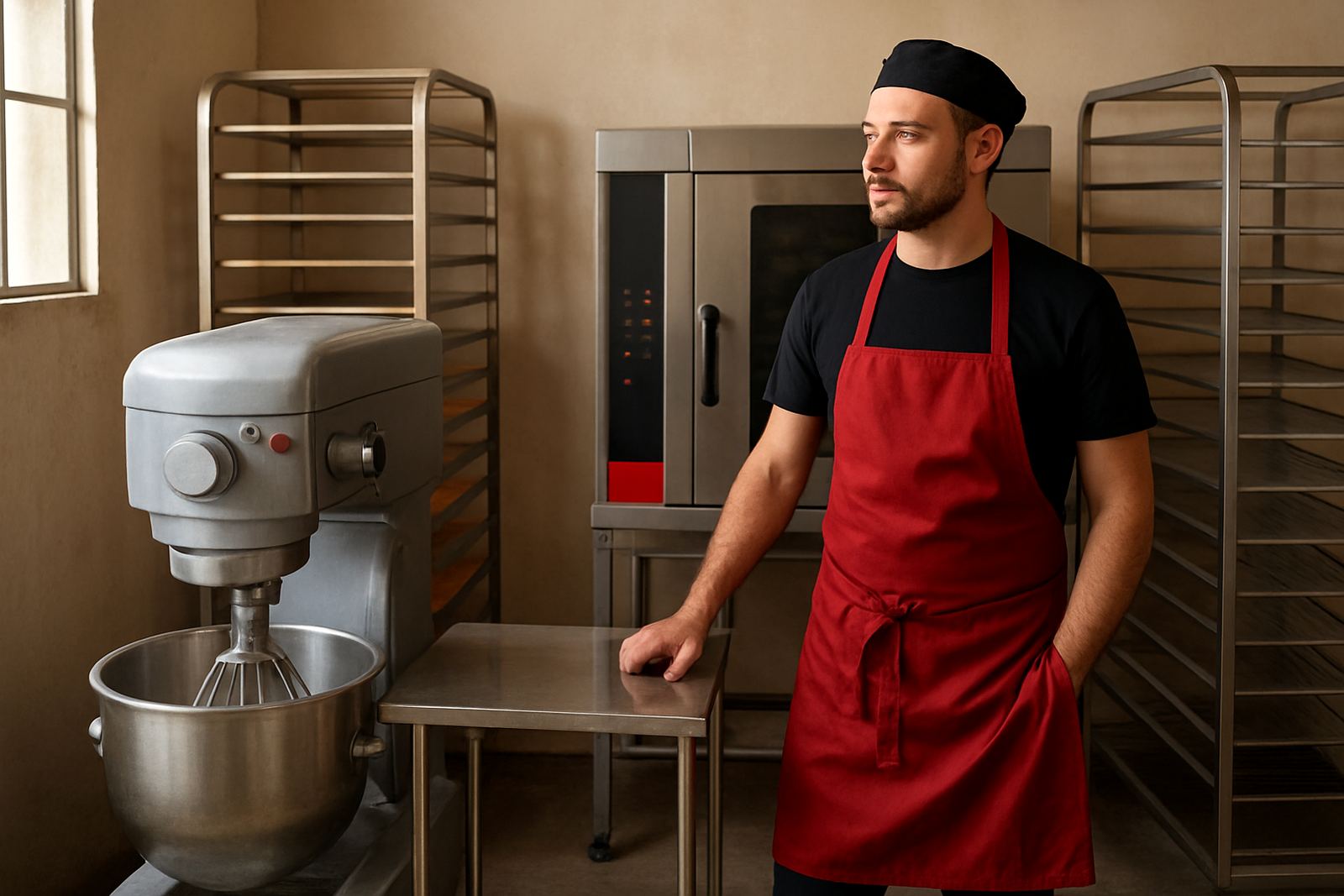
The mixer is usually the heart of the bakery, so choose it for the actual batch size, not the biggest emergency batch you imagine one day. A mixer that is too small runs hot and wears out faster, while a unit that is far too large can struggle with small batches and waste power. Staff should be able to load ingredients safely, scrape down bowls and clean the machine without awkward lifting.
Stainless steel benches should sit at a comfortable working height for weighing, scaling and shaping. If your team spends long periods on prep, a slightly higher bench can reduce back strain. Non slip flooring matters near the mixer and wash-up point because flour, oil and water can make the area slippery very quickly.
- Use sealed ingredient bins for flour, sugar, yeast and salt
- Keep digital scales on a dry, level surface
- Store scrapers, dough cutters and trays within arm’s reach
- Mark one bench for raw dough only and one for finished product
4. Proofing Control in Durban Heat and Humidity
Proofing is where many bakery setups go wrong. In hot coastal weather dough can over-proof quickly, while cooler inland mornings in Pietermaritzburg may need longer cabinet times. A controlled proofing cabinet or proofing room gives better consistency than relying on room temperature alone.
Watch the balance between heat and moisture. Too much humidity and your dough can become sticky or collapse, too little and the skin forms too early. Staff should know the target proofing time for each product and check the dough by feel as well as the clock. A small note board near the proofing area helps keep the process consistent between shifts, and it avoids guesswork when different people are on duty.
If you use gas baking or backup power during load-shedding, check that the proofing area still has enough ventilation and that doors seal properly. Warm air leaking into the wrong space can spoil product before it reaches the oven.
5. Oven Choice, Cooling Space and Energy Planning
Ovens must match the product mix and the available utilities. Deck ovens, convection ovens and combi units all do different jobs. For a bakery serving restaurants or canteens, even heat and reliable recovery between loads are usually more important than having the biggest oven on site. If power supply is unreliable, think ahead about gas, backup power or staggered production so baking can continue through outages.
Cooling is just as important as baking. Fresh product needs open rack space and enough time to drop temperature before packing. If product is boxed while still warm, condensation builds up and texture suffers. Plan a cooling zone that is separate from the oven discharge point, with good airflow and easy cleaning under the racks.
- Allow space for hot trays to be unloaded safely
- Keep spare baking sheets and tins nearby
- Provide heat resistant gloves and tray trolleys
- Leave enough floor space for cleaning behind and under equipment
6. Cleaning, Maintenance and Daily Staff Checks
A bakery setup only works well if cleaning is built into the day. Flour dust gets into corners, under benches and around motors, while butter and sugar residues attract pests if not dealt with quickly. Set up a cleaning routine for opening, during service and end of shift. Staff should know who is responsible for each area, not just the whole room in general.
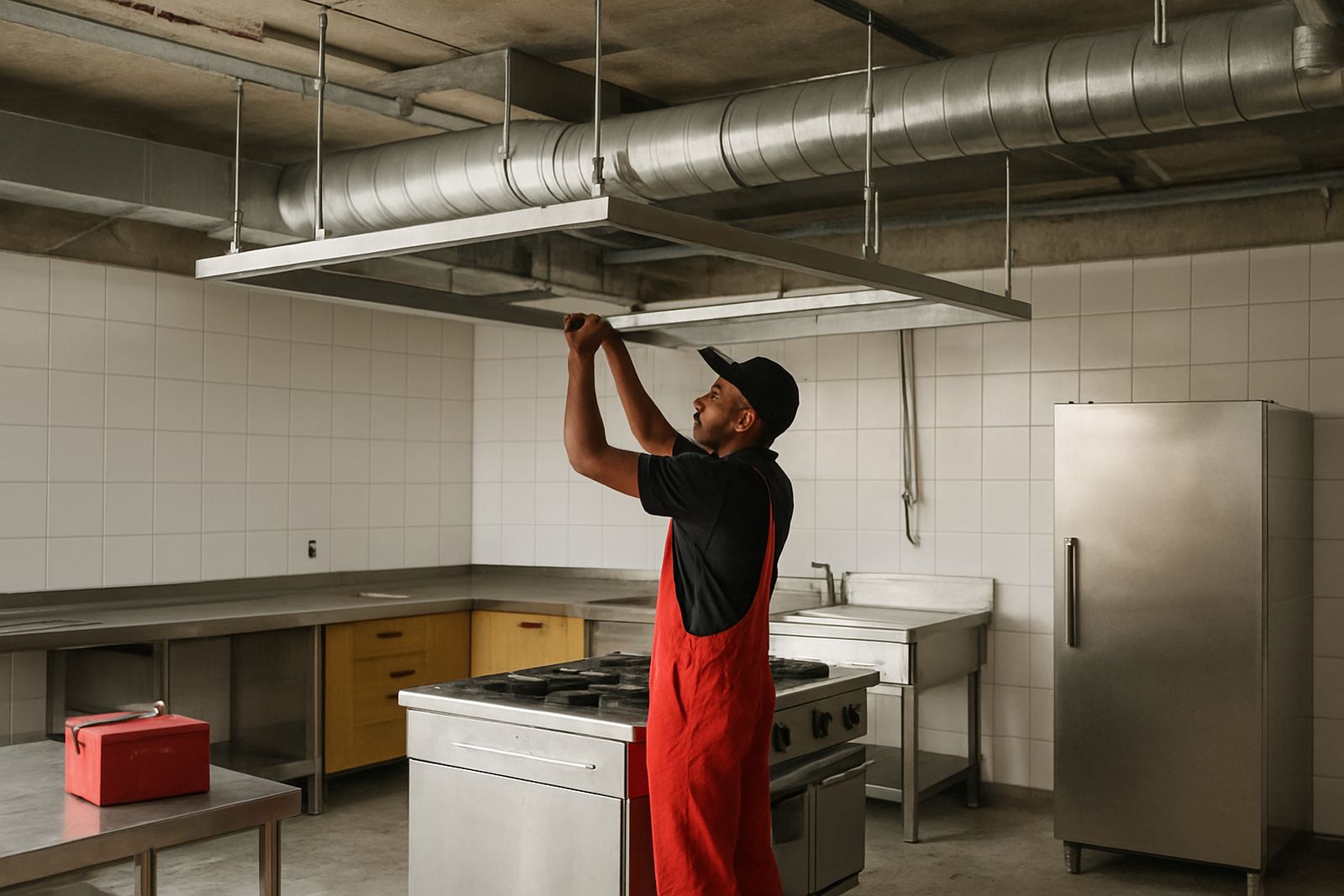
Daily checks should cover mixer guards, oven seals, proofing temperatures, extractor filters and fridge door gaskets. Stainless steel should be wiped with the correct cleaner so it stays in good condition. If there is a breakdown, deal with it early rather than pushing equipment until it fails mid-service. That usually costs more and creates more disruption.
For a new bakery or a refit, a proper site survey helps avoid surprises such as low ceilings, drain points in the wrong place or power supply limits. That is especially useful when fitting out older buildings in Durban North, Pinetown or Glen Anil where services may not be laid out for food production.