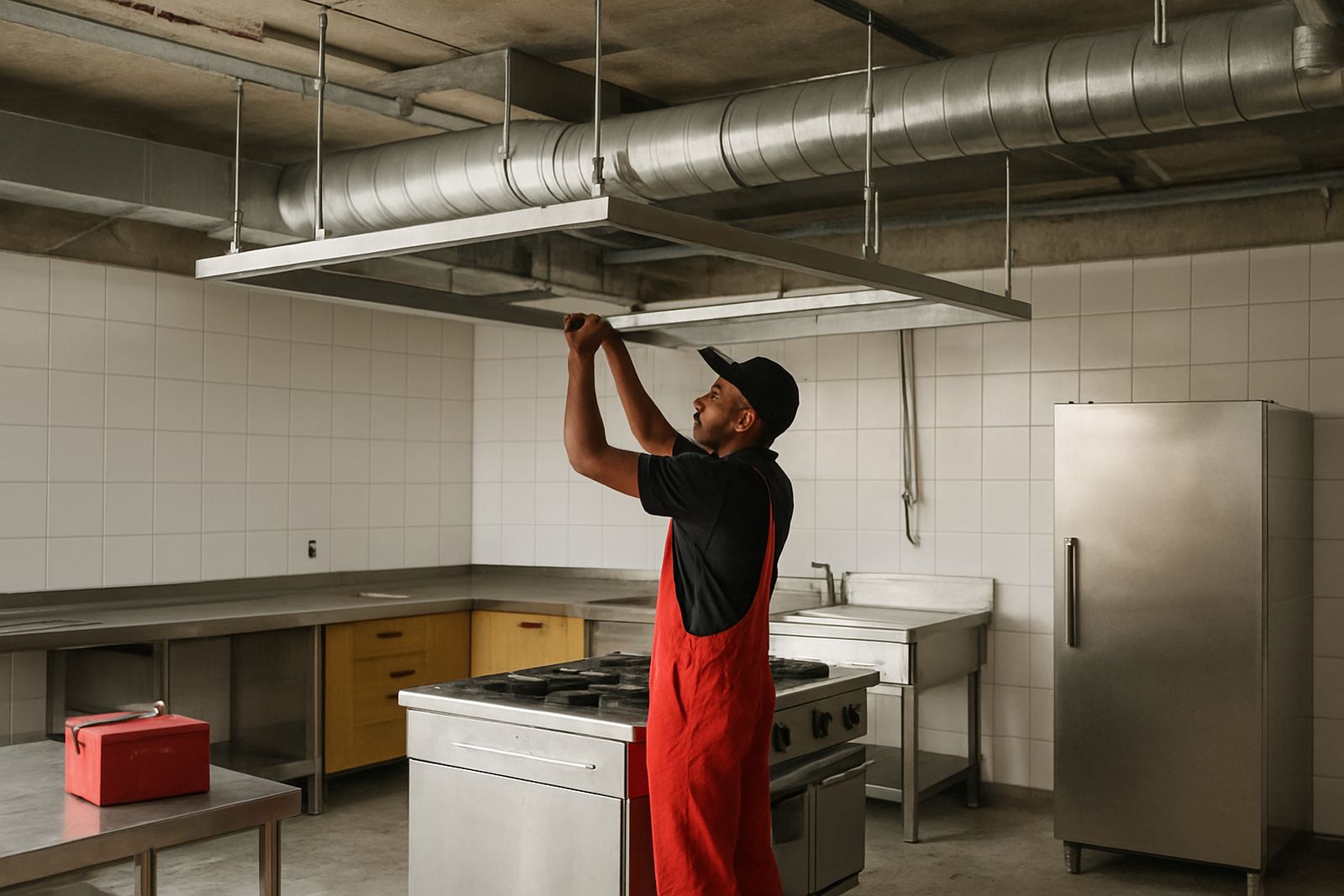
Start With the Heat and Grease Load
Every kitchen needs ventilation matched to the equipment under the canopy, not just the room size. A small prep area with a toaster and griddle needs a very different airflow plan from a hotel line with gas ranges, fryers and chargrills. Start by listing each appliance, its output and how many hours it runs in a shift.
In Durban and along the coast, humidity can make heat feel worse and grease can cling to ductwork faster. That means the canopy needs to capture vapour at the source, not just move air around the room. If the kitchen is in Glen Anil, Umhlanga or Ballito, also consider salt air near open doors and windows, since it can affect metalwork over time.
- List each cooking appliance and its exact position.
- Note whether the unit runs on gas or electricity.
- Record peak trading periods and all-day use items.
- Check if the cooking line will expand in the next 12 to 24 months.
Measure the Space Before You Size the Canopy
Do not size a canopy from memory. Measure the full cooking line, wall clearance, ceiling height and any obstructions such as beams, fire sprinkler heads or service ducts. A canopy that is too short will miss smoke at the ends, while one that is too low can get in the way of staff and hot pans.
For most kitchens, the canopy should cover the full cooking line with a practical overhang on each side. The exact size depends on the equipment arrangement, the wall finish, and whether the canopy is wall-mounted or central. In older buildings around Durban North or Pinetown, low ceilings and mixed construction can affect duct routes, so it is worth checking the roof space before anything is ordered.
- Measure length, depth and mounting height in millimetres.
- Mark doors, windows and service access points on the plan.
- Check that cleaning access is possible from the front and rear.
- Allow room for lights, filters and maintenance panels.
Plan Make-Up Air So the Kitchen Does Not Fight Itself
Extractor systems remove air, but that air must be replaced. If make-up air is not planned properly, doors slam, flames can pull sideways, and the canopy starts drawing from the wrong areas. Staff then feel hot and smoky even when the fan is running. That is a common mistake in busy canteens and hospital kitchens where doors stay open and close all day.
Fresh air should enter in a controlled way, away from the immediate grease plume but close enough to support airflow in the room. In areas with load-shedding, also think about what happens when power returns. Fans and controls should restart in a sensible sequence so the system does not shock the kitchen with sudden air movement. If the site has generator supply, confirm what the extraction will run on and whether changeover causes delays.
- Check where replacement air will enter the room.
- Avoid placing supply air directly over open flames.
- Confirm door operation when extractors are running.
- Check whether the system must work during load-shedding backup.
Use the Right Duct Route and Materials
Ducting should be short, direct and easy to clean. Every bend adds resistance, which can reduce performance and raise noise. Long roof runs are common in stand-alone buildings and shopping centre back-of-house areas, but the route still needs to allow for inspection and grease cleaning. Hidden corners and poor access often become maintenance problems within the first year.
Stainless steel is often used for canopy sections and exposed areas because it handles cleaning better and lasts well in busy kitchens. Duct supports, access panels and joints must be fixed properly, especially in coastal towns where corrosion starts earlier if the installation is left exposed to damp air. Fire stopping at wall and slab penetrations should also be checked against the building requirements before commissioning.
- Keep the duct path as straight as possible.
- Include access panels where grease can collect.
- Seal joints correctly and support long spans well.
- Check for corrosion risk near sea air and wash-down areas.
Check Noise, Fire Risk and Compliance
A kitchen extractor should not create a new problem while solving another one. Excessive fan noise can make staff shout and cause fatigue during long shifts. Vibration can loosen fittings over time. Fire risk matters too, especially where fryers and chargrills sit under the canopy. The system must be planned with safe clearances, proper filtration and suitable shutdown controls.
Before final sign-off, confirm what the local municipality and the fire consultant require for the building type. Hospitals, school canteens and large restaurant kitchens often have different approval paths. If the site is in Pietermaritzburg or a mixed-use building in Durban, ask early about any documents needed for occupancy or internal approval. A small delay at this stage is better than opening with equipment that fails inspection.
- Confirm grease filters are easy to remove and clean.
- Check fan noise against the kitchen working area.
- Confirm fire suppression or protection requirements where needed.
- Keep records of approvals, drawings and equipment data sheets.
Commissioning and Maintenance Keep the System Working
Once the extractor is installed, test it under real cooking conditions, not only during a dry run. Smoke tests, airflow checks and temperature checks will show whether the canopy captures properly across the full line. Staff should know which switches to use, how to clean filters and who to call if airflow drops.
Preventive maintenance matters because grease, dust and salt air all shorten system life. A simple monthly routine can stop bigger failures later. For commercial kitchens in Durban, Ballito and the surrounding areas, we normally recommend regular inspection of filters, fan belts if fitted, duct condition and mounting points. If the site runs through long service hours, build maintenance into the calendar before the unit starts to underperform.
- Test the system with the kitchen under normal cooking load.
- Train staff to clean filters on schedule.
- Log fan performance, noise changes and any odours.
- Book planned checks before the system starts showing faults.
For extractor planning, equipment selection and site surveys in Glen Anil, Durban North, Umhlanga, Pinetown, Ballito and Pietermaritzburg, the KZN Catering Equipment team can assist from first measure-up to final handover.