
What school kitchens need to handle each day
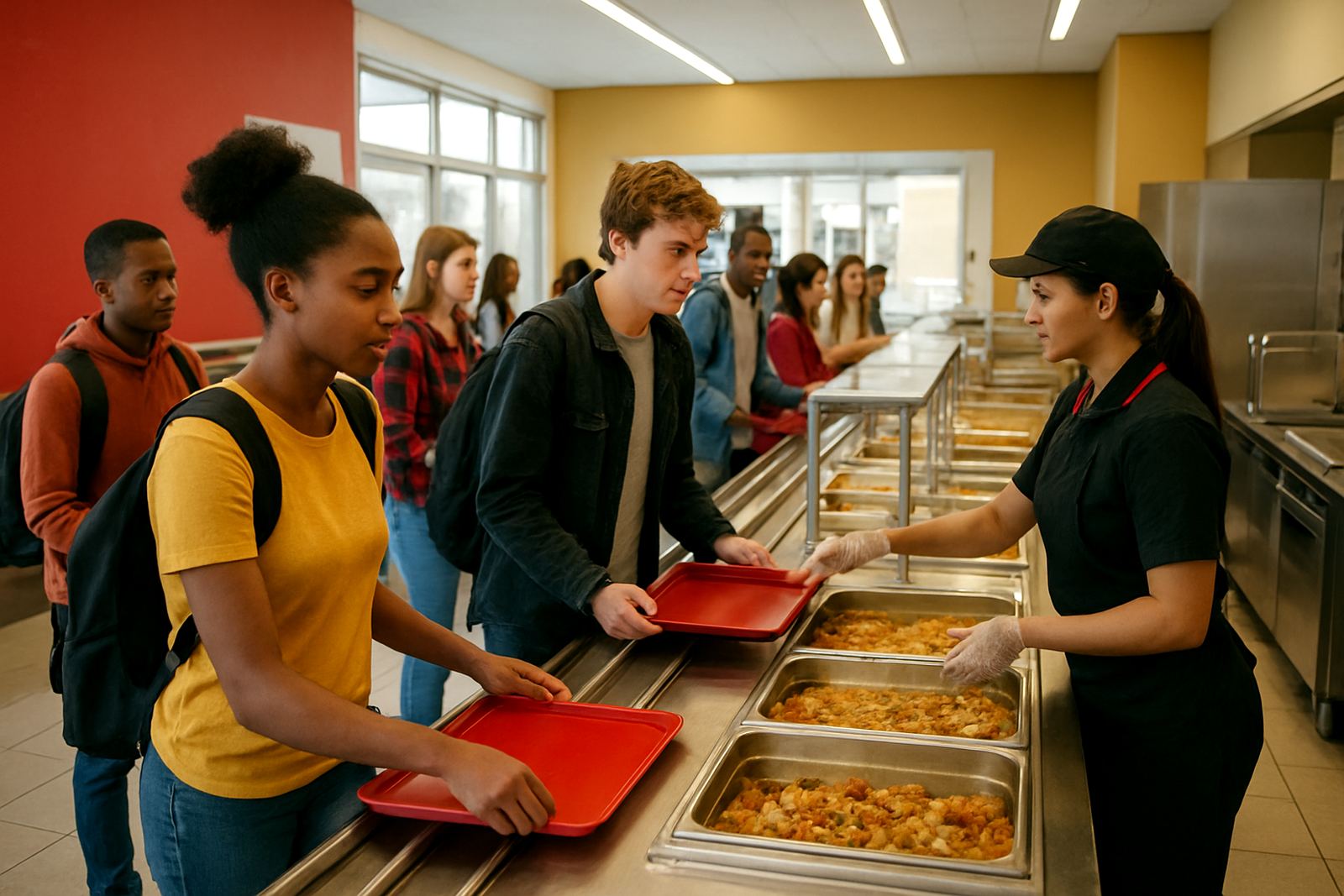
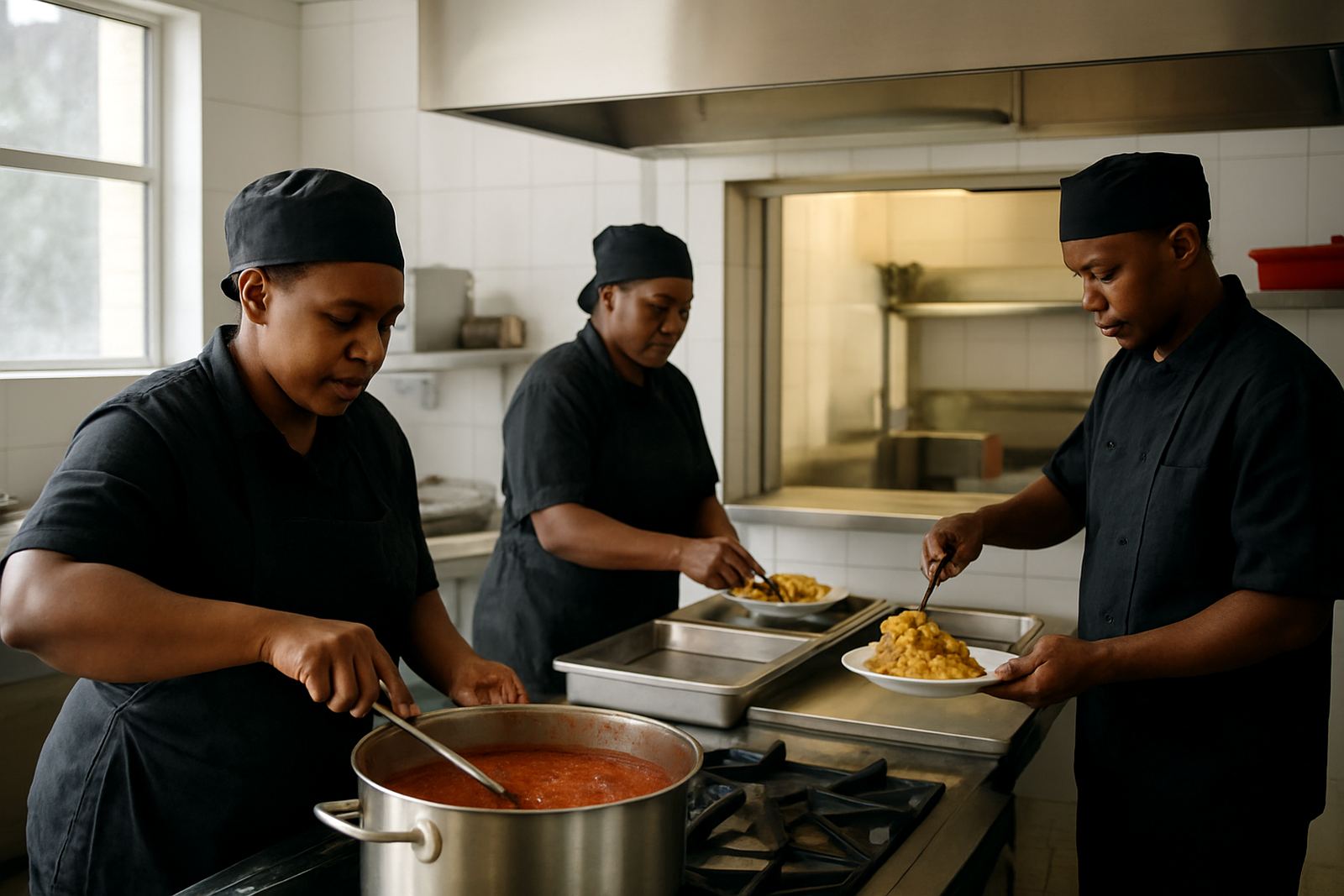
A school canteen is not a show kitchen. It has to cope with early starts, bulk meal prep, service rushes at break, and a clean-down before the last bell. In many KZN schools the same space also supports feeding schemes, sport events, teacher catering and year-end functions, so the layout must work for more than one service pattern.
We usually start by looking at the number of learners, the serving method, and whether meals are cooked on site or brought in and held hot. A small primary school might need a compact warming and packing area. A larger high school or boarding school often needs full hot production, cold storage, dry goods space, and a better extraction plan. The right answer depends on throughput, not just room size.
- Primary schools: simple prep, hot holding and service counters
- High schools: heavier cooking, faster plating, stronger wash-up flow
- Boarding schools: breakfast, lunch, supper and store management
- Feeding schemes: bulk pots, portion control and secure ingredient storage
Typical equipment for school canteens and feeding schemes
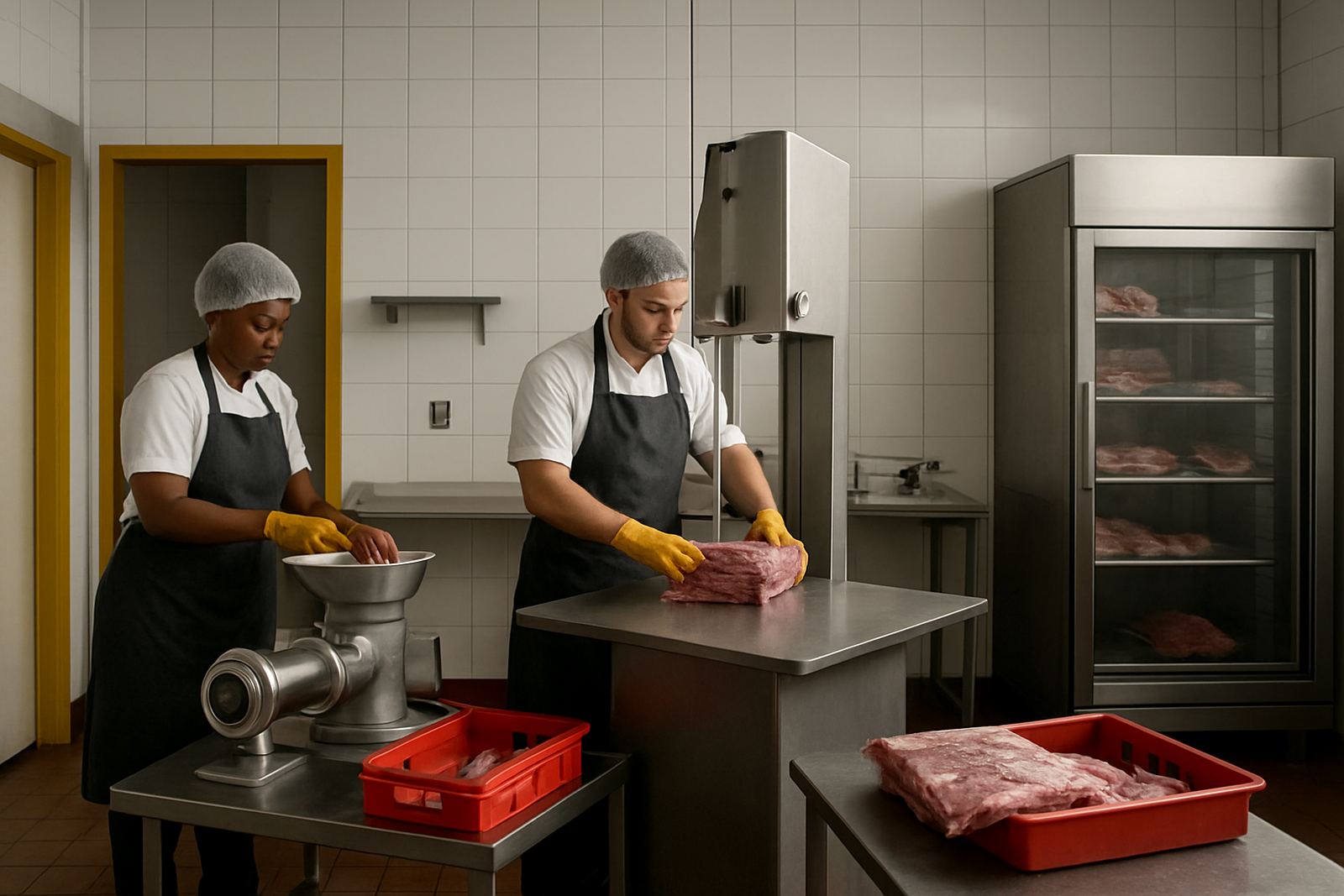
The equipment list should match the menu and the daily headcount. For many schools, a practical package includes cooking, hot holding, prep, dishwash and storage items that can take hard use and still be easy for staff to manage. Stainless surfaces are a good idea in humid Durban and coastal areas because mild steel items can rust quicker than people expect.
A common mistake is buying too many specialised units and not enough working space. Staff need room to chop, plate and move between stations. A smaller but well arranged set-up usually outperforms a crowded kitchen with expensive extras that sit idle most of the term.
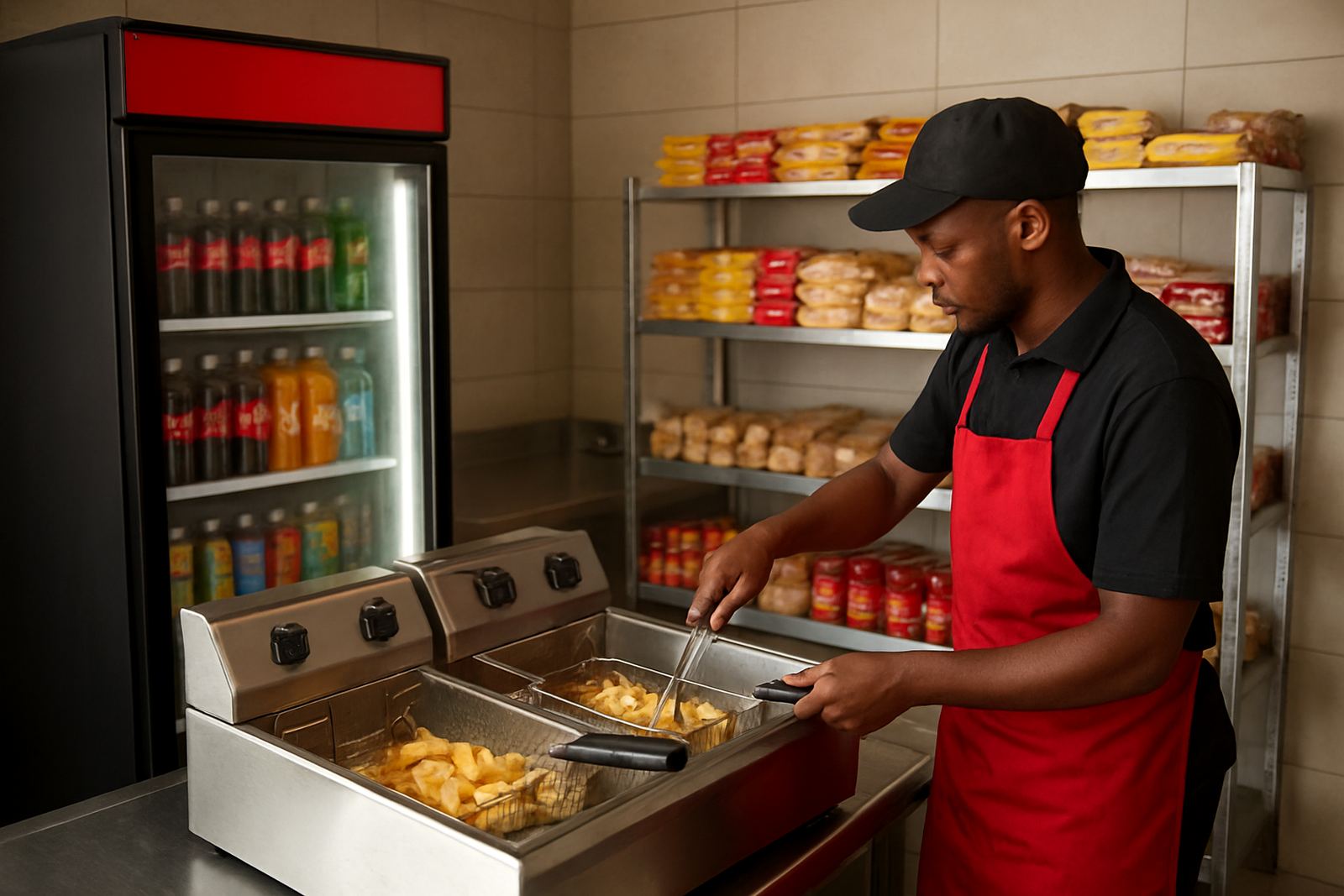
- Cooking: gas or electric range, heavy-duty boiling table, fryers where needed, stock pots
- Hot holding: bain maries, heated cupboards, insulated food transport pans
- Prep: stainless tables, veg sinks, handwash basins, wall shelves, undercounter fridges
- Storage: upright fridges or freezer, dry-goods racking, ingredient bins and lockable cupboards
- Wash-up: pre-rinse sink, dish tables, drainers, glasswash or potwash set-up if required
Layout planning that keeps service moving
School kitchens work best when the dirty side and clean side are kept apart. Raw prep should not cross the cooked food route, and the serving point should sit close to the holding area. If learners are collected through a hatch or counter, that traffic path must be kept away from returns, refuse and delivery access. It sounds simple, but many cantens are squeezed into odd rooms and the flow gets messy fast.
We also look at ventilation, drainage, floor finishes and power points early in the process. Extractor planning matters even in a modest kitchen, because heat and steam build up quickly when a school is cooking in bulk. Where there are load-shedding concerns, cold storage and essential prep should be planned around backup power, gas options, or holding times that make sense for the service window.
- Keep receiving, storage, prep and service in one logical line
- Allow enough aisle space for trolleys, crates and supervised learners if they help out
- Place handwash points where staff actually pass them
- Use non-slip floors and coved finishes for faster cleaning
- Plan for municipal grease control and drainage from day one
Common mistakes we see in school projects
One of the biggest errors is under-sizing cold storage. A school may order once or twice a week, then find the fridge space is not enough for vegetables, dairy and meat at the same time. Another issue is fitting the kitchen around the room instead of around service. The result is long walking routes, slower portions and staff bumping into each other during the lunch rush.
We also see poorly planned extraction, weak electrical provision, and tables that are too light for daily use. In coastal areas, fittings and fixings need proper attention or they corrode quicker than expected. If a school is near Pinetown, Ballito, Umhlanga or the Durban North area, the local climate and salt in the air should be part of the equipment choice, not an afterthought.
- Buying domestic-type equipment for full-time school use
- Ignoring storage for dry goods, cleaning chemicals and waste
- Leaving no budget for installation, plumbing and commissioning
- Skipping staff training, then expecting smooth service on day one
Budget ranges for school kitchen projects in Rand
Budgets vary a lot depending on learner numbers, whether the kitchen is a full cook-on-site setup, and how much building work is needed. A small school upgrade can start around R180 000 to R350 000 for selected equipment and basic fit-out. A mid-size canteen with proper prep, hot holding and cold storage often lands between R350 000 and R850 000. Larger school feeding kitchens, boarding facilities or multi-service setups can move from R850 000 to well over R1.5 million.
Those figures usually change once extraction, stainless fabrication, electrical upgrades, gas reticulation, drainage and waterproofing are included. It is better to price the full working kitchen up front than to patch in items later. That approach saves time during term, and it helps when the school must answer to governing body approvals or municipal requirements.
We can also phase a project, starting with the items that unlock safe daily service first, then adding extras later. That suits schools working with grant funding, donor support, or annual budget cycles.
Durban support from survey to training
From Glen Anil we work across Durban, Durban North, Umhlanga, Pinetown, Ballito and Pietermaritzburg, with site surveys, kitchen layouts, equipment specification, stainless fabrication, installation, commissioning, maintenance and breakdown repairs. For schools, that local support matters because term time leaves little room for delays, and a failed fridge or burner on Monday morning can affect a whole feeding schedule.
Our team includes Mandla Sibusiso Dlamini, Priya Naidoo, Siyabonga Mkhize, Annelise van Wyk, Luyanda Zungu and Jared Pillay. We are used to planning around school holidays, access control, and the practical limits of working on an active campus. Staff training is part of the job too, so the kitchen is not only installed, but used properly from the start.
If you are planning a new school kitchen or fixing an existing one, we can help with the drawing, the equipment list and the on-site sequence. Send the room size, learner numbers and menu idea through our contact form.