What a takeaway kitchen has to do in real service
A takeaway operation is usually built around speed, short cooking times and a steady handover point. The kitchen must cope with lunch rushes, supper peaks, and the days when one staff member calls in sick and the rest still need to keep moving.
In Durban and along the North Coast, heat and humidity also affect how a kitchen performs. Doors open often, equipment runs hard, and extractor airflow needs to pull grease and heat away without creating back pressure over the cook line. For coastal sites, stainless finishes and good drainage around prep and wash-up areas matter more than people expect.
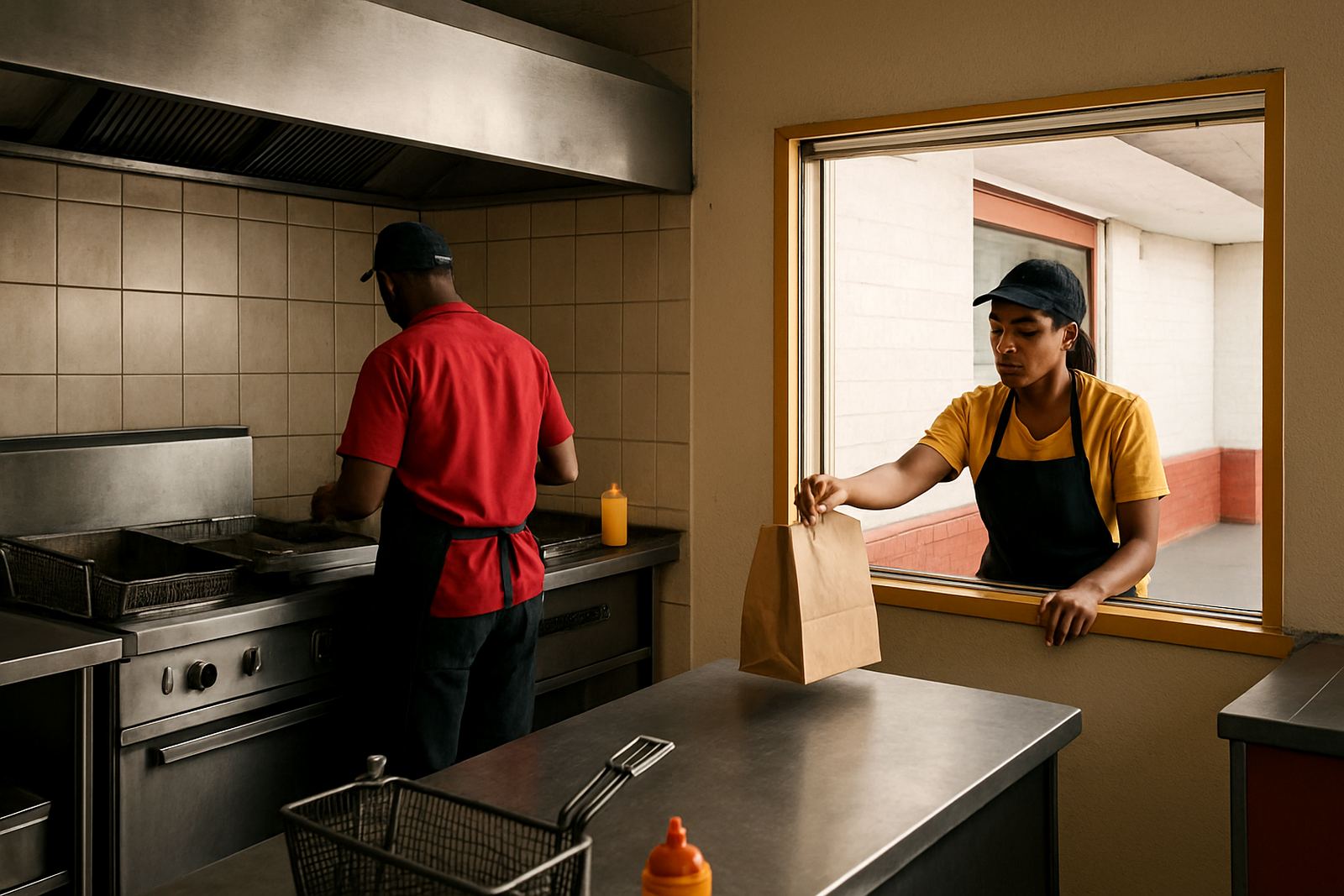
We typically plan takeaways for small footprints, from a converted shop unit in Glen Anil to a roadside site in Pinetown or a busy family shop in Umhlanga. The aim is simple: one-way movement, short travel between prep and cooking, and a handover counter that does not block the fryers or grills.
The typical equipment set for fast food service
The equipment list depends on the menu, but most takeaway kitchens use a similar base. Frying, grilling and hot holding should sit close together, while raw food storage and prep remain apart from the serving edge.
- Single or double deep fryers sized for chips, chicken and snack items
- Flat top grills or ribbed grills for burgers, toasties and breakfast items
- Boiling tops or compact ranges where the menu needs sauces or toppings
- Hot holding cabinets for cooked stock during busy periods
- Undercounter fridges and upright refrigeration for ingredients and drinks
- Stainless work tables, wall shelves and prep sinks
- Extractor canopy, ducting and grease filters matched to the cooking load
- Pass-through counter or service hatch for order handover
For a smaller site, one good fryer and one grill may be enough. For a higher volume operation, add a second fryer or a separate chip station so queues do not build at one point. If the menu includes breakfast and lunch trade, the cook line must allow one person to work safely when the morning rush overlaps with prep for the afternoon.
How we lay out the room for quick order flow
The best takeaway kitchens use a straight or L-shaped flow. Raw stock comes in one side, prep happens at the back or on a protected side wall, cooking sits in the middle, and finished food moves to the service counter without crossing dirty dishes. That order saves steps and cuts mistakes.
We normally look at the till position first, then the hot line, then the storage. In a tight site, even 300 mm can change how staff move. If the fryers are too far from the pass, food cools. If the prep area sits beside the fryer without a barrier, splashes and heat become a problem. If the fridge doors open into the queue, the shop slows down badly.
Extractor planning is important too. A takeaway that runs fryers and grills all day needs enough capture area above the heat source, with ducting sized for the actual equipment load. In busy Durban units, we also check where fresh air will enter, because a kitchen can feel stuffy very quickly when the system is undersized.
- Keep the handover point within easy reach of the main cook line
- Separate raw prep from cooked food packing
- Allow clear access to fridge doors and freezer lids
- Leave space for cleaning under and behind equipment
- Plan a safe route for staff carrying hot oil or pans
Common mistakes that slow a takeaway down
A lot of takeaway fit-outs fail because the room is treated like a shop counter first and a working kitchen second. The result is usually too little preparation space, poor ventilation and no room for cleaning or maintenance. Then the owner spends more on fixes than the original planning would have cost.
One common mistake is buying equipment before the menu is settled. Another is squeezing too many appliances into a small unit, which leaves no space for doors to open or for staff to stand and plate orders. We also see kitchens where the storage is miles away from the cook line, so staff waste time walking back and forth during peak trade.
Load-shedding is another reality in KwaZulu-Natal. If the site depends on electric cooking and refrigeration only, the business can fall over the moment the power goes. For that reason we often discuss backup planning early, including which equipment must stay on, which can pause, and how the layout will work if the lights go out for two hours.
- Buying oversized equipment for a small menu
- Not allowing enough ventilation above fryers and grills
- Forgetting a hand wash basin near the prep area
- Placing the till in a way that blocks staff movement
- Leaving no gap for maintenance access or deep cleaning
Budget ranges for a compact takeaway kitchen
Budget depends on size, menu and whether the site is a new fit-out or a refit of an existing unit. A small takeaway with basic fry and grill service may start from around R180,000 to R350,000 for equipment, stainless work, extraction and installation. That range suits a lean operation with limited seating and a simple menu.
A busier site with multiple fryers, better cold storage, stronger extraction and a more organised prep area can move into the R350,000 to R750,000 range. If the kitchen must handle high throughput, long trading hours, staff training and more complex commissioning, the number can go higher. Municipal requirements, plumbing changes and electrical upgrades can also affect the total.
We always recommend budgeting for the parts people forget: ducting, grease filters, drain connections, gas safety work where relevant, and service access. A lower upfront spend can become expensive if the layout forces constant repairs or slows the serving line.
How KZN Catering Equipment supports takeaway projects
Our team handles the project from the first site survey through to installation and commissioning. For takeaways, that usually means measuring the room properly, checking services, confirming equipment sizes and making sure the cook line, extraction and storage all suit the menu.
Mandla Sibusiso Dlamini leads the business from Glen Anil, with Priya Naidoo on kitchen design, Siyabonga Mkhize on projects, Annelise van Wyk on procurement, Luyanda Zungu on service, and Jared Pillay managing site installation. We work across Durban North, Umhlanga, Pinetown, Ballito and Pietermaritzburg, which helps when a site needs a quick turnaround or a service call after opening.
If you are planning a new takeaway or reworking an existing shop, the safest approach is to start with the menu, trading volume and available floor space. From there we can match the equipment, plan the extractor route and make sure the kitchen is practical on a busy Friday night, not just on paper.
For takeaways that must open on time, good planning saves money, and a lot of stress too.
When a takeaway needs a redesign rather than a patch-up
Some sites start small and then grow into a layout that no longer works. When queues start blocking the till, when staff keep crossing paths or when the extractor struggles in summer, it is often a sign that the room needs proper redesign rather than another quick fix.
That is especially true in older shops around Durban where electrical capacity, drainage and ventilation were not planned for modern quick-service trade. A redesign can improve service speed, reduce cleaning time and give the owner better control over stock and labour.
- Staff are turning sideways just to pass each other
- Food is piling up at the pass before collection
- Fridges are opening into the service area
- Heat and smoke build up by mid-afternoon
- The current setup is causing repeated breakdowns or delays
When these signs show up, it usually means the kitchen has outgrown the room. A proper layout review can fix more than one problem at once.