
Why the receiving bay matters before the first delivery arrives
The receiving bay is the handover point between the supplier and the kitchen. If it is too tight, poorly lit, or awkward to access, deliveries take longer, goods get damaged, and staff end up moving stock twice instead of once.
For restaurants, hospitals and canteens in Durban and across KwaZulu-Natal, the receiving area must work with real conditions: early deliveries, mixed truck sizes, coastal humidity, and load-shedding. It should also be easy to supervise, with enough room to inspect chilled, frozen and dry goods before they move into storage.
At KZN Catering Equipment we often find that the receiving bay is planned last. That is where problems start. The bay should be part of the kitchen flow from day one, not an afterthought beside the back door.
Allow enough access for trucks, trolleys and people
Good access starts outside the kitchen. Delivery vehicles need a clear route to the bay, with enough space to stop, unload and turn without blocking staff entrances or customer parking. In places like Glen Anil, Umhlanga and Pinetown, access roads and shared sites often need extra thought because deliveries can arrive at the same time as refuse collection or front-of-house traffic.
The bay should line up with the type of vehicle you receive most often. If the site gets box trucks, pallet deliveries or cage trolleys, then the doorway, ramp and floor finish must suit that load. A level threshold is best where possible, and any ramp should be wide enough for a loaded trolley and not too steep for one person to manage.
- Keep the delivery route short and direct
- Avoid tight corners where crates can catch walls
- Provide turning space for trolleys and pallet jacks
- Separate delivery movement from food prep areas
One missed detail can slow the whole morning down. If staff need to dodge parked stock or squeeze past the delivery point, the receiving bay is already working against them.
Staging space should match the size of your weekly intake
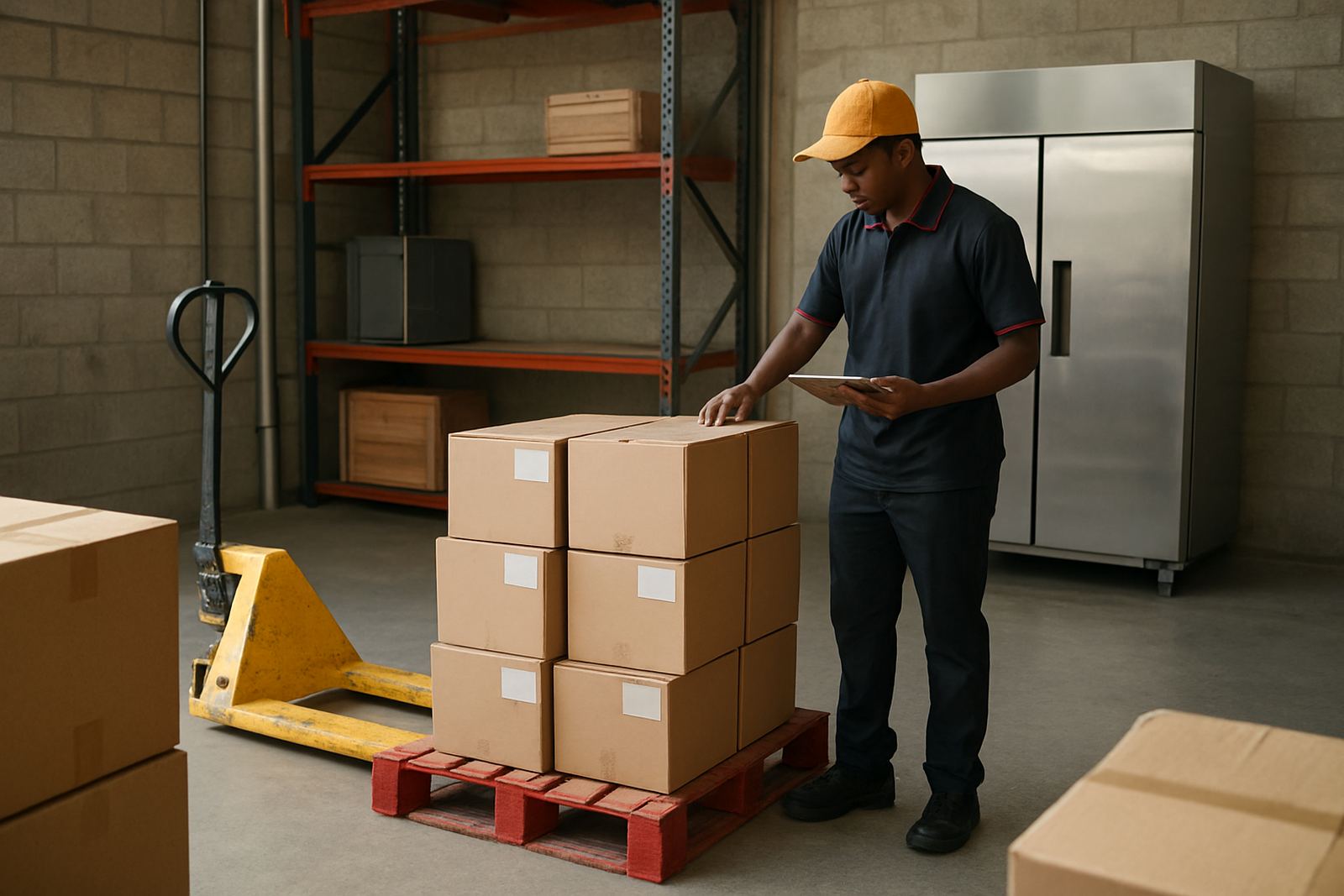
Staging space is the buffer zone between delivery and storage. It gives staff time to count, inspect, label and sort goods before they go into fridges, freezers or dry stores. Without enough staging space, stock gets piled on the floor or pushed into cold rooms before it has been checked properly.
A receiving bay should have separate points for dry stock, chilled items and frozen stock where possible. That makes it easier to prioritise temperature-sensitive goods and reduces the time that doors stay open. In a hospital kitchen, for example, this can help keep meal service on track during a busy morning intake.
- Set aside space for cages, crates and empty packaging
- Keep an inspection table or counter near the entrance
- Provide wall protection where trolleys may bump during unloading
- Use non-slip flooring that can handle water and cleaning chemicals
If the bay is also used for returns, cleaning items or waste sorting, those functions need to be clearly separated. Otherwise the intake area becomes cluttered and staff spend time moving things around instead of checking deliveries.
Inspection points need light, power and clean surfaces
Every delivery should be checked before it enters storage. That means the bay needs proper lighting, a clean surface for unpacking, and nearby power for scales, barcode scanners or label printers if used. A single weak light fitting is not enough in a commercial kitchen where staff may be checking packaging dates, damage or seal condition.
In coastal areas like Durban North, Umhlanga and Ballito, humidity can affect cartons and packaging faster than many owners expect. Damp cardboard weakens quickly, so the inspection area should be dry and easy to wipe down. Stainless steel or other suitable washable finishes are useful where food may be opened for inspection.
We also recommend a clear place for a thermometer check on chilled or frozen goods. If your team has to carry stock across the kitchen before checking it, you lose time and food safety control.
Storage flow should support first-in, first-out stock control
Receiving bays work best when they connect directly to dry storage, chilled rooms and frozen storage in a logical order. The idea is simple: stock comes in, gets checked, and then moves straight to the right place without crossing the main prep line.
Good flow makes first-in, first-out stock control much easier. Older stock should be placed where staff can reach it first, and new stock should not block it. If the receiving area feeds into a store that is badly arranged, the whole system slows down. That often leads to losses through expiry, broken packaging or forgotten stock at the back.
For larger operations in Pietermaritzburg or across multiple sites, a receiving bay may also need a designated holding point for bulk deliveries. This is especially useful when one delivery covers several departments, because staff can sort and label items before they are distributed.
- Keep dry stores close to the bay where practical
- Place chilled and frozen storage on the shortest route possible
- Use shelving that suits the pack sizes you receive
- Mark incoming stock clearly before it is put away
Durban weather and load-shedding change the planning rules
In KwaZulu-Natal, weather and power supply both affect receiving bay design. Heavy rain can track water into the bay, while heat and humidity can shorten the safe holding time for groceries that should already be refrigerated. If the site also faces load-shedding, then cold rooms and freezers must be protected with a backup plan.
That may include space for a generator connection, protected sockets, or a receiving layout that limits how long doors stay open during outages. It is not just about equipment, it is about timing. A poor bay can leave deliveries waiting while staff try to find a place to put them, and that can cause avoidable spoilage.
Municipal waste rules matter too. Packaging, broken pallets and damaged cartons need a clear exit route so they do not block the bay or attract pests. The area should be easy to wash down and maintain, with no corners where dirt can build up.
A Glen Anil example: a bay that keeps the morning moving
At a busy kitchen in Glen Anil, deliveries arrive before service prep begins. The site needed a receiving bay that could handle chilled crates, dry stock and cleaning materials without mixing the load. The solution was a clearly marked intake point with enough room to stage stock, inspect it under proper light, and move it straight into nearby storage areas.
That kind of planning saves time every day. Staff do not have to carry crates through the prep room, and the kitchen manager can see what arrived, what needs checking, and what must go straight into cold storage. It is a practical change, but it makes a real difference when the first delivery lands just as the team is starting breakfast service.
For new builds, upgrades or layout reviews in Durban, Ballito, Pinetown or Pietermaritzburg, KZN Catering Equipment can help plan the receiving bay as part of the full kitchen flow. That includes site surveys, equipment specification, extractor planning, stainless fabrication, installation and commissioning, plus maintenance and breakdown support when the kitchen is in use.