
Why stainless grade matters in a working kitchen
In a commercial kitchen, stainless steel has to do more than look tidy. It must handle hot pans, chlorine-based cleaning, steam, knocks from trolleys and daily contact with acidic food. If the grade is wrong, you start seeing tea staining, pitting, dull patches and rust spots around welds and corners.
For a restaurant in Umhlanga or a hospital kitchen in Durban North, that is not just a cosmetic problem. Corrosion can create rough surfaces that are harder to sanitise, and damaged fittings need earlier replacement. It costs more in the long run, even if the cheaper grade looked like a saving on day one.
- Higher corrosion resistance for coastal humidity
- Better hygiene because smooth surfaces are easier to clean
- Longer service life on prep tables, sinks and splashbacks
- Less downtime for repairs and re-polishing
304 stainless: the everyday choice for most food-service fittings
304 stainless is the standard choice for many kitchen items, and for good reason. It offers a good balance of cost, appearance and resistance to everyday kitchen chemicals. You will often see it used for prep tables, wall shelves, undercounter units, pot racks, handwash sinks and general fabrications in restaurants, canteens and school kitchens.
In most inland sites, 304 performs well if it is cleaned properly and not left standing in strong bleach. It is still a stainless material, but it is not invincible. A busy canteen in Pinetown that rinses floors with harsh chemicals every night can shorten its life if staff are not trained on correct cleaning. Simple habits make a big difference.
- Suitable for most dry and wet kitchen areas
- Good for counters, sinks and light fabrication
- Works well where cost must be controlled
- Needs proper cleaning to avoid surface staining
316 stainless for coastal kitchens and harsher exposure
316 stainless contains an added element that improves resistance to chlorides and salt exposure. In plain terms, it copes better with Durban’s coastal air, frequent washing and stronger cleaning routines. That makes it a better option for certain kitchens close to the sea, fish preparation areas, cold rooms, wash-up zones and equipment that sits near open doors or extractor outlets.
We often recommend 316 for sites in Glen Anil, Ballito and Umhlanga where salt in the air can work into fittings over time. It is also worth considering for hospitals and high-care kitchens where cleaning is strict and surfaces get wiped down often. The upfront cost is higher, but on some sites it is the cheaper choice over five to ten years.
- Better resistance to coastal corrosion
- Useful for fish, brine and wet processing areas
- Good option where cleaning chemicals are used often
- Ideal where equipment is expected to last longer before replacement
Finishes, thickness and welding count just as much as the grade
People often focus on the grade, but the finish and fabrication quality are just as important. A poorly made 304 item can fail faster than a well-made 316 unit. Look at the sheet thickness, the quality of the bends, the welds, and whether the item has been properly polished after fabrication.
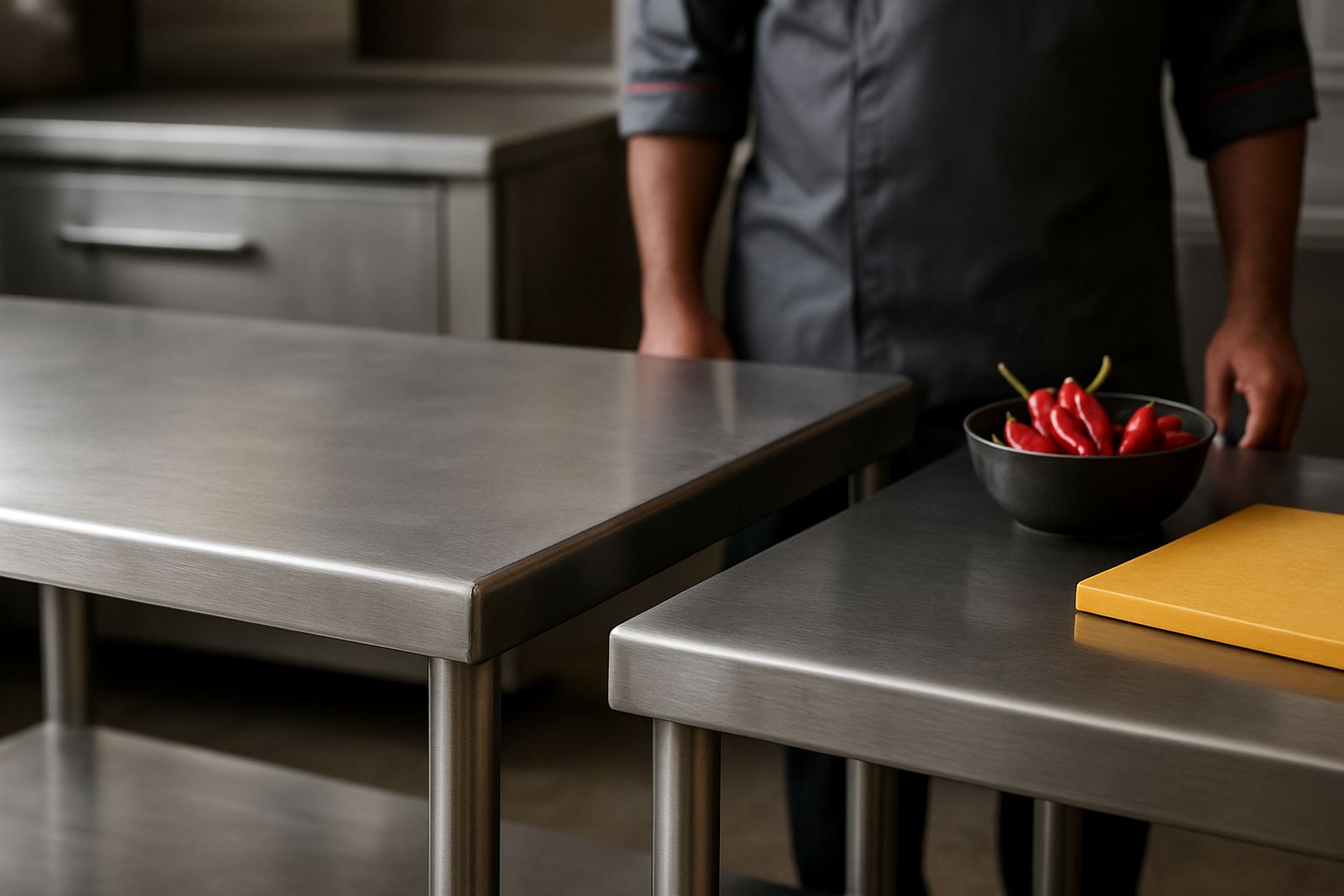
A brushed finish hides small marks better than a bright polished surface, and it is often easier to keep tidy in a working kitchen. For food-service use, smooth joins and closed seams matter because dirt and moisture collect in rough spots. Thin material may bow under load, especially on long prep tables or shelves with heavy stock. That is where the spec sheet should be checked properly, not guessed.
- Check sheet thickness for tables, sinks and shelving
- Ask for smooth welds and sealed corners
- Choose a finish that suits cleaning routines
- Match the item to the load it must carry
Where the wrong grade causes trouble in KwaZulu-Natal
Durban kitchens face a few local pressures that inland sites may not see as often. Sea air carries salt. Summer humidity hangs around for months. Some buildings have older extraction systems that drip condensate back onto steel. In a site where the extractor is weak, steam and grease can land on exposed fittings and leave marks or, over time, corrode the surface.
We have seen this in takeaway kitchens, hospital service areas and canteens near the coast. A prep counter near the back door can look fine at installation, then start showing tea staining after a year if the grade and finish were not right for the site. A small error in specification can turn into repeated polishing, patch repairs and a frustrated manager.
That is why site surveys matter. The location, cleaning routine, ventilation and water quality all affect how stainless will behave. A kitchen in Pietermaritzburg may need a different spec from one in Ballito, even if the layout is the same.
How to choose the right grade for each part of the kitchen
The best approach is to match the grade to the task. Not every item in one kitchen needs the same material, and over-specifying everything can push costs up for no reason. On the other hand, using a lighter grade on wet or exposed areas can create avoidable maintenance problems.
For example, prep tables and dry storage shelving can often be built in standard 304. Sinks, wash-up benches and items near constant moisture may need a closer look. If the site is very close to the coast, or if staff use strong cleaning chemicals, 316 may be the safer choice for key fittings. The same logic applies to extractor canopies, splashbacks and custom fabrication around hot equipment.
- Dry prep and storage: often 304 is suitable
- Wet zones and wash-up areas: consider stronger corrosion resistance
- Coastal or high-chemical sites: ask about 316
- Custom jobs: review the full environment before ordering
Practical advice before you place an order
Before you sign off on any stainless order, ask what grade is being used, where it will be fitted, and how it should be cleaned. Ask whether the fabricator has allowed for drainage, easy access and proper sealing at joins. These small details decide whether the item stays clean and neat, or starts giving trouble after the first busy season.
For restaurants, hospitals and canteens across Durban, the best result usually comes from a clear spec rather than a vague request for "stainless steel". If the supplier understands the site conditions, the cleaning method and the expected workload, the finished product will fit the job better and last longer. That saves time, keeps standards up and avoids unnecessary call-outs later on.
At KZN Catering Equipment, we work through the grade choice during the layout and specification stage so the right material is used in the right place. It is a simple step, but it makes a major difference over time.