Match-day Kiosk Brief in Isipingo
The client was a stadium concession operator in Isipingo, serving hot food and cold drinks to crowds that arrive in waves before kick-off, at half-time and again after full time. The unit had to work as a high-turnover service point rather than a full kitchen, so every square metre mattered. We were asked to plan the cooking line, prep point, storage and refrigeration around a very small back-of-house area and a serving hatch facing the crowd.
From the start, we knew the layout had to support quick frying, safe holding and easy restocking. There was no room for loose equipment or awkward corners, and the team needed a flow that let one person prep while another handled the till and service window. The site also had to stay practical during load shedding, with equipment that could restart cleanly and not trip on every small voltage dip.
Site Limits That Shaped the Layout
The biggest constraint was space. The kiosk had a narrow working footprint and limited backroom clearance, so we had to fit the cooking line against the most practical wall and keep circulation clear for staff moving between prep and service. The extractor route was also tight, which meant planning duct runs and canopy position carefully so the system would draw properly without stealing too much head height.
Because this is Durban, we also allowed for coastal humidity and regular wash-downs. Stainless steel was specified for exposed prep and cook surfaces, with closed base storage where possible to keep bags, cartons and dry stock off the floor. The kiosk sits in a public stadium setting, so we also took note of easy-clean finishes and safe cable runs. Municipal fire and grease management rules were part of the planning, especially around extraction, suppression readiness and access for routine cleaning.
- Small footprint, with a service-first layout
- Allowance for humid coastal conditions and frequent cleaning
- Clear access for grease trap and maintenance checks
- Space kept open for queue handling at peak times
What We Supplied for the Kiosk
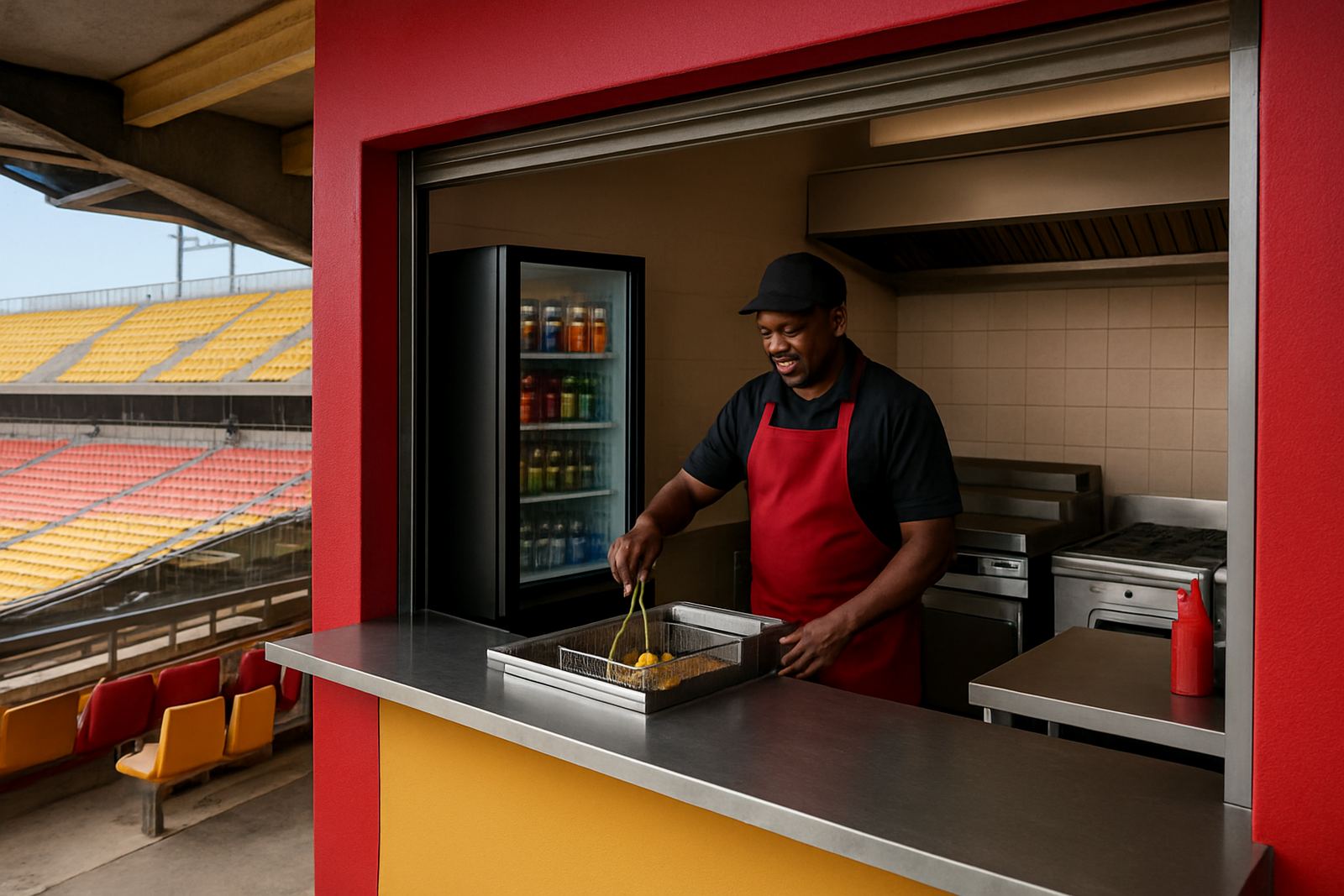
We supplied and coordinated the main equipment package, then installed and commissioned it on site. The cooking side centred on a twin basket fryer for fast chip and snack output, a two plate hot holding section, a compact worktable for prep, undercounter refrigeration for chilled ingredients, and stainless shelving for dry goods. The serving side included a clean counter line with enough deck space for packaging, condiments and cash handling.
The extractor plan was built around a canopy sized for the fryer load, with ducting positioned to suit the available roof and wall routes. We also arranged the stainless fabrication items needed to make the kiosk work as one unit, including splash protection, coved edge details where practical, and a pass-through arrangement that kept the back-of-house side tidy. Equipment and fittings were chosen so the operator could clean quickly after each event, not just at the end of the month.
- Twin basket fryer for higher peak output
- Undercounter refrigeration for chilled stock
- Stainless prep table and shelving
- Extractor canopy and ducting planned for fryer duty
- Custom stainless pieces for tight space use
Installation and Commissioning in Four Weeks
We completed the project over four weeks from final site survey to handover. Week one covered measurements, services checks and the final equipment list. Week two was for fabrication coordination and procurement. In week three we scheduled delivery and site set-out, then in week four our installation crew positioned the equipment, connected the service points and carried out commissioning with the operator present.
Commissioning included heat checks, fryer basket clearances, refrigeration start-up, extractor testing and a run-through of daily cleaning steps. Siyabonga Mkhize managed the project timing, while Jared Pillay supervised the on-site installation team. Luyanda Zungu handled the service checks and staff familiarisation, which helped the client’s team settle in before the first busy match day. There was one minor delay from a late service access sign off, but it did not affect the final handover date.
How the Kiosk Performed on Match Day
Once in use, the kiosk gave the operator a much cleaner service rhythm. Food could be fried in batches, held briefly and handed over without staff crossing paths too often. The refrigeration stayed within the prep line, which cut down on unnecessary movement and helped keep ingredients at the right temperature during longer trading periods. The finished layout also gave the staff a better line of sight to the queue, so they could prep ahead of the rush instead of reacting late.
The practical result was faster service and less clutter. The operator had enough storage for peak stock without boxes blocking the passage, and cleaning down after events became quicker because the equipment was grouped logically. The team reported fewer bottlenecks at the serving hatch, and the layout made it easier to bring in extra hands for big fixtures. It was a small space, but it now works like a proper concession unit, not a cramped afterthought.
- Better service flow at half-time and full-time rushes
- Less backtracking between prep and service points
- Cleaner stock handling and easier end-of-day wash-down
- More usable storage in the same footprint
What We Would Repeat on the Next Stadium Kiosk
If we were repeating this project for another stadium kiosk in Durban or Pietermaritzburg, we would keep the same discipline around access, ventilation and storage, because those are the points that usually cause trouble later. We would also plan extra service space around the fryer and undercounter fridge from the outset, even if it means sacrificing a small amount of display area. In a match-day operation, the working side matters more than looking busy.
We would also keep using a staged handover, with the operator trained before the first event rather than after it. That approach helps staff understand cleaning, start-up, shut-down and what to do if load shedding or a breaker trip interrupts service. For this kind of kiosk, the details matter: one wrong shelf height or one awkward cable route can slow the whole service line down. Keeping things plain and practical is what makes the unit pay its way.
Key facts
| Project | Isipingo Stadium Kiosk |
|---|---|
| Location | Isipingo, Durban |
| Client type | Stadium concession operator |
| Timeline | 4 weeks from survey to handover |
| Main equipment | Twin basket fryer, undercounter refrigeration, prep table, hot holding and shelving |
| Scope | Layout planning, stainless fabrication, installation, commissioning and staff training |