
Start with the stock you need to chill or freeze
Begin with what you will actually store each day, not what looks good on a drawing. A small café in Durban North will have a very different cold chain from a hospital kitchen in Pietermaritzburg or a canteen in Pinetown. List fresh produce, dairy, meats, plated meals, frozen items and bulk back-up stock separately. Then note how often each item moves in and out of the fridge or freezer.
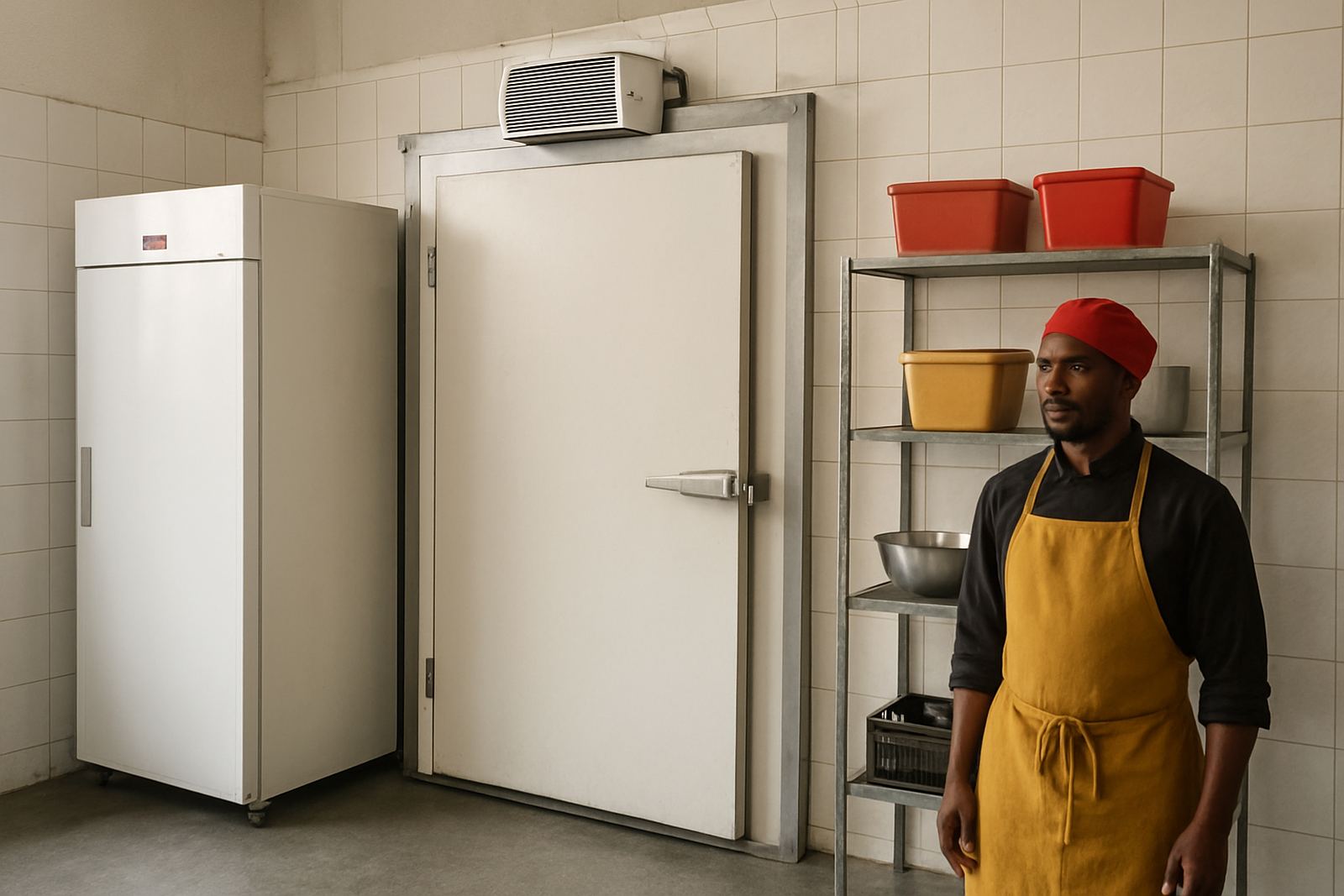
As a simple rule, upright fridges suit frequent access and smaller footprints, while cold rooms make sense when you need pallet space, trolley access or higher holding volumes. In coastal areas like Umhlanga and Ballito, humidity can work fridges harder, so door seals, ventilation and defrost cycles matter more than many buyers expect.
How to size an upright fridge without guessing
Upright fridges are the first choice for many kitchens because they are easy to place, easy to clean and easy to organise. For a small service kitchen, one or two upright fridges may be enough. Once you are handling bulk prep, meal assembly or daily deliveries, you may need several units or a cold room backed up by upright units for daily use.
- Measure the footprint, but also allow clearance for door swing and cleaning access.
- Check whether trays, GN pans or shelves will fit the way your team works.
- Allow space for air movement at the back and top of the cabinet.
- Choose a unit that can recover temperature quickly after repeated opening.
Do not overfill an upright fridge. If cold air cannot circulate, the top shelf may be too warm while the back runs colder than needed. That leads to uneven food safety and extra strain on the compressor.
When a freezer room is the better buy
Freezer rooms suit operations that buy in bulk, freeze prepared meals or keep larger frozen stock for longer periods. They also help where delivery schedules are irregular or where a site must hold emergency stock, such as a hospital or institutional kitchen. A freezer room gives you more usable volume than several standing cabinets, but it needs careful planning for access, insulation and floor loading.
Before you commit, check the route into the room. Can a trolley turn cleanly? Is there enough light? Will staff have to stand in the doorway too long while picking stock? A freezer room must be practical for the person using it at 6 am, not only for the person signing off the purchase.
- Confirm the product mix, especially meat, frozen veg, breads and prepped meals.
- Allow for future growth of at least 15 percent if the kitchen is expanding.
- Check the room location for heat, drainage and service access.
- Plan for a fast door, good sealing and an alarm if the room will be used heavily.
Cold room capacity and the numbers that matter
Capacity is often measured in cubic metres, but the real question is how that space will be used. A 6 m3 room packed badly can perform worse than a smaller room set out properly. You need room for airflow, stock rotation and safe access to the back of the store. If your team cannot see dates and labels clearly, waste climbs quickly.
Work through these checks before selecting the size:
- Daily stock intake in crates, cartons or trays.
- Peak holding stock for weekends, functions or month-end.
- Number of staff who will access the room at the same time.
- Type of stock, because meat, dairy and prepared food may need different zones.
- Whether a trolley, rack or pallet jack must enter the room.
For Durban sites, think about door openings during hot, humid weather and how often the room will be accessed during a shift. The more frequently it opens, the more important the insulation, sealing and refrigeration recovery time become.
Installation checks for South African kitchens
Good refrigeration can fail early if the installation is rushed. Make sure the site has proper power supply, drainage, ventilation and enough clearance around condensers. In areas with frequent power interruptions, ask how the system will behave during outages and restart. Some kitchens also need back-up planning for emergency stock so that one trip can save the whole cold chain.
Also consider the surrounding kitchen activity. If the unit sits next to ovens, dishwashing heat or direct sun, it will work harder and cost more to run. A short site survey can prevent a lot of trouble later. This is where proper extractor planning, layout and equipment placement all support the cold storage decision.
Simple handover checklist for managers and staff
Once the equipment is installed, a short handover keeps everyone using it correctly. Staff training should cover temperature checks, cleaning, stock rotation and what to do if a unit alarms or warms up. It does not need to be complicated, but it must be consistent.
- Record the normal operating temperature for each unit.
- Show staff how to load stock without blocking air flow.
- Set cleaning routines for shelves, seals and drip trays.
- Label maintenance contact details near the equipment.
- Keep a log of breakdowns, service dates and thermostat checks.
For busy kitchens in Glen Anil, Durban North, Pinetown and Pietermaritzburg, a clear maintenance routine helps avoid spoiled stock and unnecessary call-outs. Preventive service is cheaper than a full repair after a warm-up event.